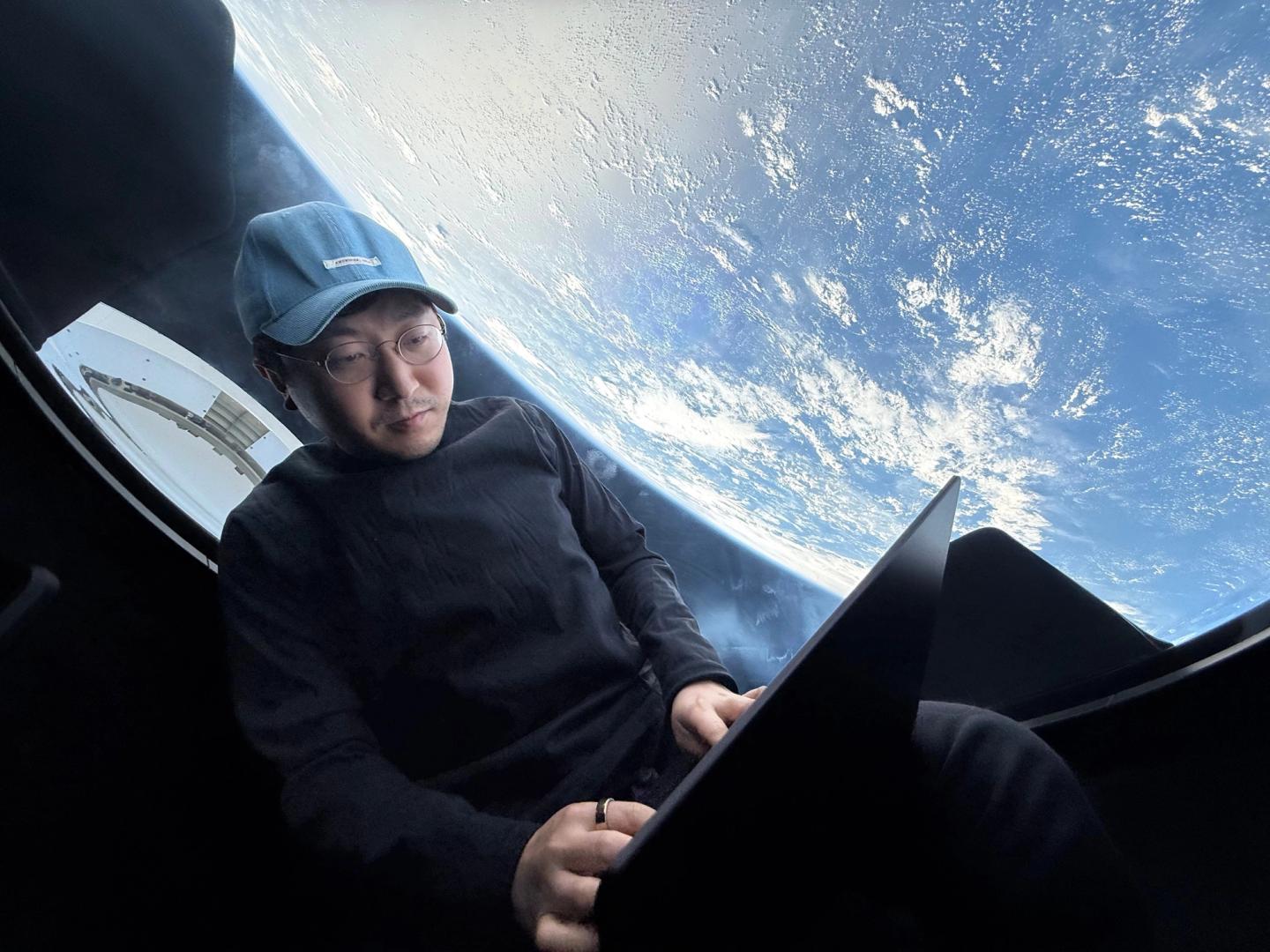
Chun Wang has been appointed as the Mission Commander for SpaceX’s inaugural commercial human spaceflight to Mars, a key step in Elon Musk’s vision of establishing a multi-planetary civilization. Wang, a co-founder of F2Pool and a prominent figure in the cryptocurrency sector, will lead a mission aimed at transporting both cargo and citizens to the Red Planet.
Wang, who has a significant stake in the Bitcoin mining industry, controlling approximately 11.3% of the global network’s hashrate, is estimated to possess personal Bitcoin assets exceeding $300 million. His transition from digital finance to space exploration marks a pivotal moment in his career, as he takes a two-year leave from his current responsibilities.
The announcement from SpaceX aligns with Musk’s ambitious plans for Mars colonization. The mission will commence with a week-long circumlunar fly-by, bringing the crew within 125 miles of the Moon’s surface, before embarking on the journey to Mars. The targeted launch window is set for 2026, with the crew expected to spend two consecutive years in space.
During the mission, the crew will engage in extensive exploration of the Earth-Moon system, conduct a high-altitude fly-by of Mars, and navigate a complex return trajectory to Earth. The operational challenges of a 24-month deep-space mission include hardware fatigue and the management of cryogenic fuel under extreme conditions.
To address these challenges, SpaceX is introducing its next-generation Starship V3 architecture. This upgraded spacecraft features advanced systems, including vacuum-jacketed header feed lines and high-voltage cryogenic recirculation systems, designed to enhance safety and efficiency in deep space.
Wang’s team will also face acute biomedical risks, including the need for advanced behavioral health monitoring and the collection of human X-ray images in microgravity. These efforts aim to assess the physiological impacts of long-duration space travel.
The mission is expected to yield critical data that will inform future Mars exploration, transitioning efforts from temporary missions to permanent, self-sustaining habitats. The findings will test Starship’s autonomous navigation, radiation shielding, and in-space propellant transfer capabilities.
As SpaceX prepares for this historic mission, the company has also confidentially filed for a public offering, aiming for a valuation exceeding $1.75 trillion. This move reflects the growing significance of the space sector and Musk’s ongoing commitment to integrating cryptocurrency into his business ventures, as evidenced by the recent disclosure of SpaceX’s Bitcoin holdings.
Chun Wang has been named Mission Commander for SpaceX's first commercial human mission to Mars, a key initiative in Elon Musk's vision for colonization. The mission, set for 2026, aims to gather crucial data for future Mars exploration and establish a framework for human habitation on the planet.