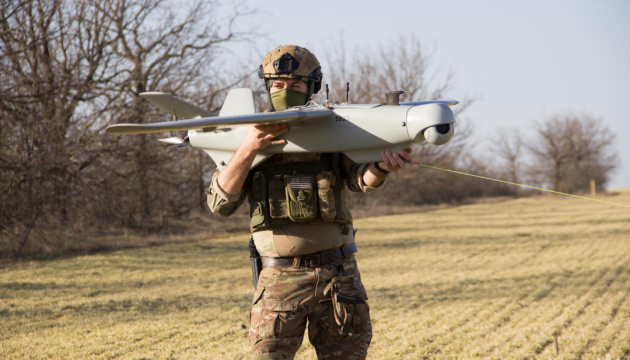
The 426th Separate Drone Battalion of the Ukrainian Navy’s Marine Corps has been effectively conducting operations against enemy forces, even in concealed positions such as basements. Established in November 2025, the unit has been actively engaged in combat missions in southern Ukraine, particularly around Nikopol.
This battalion is recognized for its high-tech capabilities, equipped with advanced drone models including interceptor drones, reconnaissance units like the “Shark” and “Leleka,” and the bomber drone known as “Vampir,” which has been nicknamed “Baba Yaga” by Russian forces.
Personnel from the battalion are adept at operating in both terrestrial and aquatic environments, carrying out a range of tasks. These include artillery fire adjustment, targeting enemy equipment and personnel, and conducting aerial reconnaissance, the results of which are shared with other military units.
A notable feature of the unit is its ability to independently identify and eliminate targets. Recently, they successfully destroyed an enemy boat and six soldiers attempting to land on islands at the Dnipro River mouth, thwarting the enemy’s rotation with the use of FPV drones. Such complex operations require extensive training and preparation.
During a training session for FPV drone operators, a correspondent from Ukrinform observed the rigorous exercises. The training site was bustling with both new recruits and experienced soldiers, all focused on enhancing their skills and sharing knowledge.
One of the instructors, known by the call sign “Rubikon,” is a former entrepreneur from Odesa who volunteered for military service at the onset of the war in early 2022. Initially serving in an infantry battalion, he has since transitioned to the drone unit, where he now trains new operators.
“Rubikon” recounted a particularly harrowing first combat experience in the Avdiivka direction, where his unit faced heavy enemy fire shortly after landing. He emphasized the critical nature of split-second decisions in combat scenarios, recalling how a brief delay saved his life during a shelling incident.
As warfare evolves to become more technology-driven, he recognized the growing significance of drones. His transition to an FPV drone operator has allowed him to achieve significant results, and he is now dedicated to imparting his knowledge to others.
FPV drones are noted for their agility and precision, capable of targeting enemy forces not only in open fields but also in urban settings and concealed locations. However, their effectiveness largely depends on the skill of the operator, who must undergo extensive training to navigate complex environments.
Currently, “Rubikon” is instructing younger colleagues in the operation of FPV drones, with a focus on locating and neutralizing enemy units, particularly those operating their own drones. This has led to the phrase “hunters for hunters” within the unit, as they aim to counter the threat posed by enemy drone operators.
In training, emphasis is placed on developing micro-control skills, essential for maneuvering drones in confined spaces to strike targets accurately. The unit also faces challenges from enemy electronic warfare systems, and they employ various strategies, including the use of fiber-optic connections for drone operations.
The battalion maintains close communication with drone manufacturers to adapt their technology to the evolving battlefield conditions. This collaboration ensures timely responses to challenges encountered during combat operations.
As training progresses, operators are assessed based on their strengths, whether in piloting, technical skills, or navigation, ensuring they are assigned roles that best suit their capabilities.
Among the trainees is a 20-year-old soldier known as “Viking,” who has been serving for over a year. He expressed his commitment to the military and his enjoyment of the work, citing the support he receives from his commanders and peers.
Another operator, “Marcel,” shared his journey from a civilian mechanic to a drone pilot, highlighting the camaraderie among the unit and their shared motivation to protect their homeland.
As the training continues, the soldiers remain focused on enhancing their skills, preparing to confront the challenges posed by enemy forces in a rapidly evolving conflict.
The 426th Separate Drone Battalion of the Ukrainian Navy's Marine Corps is demonstrating significant advancements in drone operations, effectively targeting enemy forces in various environments. With a focus on extensive training and technological adaptation, the unit is preparing to meet the evolving demands of modern warfare.
