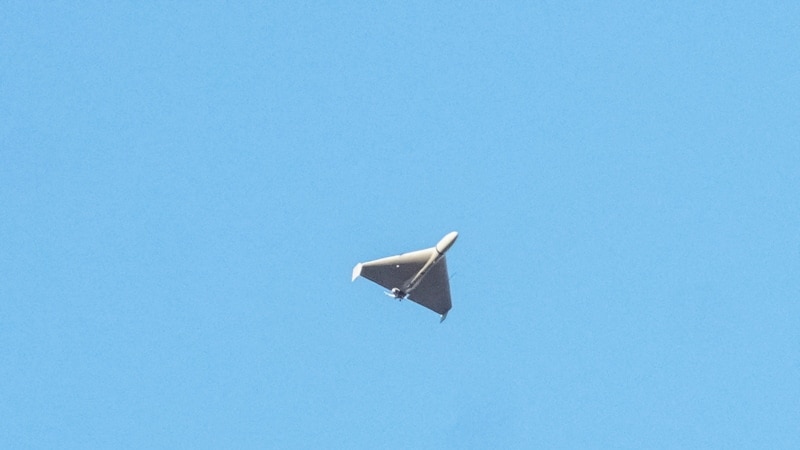
In the early hours of May 27, Russian forces launched a significant attack on Ukraine, deploying 163 strike drones, according to the Ukrainian Air Force.
Preliminary reports indicate that by 8:30 AM, Ukrainian air defense systems had intercepted or suppressed 150 of these drones, which included models such as Shahed, Gerbera, and Italmas. The strikes were reported across various regions, including the north, south, and east of Ukraine.
Despite the defensive efforts, eight drones successfully hit seven locations, with debris falling in four additional areas. Ukrainian military officials have warned that some Russian drones remain active in the airspace.
This attack is part of a broader pattern where Russian military forces consistently target Ukrainian cities and civilian infrastructure using various weapons, including strike drones, missiles, and multiple rocket launchers. Such actions have raised serious concerns among Ukrainian authorities and international organizations, who classify these strikes as war crimes.
Ukrainian officials argue that these assaults are systematically aimed at crippling essential services, including electricity, heating, water supply, communication, and medical assistance, which they characterize as genocidal actions. Legal experts and human rights advocates have noted that the ongoing war has seen a range of crimes that could be classified as genocide under international law.
The definition of genocide, as outlined in the 1948 United Nations Convention on the Prevention and Punishment of the Crime of Genocide, includes acts committed with the intent to destroy, in whole or in part, a national, ethnic, racial, or religious group. This includes killing members of the group, causing serious bodily or mental harm, deliberately inflicting living conditions calculated to bring about the group’s destruction, and imposing measures to prevent births within the group.
Russian leadership has consistently denied that its military is intentionally targeting civilian infrastructure, claiming that its operations are focused on military objectives. However, the evidence of widespread damage to hospitals, schools, and essential services raises questions about the adherence to international humanitarian law.
The international community continues to monitor the situation closely, with calls for accountability and adherence to the principles of human rights and protection of civilians during armed conflict.
The recent drone strikes by Russian forces on Ukraine highlight the ongoing conflict's severe impact on civilian infrastructure. Ukrainian officials classify these actions as war crimes, raising concerns about potential genocide under international law.