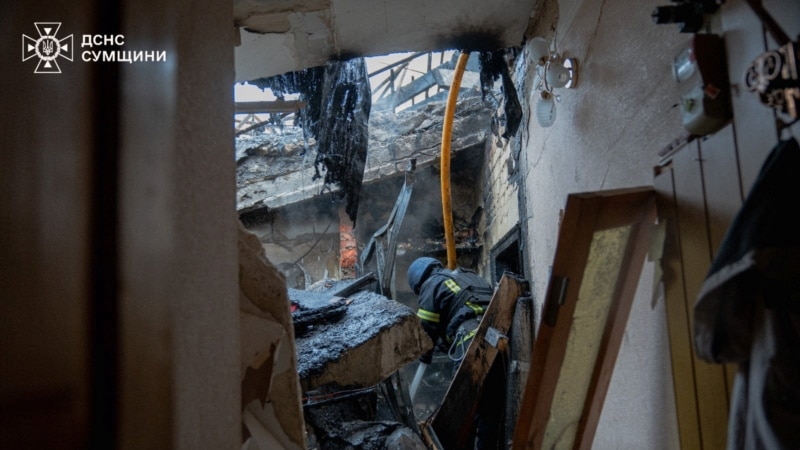
In the early hours of June 17, Russian military forces launched a drone strike on an equestrian school in the Sumy region of Ukraine, resulting in the deaths of several horses, according to Oleg Grygorov, the head of the regional military administration.
Grygorov stated that the attack was deliberately aimed at a civilian facility where children regularly participated in equestrian activities. Preliminary reports indicate that no staff members were injured, but the strike directly hit a stable, leading to the loss of equine lives.
This incident is part of a broader pattern of assaults by Russian forces on Ukrainian cities and civilian infrastructure, employing various types of weaponry, including drones, missiles, and multiple rocket launchers.
Ukrainian authorities and international organizations have classified these attacks as war crimes, emphasizing their targeted nature. The strikes on essential services and healthcare facilities aim to deprive civilians of electricity, heating, water supply, communication, and medical assistance, which some legal experts and human rights advocates argue may constitute acts of genocide.
Legal scholars and genocide researchers assert that the ongoing conflict has seen Russia commit numerous actions that could be defined as genocidal. These include:
- Public declarations by Russian officials denying the existence of Ukrainians as a distinct ethnic group.
- Incitement to violence against Ukrainians.
- Deliberate targeting of vital infrastructure to disrupt everyday life.
- Persecution of pro-Ukrainian individuals in occupied territories.
- Attacks on educators and cultural figures to undermine Ukrainian identity.
- Efforts to indoctrinate children in occupied areas to alter their national identity.
- Forced deportation of children to Russia to change their cultural identity.
- Destruction of Ukrainian literature and cultural artifacts.
The 1948 United Nations Convention on the Prevention and Punishment of the Crime of Genocide obligates its 149 signatory nations to prevent and punish acts of genocide both in wartime and peacetime. The Convention defines genocide as actions intended to destroy, in whole or in part, a national, ethnic, racial, or religious group.
Signs of genocide include the killing of group members, inflicting serious bodily or mental harm, deliberately creating living conditions aimed at destroying the group, and public incitement to commit such acts.
Despite these allegations, Russian leadership continues to deny that its military targets civilian infrastructure, claiming that its operations are focused on military objectives.
A recent drone strike by Russian forces on an equestrian school in Ukraine's Sumy region has resulted in the deaths of horses, raising concerns about targeted attacks on civilian infrastructure. Ukrainian authorities classify such actions as war crimes, with implications of genocide due to the systematic targeting of essential services and cultural identity.