Scientists are harnessing the principles of evolution to create advanced robots capable of addressing some of humanity’s most pressing challenges. From pollination to disaster response, these innovations draw inspiration from the natural world.
One notable development is the RoboBee, a tiny flying drone designed to mimic the role of natural pollinators. As global populations of bees and other pollinators decline, the RoboBee project aims to provide a solution for agricultural pollination, environmental monitoring, and search missions in confined spaces. Currently in testing phases, this technology could play a critical role in food production.
At the École Polytechnique Fédérale de Lausanne (EPFL), researchers have created a soft robotic arm that takes cues from the flexibility of an elephant’s trunk and an octopus’s tentacle. This innovative design features a specially modified spring, known as a “cut helix,” that can adjust its stiffness, allowing the arm to handle fragile objects safely. This capability makes it suitable for direct interaction with humans and delicate tasks.
Engineers have also developed climbing robots inspired by geckos, which can traverse smooth vertical surfaces without falling. These robots are equipped with adhesive materials that replicate the microscopic structures found on gecko feet. Their ability to inspect and repair skyscrapers, bridges, and complex infrastructure could revolutionize maintenance practices in hard-to-reach areas.
In Spain, researchers at the CIRTESU center have designed a robotic fish for aquaculture management. Tested in the port of Castellón, this robot mimics the movement of real fish, making it more stable and energy-efficient than traditional underwater drones. Equipped with sonar and cameras, it inspects fish farm nets for damage and algae growth.
The Eelume robot addresses the costly and risky task of servicing oil platforms and underwater pipelines by emulating the smooth movements of eels and sea snakes. Its long, jointed body allows it to navigate complex underwater structures, making it effective in environments where larger machines struggle. The Eelume can operate underwater for extended periods.
Flexible segmented snake robots are being deployed in disaster scenarios where buildings have collapsed due to earthquakes or explosions. These robots can maneuver through narrow gaps and debris that are impassable for humans or wheeled vehicles, enabling rescue teams to locate survivors quickly and safely.
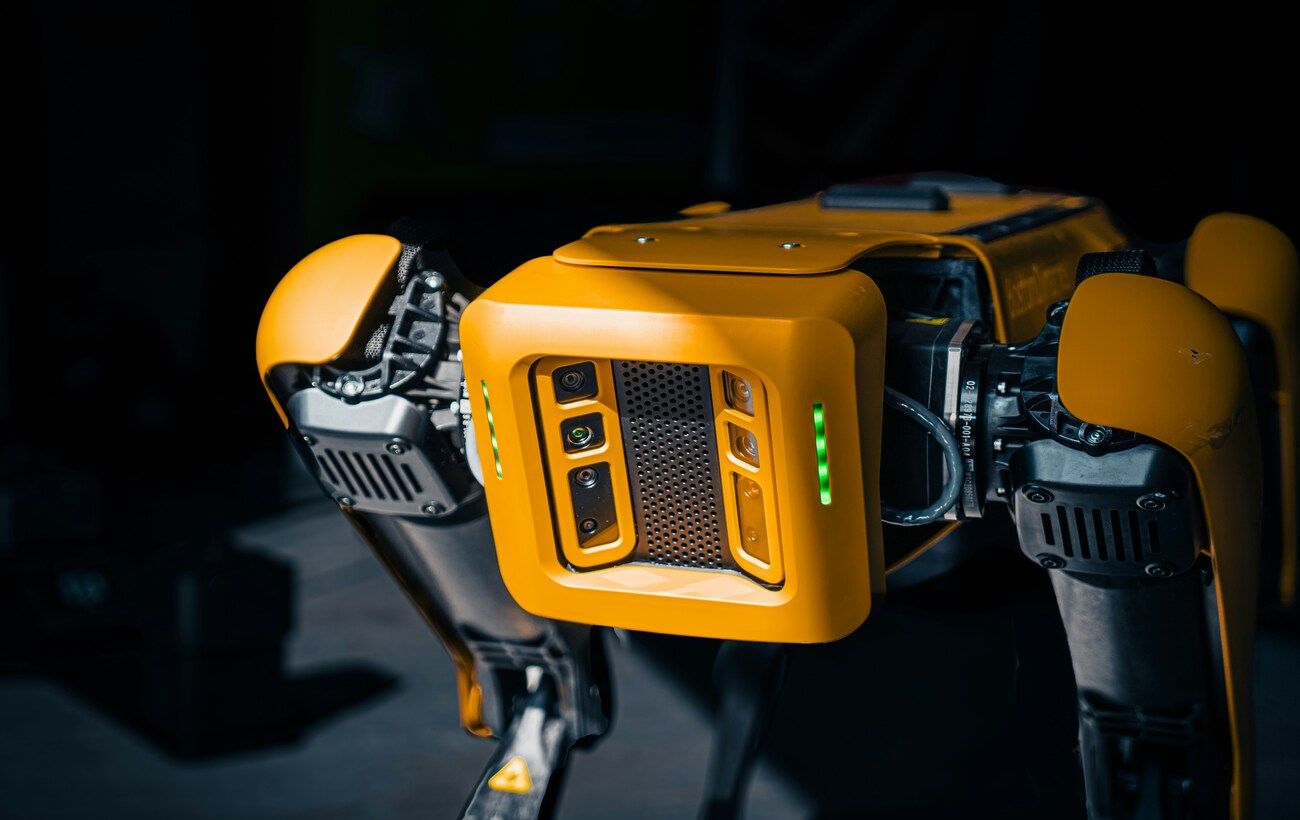
Lastly, Boston Dynamics’ Spot robot dog stands out as one of the most recognized ground-based bio-robots. Capable of navigating stairs and rough terrain, Spot is designed to operate in hazardous environments such as construction sites and power plants, gathering critical data in real-time while ensuring the safety of human workers.
Innovative robots inspired by nature are emerging to solve critical challenges in agriculture, disaster response, and infrastructure maintenance. These advancements showcase the potential of biomimicry in technology.