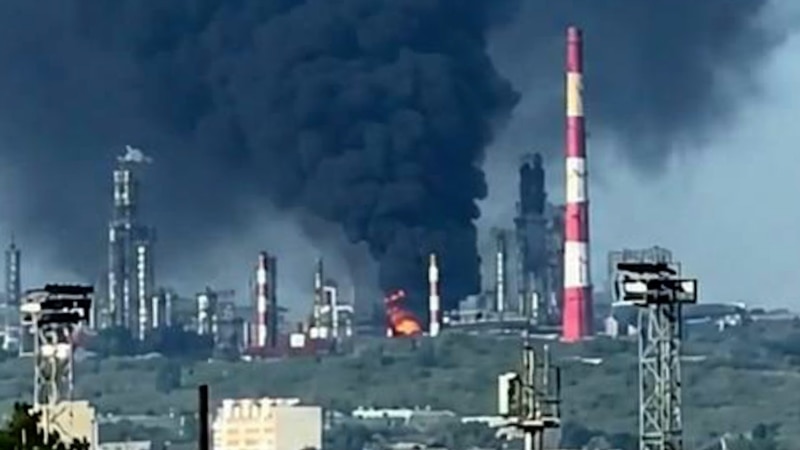
In May, Ukrainian drones launched attacks on Russian oil facilities at least 30 times, marking the highest frequency of such operations since the onset of the conflict, according to a report by Bloomberg.
The strikes targeted 16 oil refineries, including eight of the ten largest in Russia. Some facilities were hit multiple times to hinder Russia’s ability to quickly restore production and capitalize on rising oil prices amid its ongoing conflict with Iran.
As a result of these attacks, Moscow has implemented a ban on the export of aviation fuel, further exacerbating an already declining refining capacity, which has reached its lowest level in 16 years. In May, the volume of crude oil processed fell to 4.58 million barrels per day, a 13% decrease compared to the previous year, according to estimates from OilX analysts.
Analyst Serhiy Vakulenko noted that Ukraine has expanded its list of targets, including secondary facilities, terminals, and pumping stations, which are more challenging to restore due to existing sanctions.
Despite the escalation in drone strikes, experts assert that Russia is not facing an immediate fuel crisis. Retail gasoline prices have risen slightly, by just over 2 rubles since the beginning of the year, and restrictions on sales have only been implemented in Crimea.
Since the beginning of Russia’s full-scale invasion, various sites within Russian territory have been subjected to airstrikes. The Ukrainian General Staff has confirmed most of these attacks, stating that Ukrainian Defense Forces are systematically executing measures aimed at degrading the combat capabilities of Russian occupying forces and compelling Russia to cease its armed aggression against Ukraine.
Ukrainian drone attacks on Russian oil infrastructure have surged in frequency, prompting Moscow to restrict aviation fuel exports. The refining capacity has dropped significantly, although experts suggest that a fuel crisis is not imminent.
Source: Bloomberg