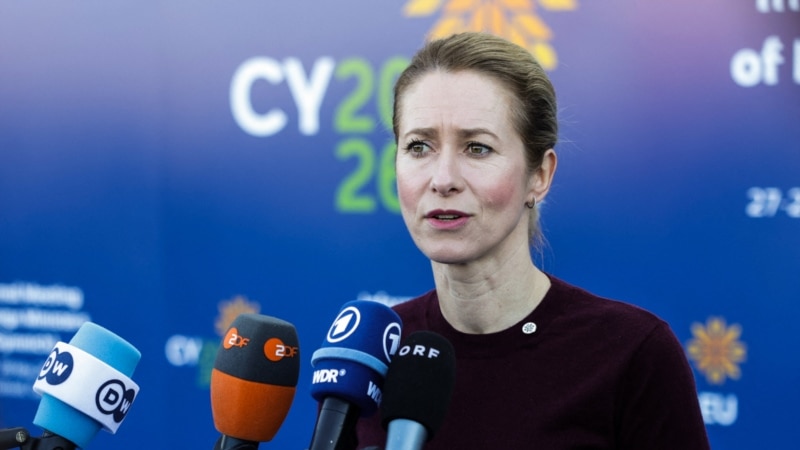
Kaja Kallas, the European Union’s chief diplomat, has emphasized the necessity of encouraging direct negotiations between Ukraine and Russia to facilitate an end to the ongoing war. Speaking at a press conference following an informal meeting of foreign ministers in Limassol on May 28, Kallas stated that an unconditional ceasefire is essential for any peace talks to proceed.
“It is crucial that we push Ukraine and Russia to engage in direct dialogue, as there are numerous issues that only they can resolve themselves,” Kallas remarked. She acknowledged the potential role of countries engaging in shuttle diplomacy but reiterated that the two nations must ultimately negotiate their own terms.
Kallas noted that Europe cannot act as a neutral mediator, given its alignment with Ukraine. She stated, “If we look at Russia’s demands, they essentially seek to tilt the scales in their favor, as all concessions thus far have come from Ukraine. There must also be concessions from Russia.” She stressed the EU’s commitment to supporting Ukraine’s interests, asserting that Europe is inherently part of the broader context in which Ukraine operates.
During the meeting, Kallas highlighted that all EU efforts should complement those of the United States. “We are not replacing the United States but addressing issues they have not tackled in these discussions,” she explained.
Despite recent developments favoring Ukraine, Kallas expressed concern over Russia’s apparent lack of genuine interest in achieving peace. She indicated that discussions in Limassol included potential demands on Russia for future peace negotiations.
“We had in-depth discussions about what concessions Europe should demand from Moscow and where our red lines lie,” Kallas said. She outlined several expectations, including the cessation of Russian sabotage operations, cyberattacks, electoral interference, and violations of airspace across Europe.
Kallas underscored that limiting Ukraine’s military capabilities while simultaneously rearming Russia poses a direct threat to European security. She asserted that any restrictions on Ukraine must also apply to Russia, stating, “There can be no legal recognition of occupied Ukrainian territories, and accountability must be ensured.” She emphasized that any peace agreement must fully acknowledge Ukraine’s sovereignty and independence.
Furthermore, she pointed out the broader security concerns regarding the presence of Russian troops in countries like Georgia and Moldova, stating that it is in Europe’s interest for those forces to be withdrawn.
The ministers also discussed strategies to enhance global pressure on Russia. Kallas noted that Europe needs to leverage its influence more effectively concerning trade, investment, market access, and partnerships. She mentioned that new sanctions against Russia are being prepared to intensify pressure and compel Moscow to engage meaningfully in negotiations.
Recent escalations in the Middle East have postponed trilateral talks involving Ukraine, the U.S., and Russia, which were initially scheduled for January and February. Sources from the Financial Times indicate that both Moscow and Kyiv view the prospects for resuming U.S.-mediated peace talks as slim, even after the conclusion of the conflict in the Middle East.
According to these sources, neither side currently sees value in continuing negotiations. Ukraine reportedly believes that discussions reached an impasse in February after the last round with Russia and is frustrated by Washington’s inability to exert pressure on President Putin.
Officially, Russian authorities have positioned the demand for the transfer of the entire Donbas region as a key condition for a peace settlement, suggesting that such agreement was implied during a meeting between President Biden and President Putin in Anchorage last year.
Since last year, Ukraine has proposed halting hostilities along the front lines, which would allow a significant portion of the Donbas to remain under Russian control, though it does not intend to legally recognize this arrangement.
U.S. Secretary of State Marco Rubio stated on May 22 that Washington remains prepared to continue mediating between Russia and Ukraine, although negotiations are currently stalled. He also noted that previous discussions have not yielded productive outcomes.
Kaja Kallas, the EU's chief diplomat, has called for direct negotiations between Ukraine and Russia to end the war, emphasizing the need for an unconditional ceasefire and outlining Europe's position on concessions. Despite recent gains for Ukraine, concerns remain regarding Russia's commitment to peace and the effectiveness of ongoing diplomatic efforts.