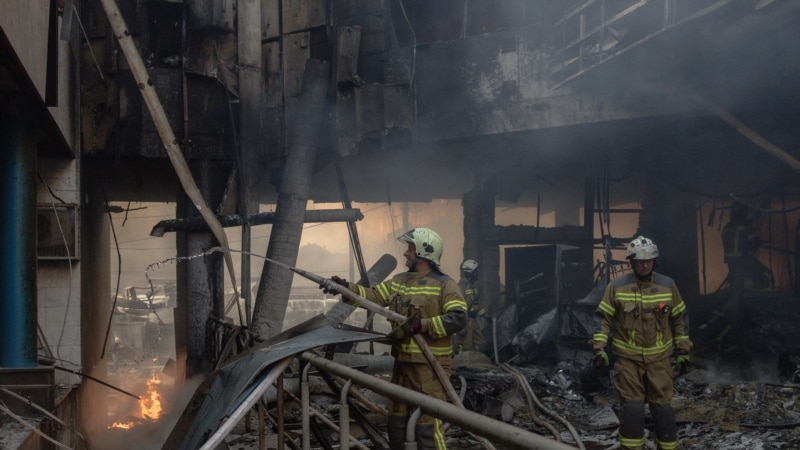
On the night of May 24, Russian forces launched a large-scale attack on Ukraine, leading to the deaths of two individuals in the Bucha and Obukhiv districts, while nine others sustained injuries, including an infant. The head of the Kyiv regional military administration, Mykola Kalashnyk, confirmed these details.
Among the injured, five were reported in the Fastiv district, with two women requiring hospitalization. Significant damage occurred in various areas, including a garage cooperative and several buildings in the Bilocherkivskyi district, as well as 11 private homes in the Brovary district. The Vyshhorod district also reported damage to a multi-story building, a private residence, and a vehicle.
In addition to the casualties in Kyiv, the attack impacted infrastructure throughout the region. The Bucha district saw damage to a business, storage facilities, an educational institution, a store, three apartment buildings, eight private homes, and two vehicles. In the Obukhiv district, three private homes were affected, while the Boryspil district reported damage to two private residences and associated structures.
Earlier, on the evening of May 23, Ukrainian President Volodymyr Zelensky urged citizens to remain vigilant regarding air raid alerts, citing indications of a potential large-scale strike by Russian forces. He mentioned intelligence reports suggesting preparations for an attack involving the use of the ‘Oreshnik’ system.
Russian military operations continue to target Ukrainian cities and civilian infrastructure using a variety of weaponry, including drones, missiles, and rocket systems. Ukrainian authorities and international organizations classify these strikes as war crimes, emphasizing their deliberate nature.
Attacks on essential services and healthcare facilities are viewed as efforts to deprive civilians of electricity, heating, water supply, communication, medical assistance, and other critical living conditions. Legal experts and human rights advocates argue that such actions may constitute genocidal behavior, given the systematic targeting of the Ukrainian population.
The 1948 UN Convention on the Prevention and Punishment of the Crime of Genocide obligates its 149 member states to prevent and punish acts of genocide during both wartime and peacetime. The convention defines genocide as actions intended to destroy, in whole or in part, a national, ethnic, racial, or religious group.
Indicators of genocide include the killing of group members, causing serious bodily or mental harm, deliberately inflicting conditions aimed at the group’s destruction, preventing births, and forcibly transferring children from one group to another.
Despite the evidence, Russian leadership denies that its military is intentionally targeting civilian infrastructure or causing harm to non-combatants, maintaining that its operations are legitimate.
A recent Russian attack on Ukraine resulted in multiple casualties and extensive damage across the Kyiv region. Authorities report significant destruction to civilian infrastructure, raising concerns over potential war crimes.