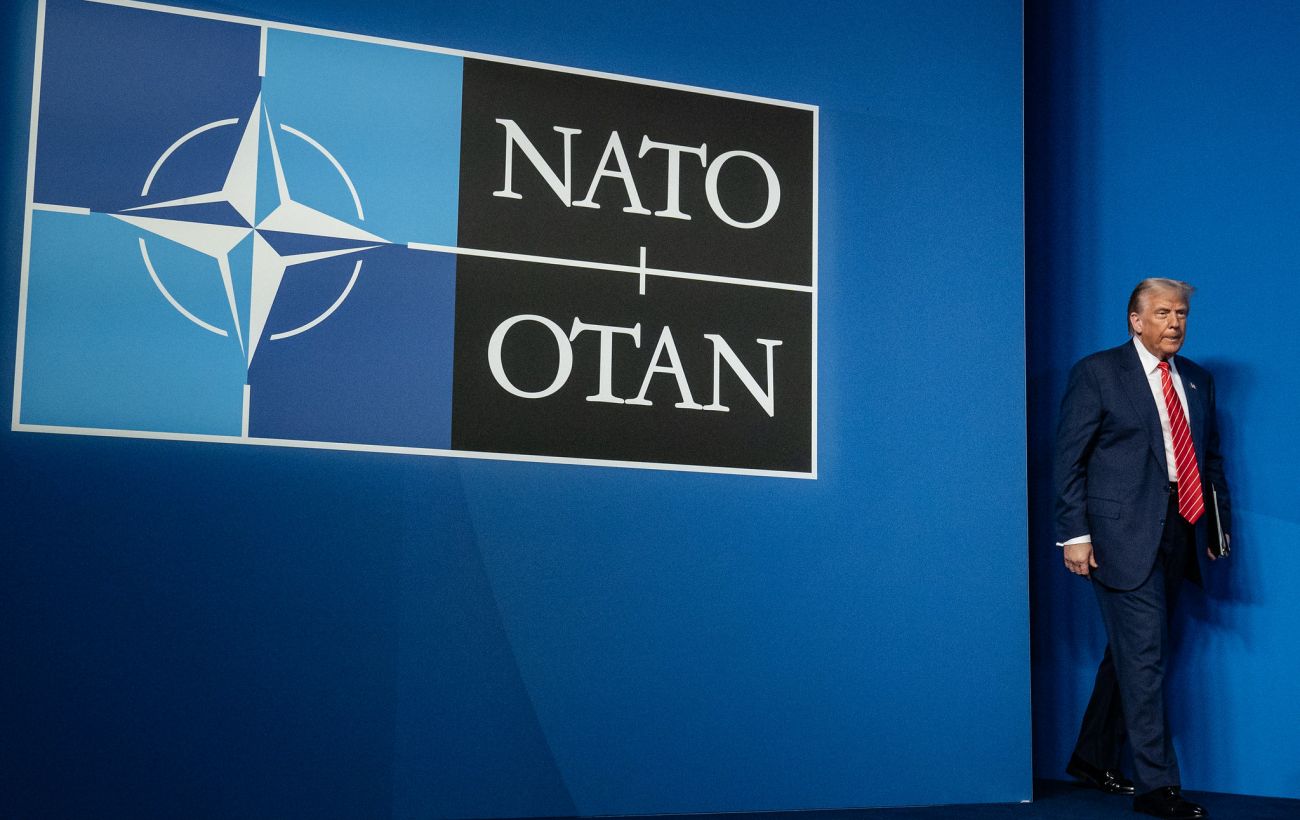
At the GLOBSEC forum in Prague, European leaders convened to address the viability of NATO in light of recent uncertainties surrounding U.S. military commitments under President Trump. A central concern is whether European nations can continue to rely on American military support.
The discussions were prompted by Trump’s unexpected reaction to the planned deployment of U.S. troops in Poland. U.S. Defense Secretary Pete Hegseth abruptly canceled the deployment of 4,000 soldiers, a move followed by Trump’s conflicting statements on social media.
According to a diplomatic cable obtained by POLITICO, the mixed signals from Washington caused significant political and psychological shock in Poland. Polish officials described the communications from the U.S. as chaotic. Marcin Przydacz, the Polish Secretary of State, emphasized that Poland aims to meet defense spending targets of 5% of its GDP.
Historically, Poland has aligned closely with the U.S., investing billions in American military equipment and refraining from criticizing Washington’s actions. However, it has not received stable guarantees from the U.S.
Czech President Petr Pavel noted that the issue lies not only in troop withdrawals but also in the lack of communication. He pointed out that prior changes in troop levels had been coordinated with NATO allies, whereas the decision regarding Poland was made without such collaboration.
The forum also addressed European defense procurement rules. Swedish Defense Minister Paul Jonsson cautioned against implementing a “European preference” in these regulations, stating, “Sometimes it may be weapons from Europeans, sometimes from Americans, or elsewhere in Asia,” stressing that the primary goal is to ensure military readiness.
Other nations are seeking a balance between domestic production and cooperation with the U.S. Romanian Foreign Minister Oana Călin highlighted the importance of localizing production and investing in domestic jobs while maintaining collaboration with Washington. Romania’s procurement plan includes over $2 billion in American equipment.
Germany is working with partners to develop a new defense capability for Europe, as noted by Foreign Minister Johann Wadephul. He acknowledged that U.S. focus is increasingly shifting towards China and the Indo-Pacific region.
As the NATO summit in Ankara approaches in July, discussions on aligning the internal interests of European countries with the need to retain U.S. involvement in the alliance are expected to be a key topic.
It is worth noting that in mid-May, the U.S. military unexpectedly canceled the deployment of over 4,000 soldiers from the 2nd Armored Brigade of the 1st Cavalry Division to Poland, despite some troops already being in the country. The Pentagon maintained that the decision was not abrupt but rather the result of a comprehensive process linked to the U.S. Army’s budget constraints.
Subsequently, Trump intervened, questioning Hegseth during a phone call about the cancellation and asserting that the U.S. should not treat Poland poorly as an ally. Shortly thereafter, Trump announced plans to send 5,000 troops to Poland.
European leaders are grappling with NATO's future amidst uncertainty over U.S. military commitments, particularly following President Trump's mixed signals regarding troop deployments in Poland. Discussions at the GLOBSEC forum highlighted the need for improved communication and a balanced approach to defense procurement within Europe.
Source: POLITICO