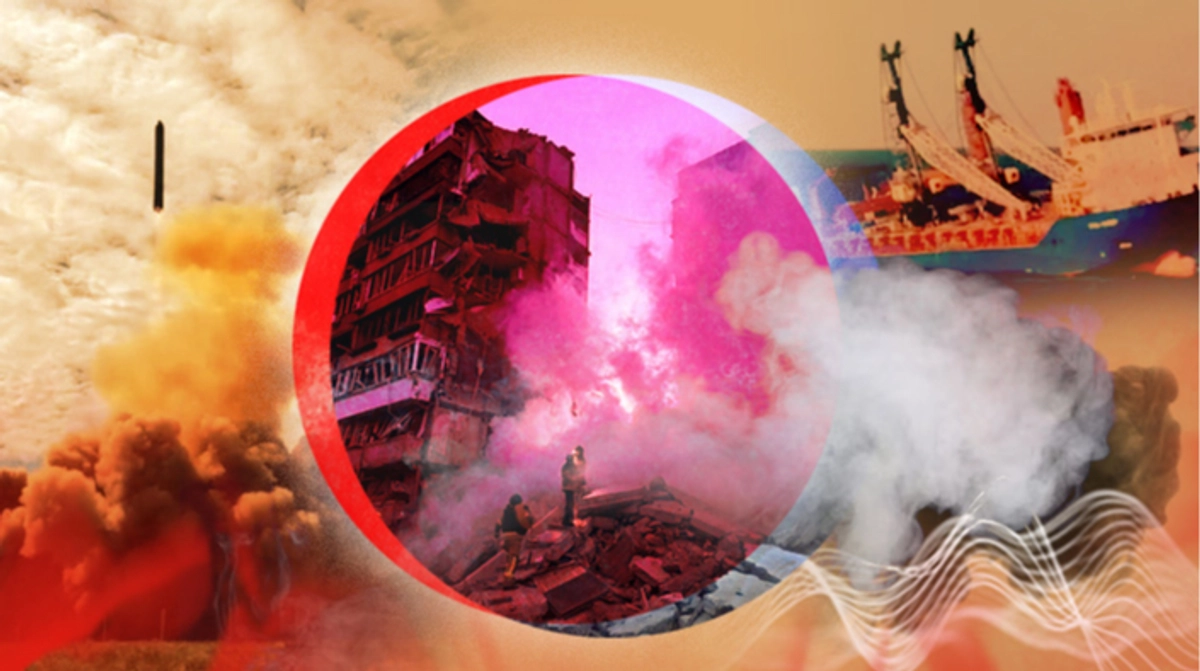
In the past week, Ukraine has faced a significant escalation in military attacks from Russia, raising concerns about the ongoing conflict. This surge in hostilities coincides with statements from Russian President Vladimir Putin regarding the status of the war and potential diplomatic overtures.
On a recent occasion, Russian forces launched a large-scale assault on Kyiv, employing a variety of missile systems. Ukrainian air defense systems reportedly intercepted a substantial number of these missiles, showcasing their ongoing efforts to protect urban centers. This attack marks a continuation of Russia’s strategy to exert pressure on Ukraine, particularly as the conflict enters a new phase.
Analysts suggest that the Russian military’s current capabilities may not suffice to achieve its objectives in eastern Ukraine by the fall, despite previous assertions from the Kremlin. The situation on the front lines remains fluid, with both sides engaged in intense skirmishes. Ukrainian forces have demonstrated resilience, but the challenges posed by entrenched Russian positions complicate the battlefield dynamics.
Amidst these military developments, Putin has made statements indicating that he believes the war is nearing its conclusion. This assertion has raised eyebrows among observers, particularly given the ongoing violence and lack of a clear resolution. Additionally, reports have emerged about Putin’s intention to invite former German Chancellor Gerhard Schröder for discussions, which may signal an interest in exploring diplomatic avenues.
In a related context, Russia has conducted tests of its Sarmat intercontinental ballistic missile, a move that underscores its military capabilities and strategic intentions. This missile is designed to enhance Russia’s nuclear deterrent and has been a focal point in discussions about global security.
Furthermore, there have been reports regarding an incident involving the Russian vessel Ursa Major, which was attacked in December 2024. Speculation suggests that this operation may have been carried out by a Western nation, highlighting the complex geopolitical landscape surrounding the conflict.
In a recent podcast episode, Fedor Popadyuk interviewed Yevhen Buderatsky, the deputy editor of Ukrainian Pravda, to delve deeper into these developments. The conversation provided insights into the current state of the war and the implications of recent military actions.
The recent week has seen intensified military actions in Ukraine, particularly with large-scale attacks on Kyiv. Amidst these developments, President Putin's remarks about the war's conclusion and ongoing missile tests highlight the complex dynamics of the conflict.