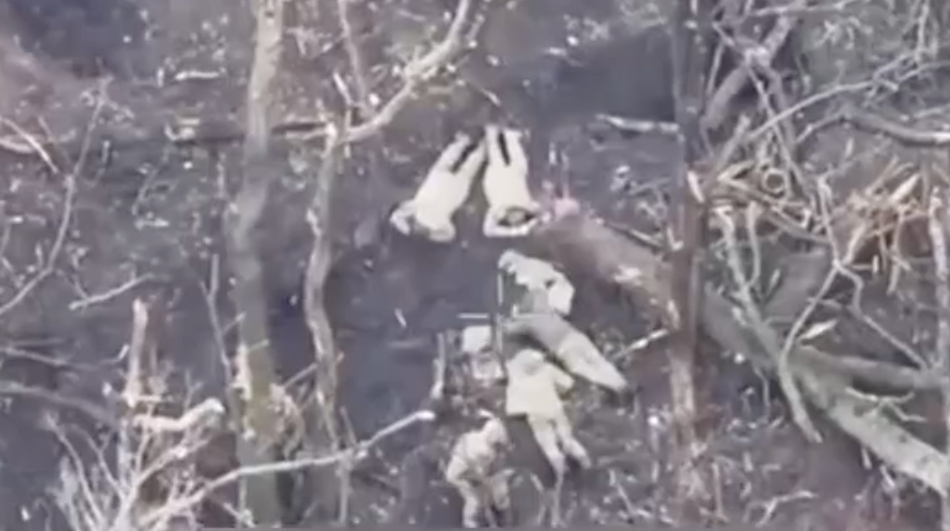
Recent reports indicate that Russian military personnel executed four Ukrainian prisoners of war (POWs) near the settlement of Veterynarne in the Kharkiv region. This incident has raised significant concerns regarding adherence to the rules of warfare.
According to analysts from DeepState, video footage has surfaced showing the execution of the Ukrainian soldiers, who were reportedly lying face down on the ground. The actions have been described as a blatant violation of established wartime conventions.
“The enemy has once again breached the customs and rules of warfare—four Ukrainian POWs were shot near Veterynarne in Kharkiv,” a statement from DeepState noted.
Details surrounding the incident suggest that Russian forces had previously engaged in combat with Ukrainian troops, leading to the capture of these soldiers. Reports indicate that the four servicemen belonged to a mechanized brigade of the Ukrainian Armed Forces.
This execution occurred shortly after Russian President Vladimir Putin announced a so-called “Easter ceasefire,” which was set to commence at 16:00 on April 11 and last until the end of the day on April 12. However, contrary to these declarations, Russian military operations continued unabated.
On the evening of April 11, DeepState analysts reported that Russian forces employed FPV drones to target an evacuation group containing injured Ukrainians near Huliaipole in the Zaporizhzhia region. Furthermore, the General Staff of the Ukrainian Armed Forces documented 469 violations of the ceasefire by Russian forces after 16:00, which included 22 assault actions, 153 artillery strikes, and the deployment of nearly 300 attack drones against Ukrainian positions.
The ongoing conflict has raised serious questions about the treatment of POWs and the conduct of military operations, particularly in light of international humanitarian law.
The execution of four Ukrainian POWs by Russian forces near Kharkiv highlights ongoing violations of wartime conduct amid claims of a ceasefire. This incident raises serious concerns about the treatment of captured soldiers and adherence to international law.