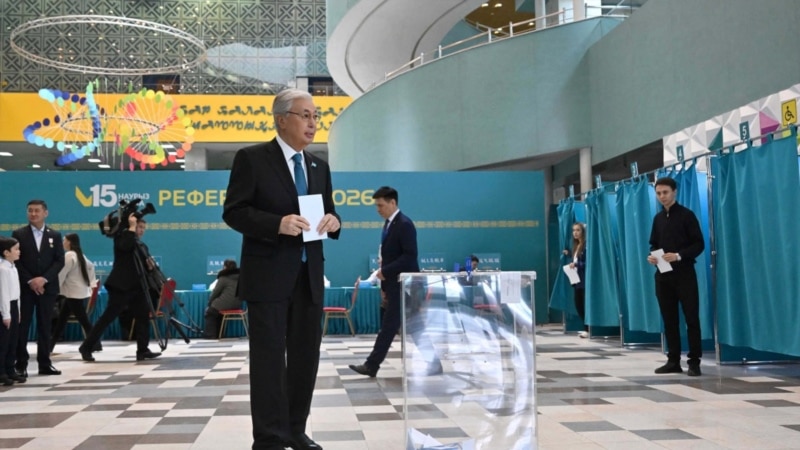
Initial exit poll results from Kazakhstan’s constitutional referendum indicate significant backing for proposed amendments. According to the Eurasian Integration Institute, approximately 86.7% of voters supported the new constitution, while the Astana Socius research institute reported a slightly higher figure of 87.4%.
A major change in the proposed constitution is the transition from a bicameral to a unicameral parliament, which is suggested to be named the Kuralty. This new legislative body would consist of 145 members elected for five-year terms through a proportional representation system based on party lists.
Currently, the lower house of parliament, the Mazhilis, is elected through a mixed system allowing both parties and independent candidates. The government of Astana claims these reforms aim to enhance representation and improve the professionalism of lawmakers. However, critics argue that non-party members will be excluded from running for parliament, and they highlight ongoing difficulties for opposition movements in registering political parties with the Ministry of Justice.
The proposed changes also expand presidential powers. The president would gain the authority to appoint the prosecutor general, heads of the Constitutional and Supreme Courts, the National Bank, and the National Security Committee independently, without requiring Senate approval.
Additionally, the document introduces the position of vice president, who would be appointed by the president with Kuralty’s consent. In the event of the president’s early termination of duties or death, the vice president would assume the presidency, a shift from the current system where the Senate speaker takes over.
The president would also have the power to dissolve the Kuralty if parliament fails to approve presidential nominations for vice president, prime minister, or speaker on two occasions. During parliamentary recess, the president would be authorized to issue decrees with the force of law.
Critics of the proposed reforms have faced harassment, with police reportedly intervening on social media to demand the removal of critical posts. Several individuals have been administratively detained for allegedly spreading false information.
Kazakhstan's recent referendum shows overwhelming support for constitutional changes, including a shift to a unicameral parliament and expanded presidential powers. Critics, however, raise concerns over political representation and state repression of dissent.
Source: Radio Azattyq