Recent military confrontations in the Strait of Hormuz have raised questions about the status of a ceasefire between the United States and Iran. On Monday, both nations engaged in hostilities, prompting U.S. President Donald Trump to refrain from confirming whether the ceasefire remains intact.
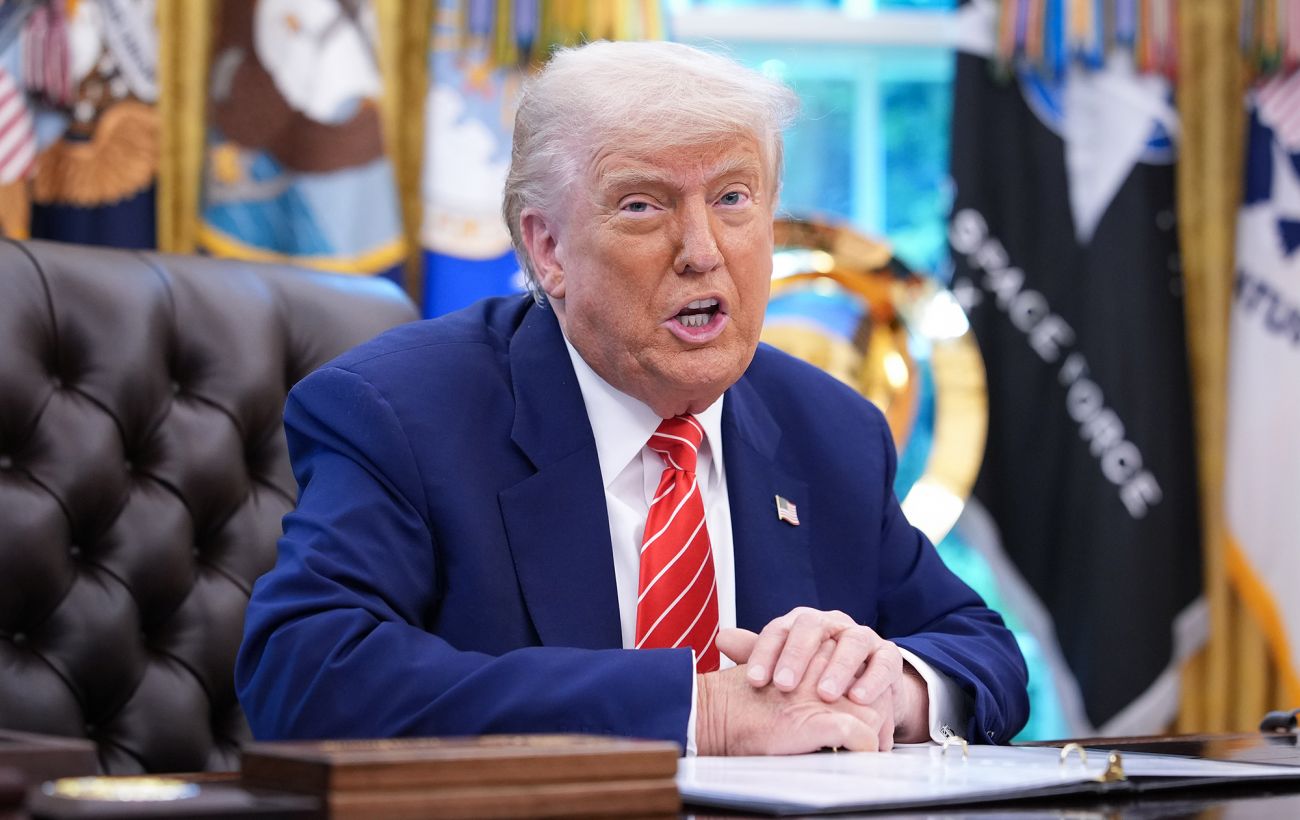
During an interview with radio host Hugh Hewitt, Trump was asked if the ceasefire had ended, to which he responded, “Well, I can’t tell you that. If I answered that question, you would say that this person is not smart enough to be president.” This statement reflects the heightened tensions surrounding U.S.-Iran relations.
Earlier the same day, in an interview with Fox News, Trump issued a stark warning to Iranian forces, stating that they would be “wiped off the face of the earth” if they attempted to attack American vessels in the Strait or the Persian Gulf. He later claimed that military operations against Iran were, in essence, concluded.
On the same day, Reuters reported that both countries had initiated new attacks in the Persian Gulf, engaging in maritime blockades that undermined the fragile ceasefire. This escalation included missile and drone strikes following Trump’s announcement of Operation Freedom, which aimed to ensure safe passage for vessels in the Strait that were not involved in the Middle Eastern conflict.
Reports indicated that several commercial ships in the Persian Gulf experienced explosions or fires as the day progressed. The U.S. military claimed to have destroyed six small Iranian military boats, while an oil port in the UAE was set ablaze due to an Israeli attack, which also houses a significant American military base.
This marked the first noticeable military engagement since the ceasefire was announced in April, intended to facilitate access through the Strait of Hormuz. However, Iranian officials have stated that any reopening of the Strait would require their approval.
In response to the recent clashes, Iranian Foreign Minister Abbas Araghchi asserted that the events of Monday demonstrated the absence of a military solution to the crisis. He indicated that peace negotiations mediated by Pakistan were ongoing and cautioned the U.S. and UAE against becoming entangled in conflicts with adversaries. Araghchi described Operation Freedom as a “Deadlock Project” in a social media post.
Despite the declared ceasefire, negotiations to finalize an end to hostilities have yet to yield a comprehensive agreement. At the end of April, the U.S. received a proposal from Iran that included reopening the Strait of Hormuz and halting military actions, but deferred discussions on Iran’s nuclear program to a later date.
On May 3, Trump stated that he had reviewed Tehran’s proposal but deemed it “unacceptable,” without providing specifics on his objections. Shortly thereafter, reports emerged suggesting that Iran might be willing to bring the nuclear issue to the negotiating table, although it remains unclear whether this information reached U.S. officials.
The recent military exchanges in the Strait of Hormuz have intensified scrutiny on the status of the U.S.-Iran ceasefire. As both nations engage in hostilities, diplomatic efforts remain stalled, with significant implications for regional stability.
Source: Reuters