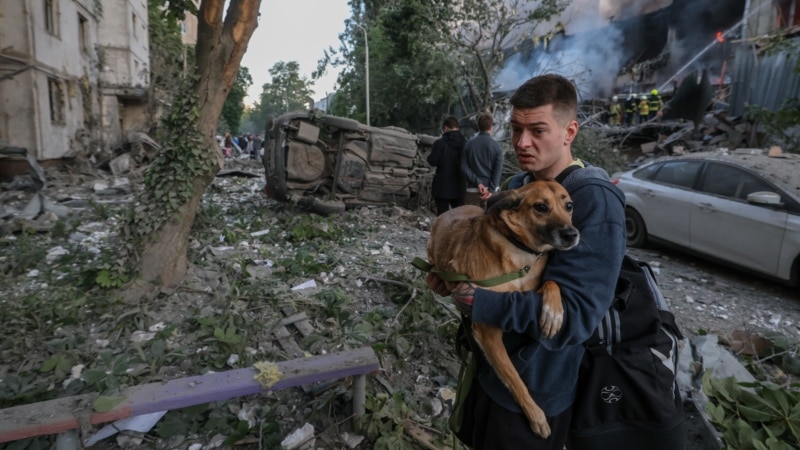
The UN Humanitarian Coordinator for Ukraine, Matthias Schmale, has strongly criticized a series of intense Russian strikes targeting Dnipro, Kyiv, and Kharkiv, which resulted in civilian casualties. He urged Russia to halt the escalation of these attacks.
On the night of June 2, Ukraine faced a significant assault, marking the third such incident in three weeks. Schmale’s statement highlighted the urgent need for Russia to cease its aggressive rhetoric and military actions to pave the way for a just peace.
According to the Ukrainian Air Force, Russia launched 73 missiles and 656 drones during the night, with 40 missiles and 602 drones reportedly intercepted. The primary focus of the strikes was Kyiv, but other regions, including Dnipro, Kharkiv, Zaporizhzhia, and Poltava, also suffered attacks.
In Dnipro, a four-story residential building was partially destroyed, leading to 16 fatalities and 42 injuries. Kyiv reported six deaths and at least 81 injuries due to the strikes, which hit residential areas, educational institutions, and healthcare facilities.
The Russian Ministry of Defense claimed responsibility for a “massive strike” aimed at defense industry facilities and fuel and transportation infrastructure in Ukraine. They asserted that all designated targets were successfully hit.
Russian forces have been consistently attacking Ukrainian cities and civilian infrastructure using various weapons, including drones and missiles. Ukrainian authorities and international organizations classify these strikes as war crimes, emphasizing their targeted nature.
Attacks on essential services and healthcare facilities, aimed at depriving civilians of electricity, heat, water, communication, and medical assistance, have been described as indicative of genocidal actions. Legal experts and human rights advocates assert that these actions fall under the definition of genocide, as outlined in the 1948 UN Convention on the Prevention and Punishment of the Crime of Genocide.
The Convention obligates its 149 member states to prevent and punish acts of genocide during both wartime and peacetime. It defines genocide as acts committed with the intent to destroy, in whole or in part, a national, ethnic, racial, or religious group.
Indicators of genocide include the killing of group members, causing serious bodily or mental harm, deliberately inflicting living conditions intended to destroy a group, and public incitement to commit such acts.
Russian leadership denies that its military is intentionally targeting civilian infrastructure, despite evidence of strikes that have resulted in civilian deaths and the destruction of hospitals, schools, and essential services.
The UN Humanitarian Coordinator condemned recent Russian strikes on Ukrainian cities, resulting in civilian casualties. He called for an end to the escalation of attacks, which have been classified as war crimes by Ukrainian authorities and international organizations.