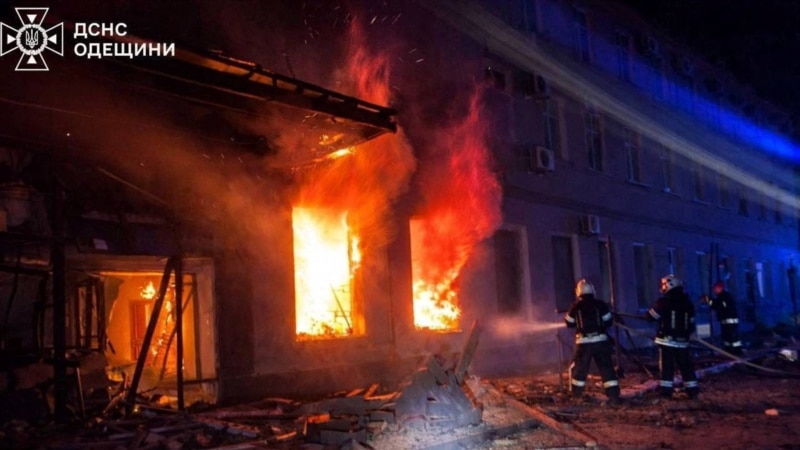
In southern Ukraine’s Odesa region, approximately 4,000 residents lost electricity following damage to power lines caused by a Russian strike on the night of May 29, according to regional military administration chief Oleg Kiper.
Kiper also reported that three commercial vessels flying flags from Vanuatu, the Comoros, and Panama were struck by Russian drones while navigating a Ukrainian maritime corridor. Fires broke out on the ships, but crew members managed to extinguish them. Two foreign crew members sustained injuries, but they did not require hospitalization and received on-site assistance.
Meanwhile, the Ministry of Energy indicated that ongoing military actions and shelling of energy facilities resulted in power outages for consumers in Dnipropetrovsk, Zaporizhzhia, Odesa, Sumy, Kherson, and Chernihiv regions on the same day.
Earlier, the Ukrainian Navy reported that Russian forces targeted a Turkish vessel en route to Turkey from a port in Odesa, injuring two crew members.
The Ukrainian Air Force stated that on the night of May 29, Russian forces launched an attack using Iskander-M ballistic missiles and 232 strike drones, with air defense systems neutralizing 217 of these threats. Reports indicated that there were hits from a ballistic missile and 14 drones across 14 locations, with debris falling in seven areas.
Romanian authorities confirmed that during the Russian assault, one drone entered Romanian airspace and crashed into a residential building in the border city of Galați, resulting in a fire and injuries to two individuals.
Russian military forces have consistently targeted Ukrainian cities and civilian infrastructure using various types of weaponry, including strike drones, missiles, and multiple rocket launchers. Ukrainian officials and international organizations classify these attacks as war crimes, emphasizing their deliberate nature.
Attacks on essential services and healthcare facilities aimed at depriving civilians of electricity, heat, water, communication, and medical assistance are viewed as indicators of genocidal actions. Legal experts and human rights advocates assert that Russia’s actions during the ongoing war constitute various crimes that could be classified as genocide. Such actions include public declarations of intent to destroy Ukrainians as an ethnic group, targeted assaults on critical infrastructure, and the persecution of pro-Ukrainian individuals in occupied territories.
The 1948 United Nations Convention on the Prevention and Punishment of the Crime of Genocide obligates its 149 signatory states to prevent and punish acts of genocide both in wartime and peacetime. The Convention defines genocide as actions intended to destroy, in whole or in part, a national, ethnic, racial, or religious group.
Indicators of genocide include the killing of group members, causing serious bodily harm, deliberately creating living conditions aimed at the destruction of the group, preventing births, and forcibly transferring children from one group to another.
Russian leadership continues to deny that its military is intentionally targeting civilian infrastructure in Ukraine, asserting that they do not aim to harm the civilian population or destroy hospitals, schools, and essential services.
Recent Russian strikes in southern Ukraine have left thousands without power and caused injuries among crew members of commercial vessels. The ongoing attacks on civilian infrastructure have drawn international condemnation, with many labeling them as war crimes and potential acts of genocide.