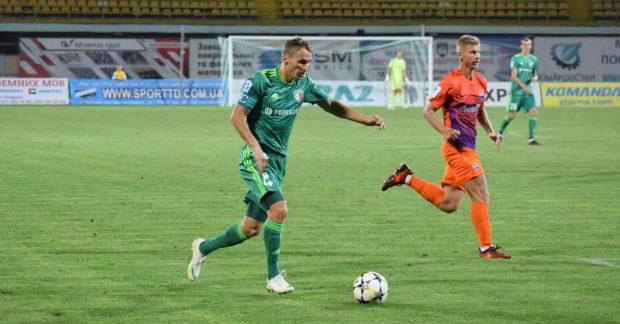
The head of the Poltava Regional State Administration, local government officials, and business leaders are being urged to take decisive action to rescue FC Vorskla, a football club facing severe financial difficulties.
Gennady Sikalo, spokesperson for the “Diya” party and head of the “Last Bastion” public organization, made this appeal, highlighting that not only the men’s and women’s teams are at risk, but also the youth academy that trains hundreds of children.
In his public address, Sikalo criticized local and regional authorities for their apparent disengagement from the club’s issues, attributing this to the club’s private ownership status. He pointed out that officials are ignoring the potential collapse of a significant part of the region’s sports infrastructure.
“In Poltava, local authorities are acting as if nothing is wrong. A men’s top league team with over fifty years of history is facing catastrophic financial challenges, yet they dismiss it as a private issue. The youth academy may cease to exist, but they seem indifferent,” Sikalo stated, emphasizing the club’s integral role in the community.
The club’s internal crisis has become increasingly visible. Sikalo noted that he witnessed the dire conditions faced by athletes, with female players training in worn-out uniforms from previous years. To support the team, concerned benefactors have contributed approximately $25,000 for essential gear and have been providing 1.5 million hryvnias monthly for operational expenses, enabling the team to finish the Ukrainian championship and secure bronze medals.
However, the response from government representatives has been lackluster. Sikalo referred to a recent award ceremony attended by acting mayor Kateryna Yamshykova, where the team received only a certificate instead of meaningful assistance. “A certificate is not a rescue plan for the club. It does not address the uncertainty faced by the coach or the children who may soon lose their training opportunities,” he remarked.
Sikalo also pointed out inconsistencies in funding priorities, stating that the Poltava Regional Administration has found millions for other sports projects, such as a private club in Reshetylivka and a hockey team in Kremenchuk, while neglecting the region’s main football club.
As corporate conflicts surrounding investor Konstantin Zhevago continue, the club’s infrastructure deteriorates. To address this situation, Sikalo proposed a four-step crisis management plan: the formation of a joint crisis group involving city and regional authorities to preserve the club’s infrastructure and academy; conducting an open audit of the club’s minimum operational needs; establishing a transparent support fund; and engaging major local businesses. He estimated that if ten entrepreneurs contribute one million hryvnias each month, it would fully sustain the club during this transitional period.
“Children should not bear the burden of Zhevago’s issues. The men’s and women’s teams should not suffer due to the financial mismanagement of adults. Poltava must not lose its club because of a system reliant on a single funding source,” Sikalo concluded, calling for immediate action from both government and business leaders.
FC Vorskla is in critical financial distress, prompting calls for local government and businesses to unite for its survival. Gennady Sikalo emphasizes the club's importance to the community and outlines a crisis management plan to secure its future.