Russia has introduced a new air defense system, the ZAK-30 ‘Citadel,’ designed to safeguard its oil refineries from drone attacks, particularly those launched from Ukraine. However, questions remain regarding the system’s effectiveness against long-range strikes.
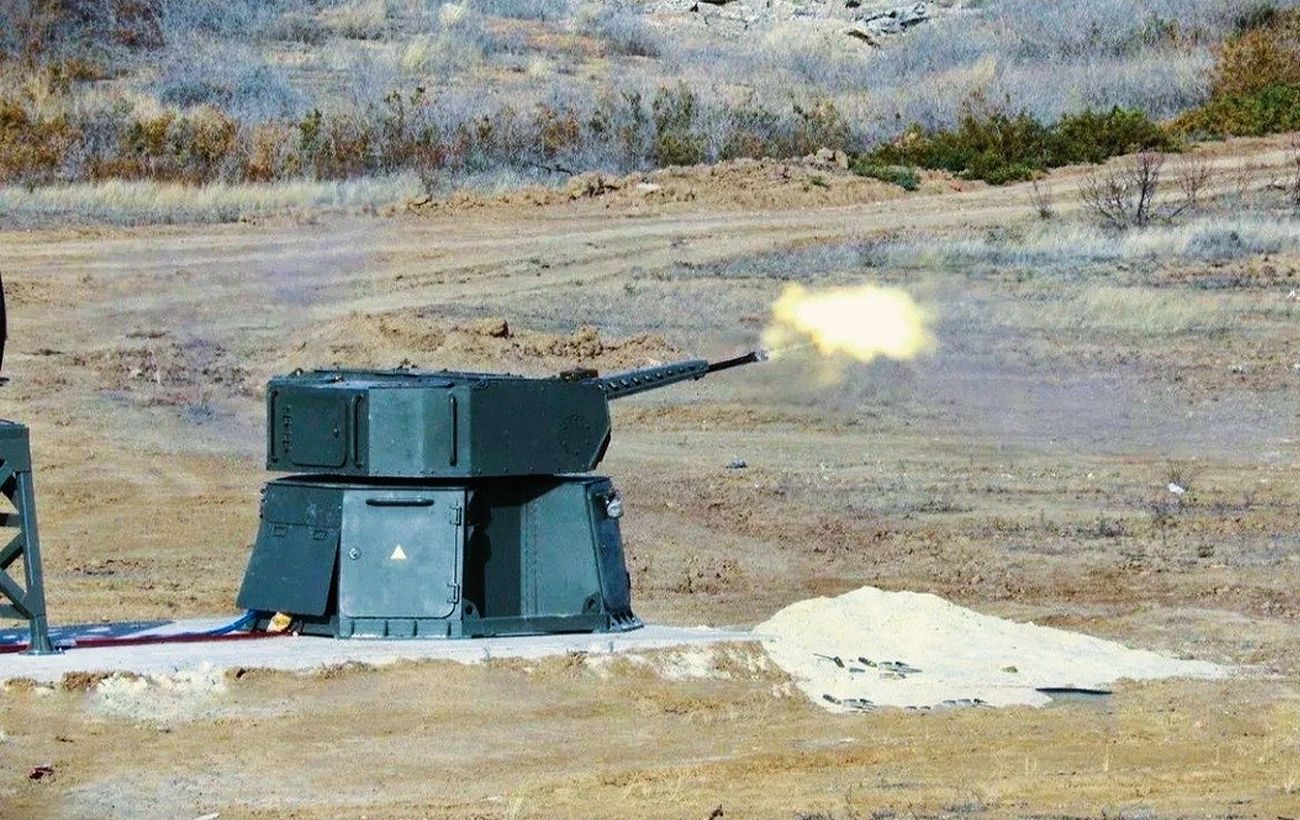
The ‘Citadel’ was developed by the Russian technology conglomerate Rostec and is intended to defend stationary facilities from various types of drones, including both quadcopters and fixed-wing aircraft. The system features a 30mm cannon mounted on a stationary turret and is said to be capable of firing shells equipped with programmable detonation, including shrapnel rounds. The process from target detection to destruction is largely automated.
Target acquisition is facilitated by radar and electro-optical systems. However, images of the system do not show these components integrated into the unit, suggesting that targeting information may be sourced from external systems or a broader air defense network.
Defense industry analyst Andriy Tarasenko indicates that the effective range of the ‘Citadel’ is approximately 1.2 kilometers, with each unit costing around 600 million rubles, equivalent to between 3.48 and 7.21 million euros, depending on the exchange rate. To adequately protect a single oil refinery, estimates suggest that between six to ten units would be required, translating to a total cost ranging from 3.48 to 6 billion rubles.
Comparisons have been drawn between the ‘Citadel’ and the German Skynex air defense systems, which are currently operational in Ukraine and capable of intercepting not only drones but also cruise missiles. While both systems share conceptual similarities, a key difference lies in the integration of the optical and radar systems. In the case of Skynex, these components are built directly into the unit, enhancing accuracy and autonomy, a feature that the ‘Citadel’ lacks.
In addition to the targeting concerns, there are also issues related to ammunition. Russia showcased programmable shells at an exhibition in Saudi Arabia in early 2026, but there has been no subsequent information regarding their mass production. Without these advanced munitions, the ‘Citadel’ would rely on standard 30mm shells, which do not have remote detonation capabilities. This limitation is viewed as a significant weakness, particularly when compared to the capabilities of the Pantsir system in countering drone threats.
While the ‘Citadel’ may hold potential advantages over the Pantsir in terms of drone defense, its actual impact on the battlefield will depend on large-scale production and deployment. A limited number of units is unlikely to make a significant difference in operational effectiveness.
Furthermore, Defense Express notes that the true performance characteristics of the new air defense system can only be assessed through practical application, raising the possibility that it could be another unfulfilled project.
Russia's ZAK-30 'Citadel' air defense system aims to protect oil refineries from drone attacks, but its effectiveness and production capabilities remain uncertain. Analysts highlight potential weaknesses in targeting and ammunition that could limit its operational impact.