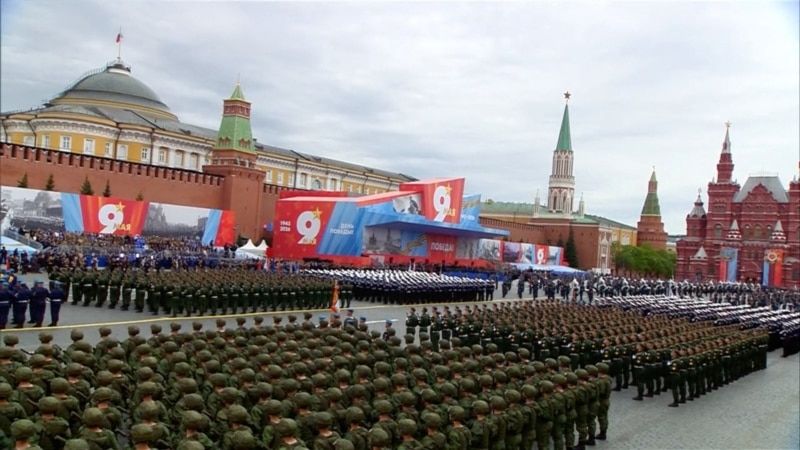
On May 9, Russia commemorated Victory Day with a parade in Moscow’s Red Square, marking the anniversary of the defeat of Nazi Germany in World War II. This year’s event was notable for its absence of military hardware, a decision attributed by the Kremlin to the current operational situation. However, the aerial segment of the parade proceeded as planned.
According to the Russian Ministry of Defense, the parade featured troops from various military academies and participants from the ongoing conflict in Ukraine. The event also included soldiers from North Korea, as announced by the broadcast’s commentator.
During the ceremony, President Vladimir Putin delivered a speech, framing the conflict in Ukraine as a struggle against an “aggressive force” backed by NATO. He invoked the legacy of past victories, stating, “The great feat of the generation of victors inspires today’s soldiers who are fulfilling the objectives of the special military operation,” referring to the war in Ukraine.
This year, leaders from Belarus, Kazakhstan, Uzbekistan, Malaysia, and Laos attended the parade, alongside representatives from South Ossetia and Abkhazia, regions recognized by Russia but not by the international community. Notably, Slovak Prime Minister Robert Fico arrived in Moscow on May 8 but did not participate in the parade.
In the lead-up to the event, reports emerged that the Russian government had revoked press credentials for foreign journalists planning to cover the parade. Kremlin spokesperson Dmitry Peskov labeled these reports as “false information” but acknowledged that the number of journalists would be “limited” due to the parade’s reduced format.
Prior to the parade, Russia unilaterally declared a ceasefire for May 8 and 9, warning Ukraine of severe consequences should the event be disrupted. Ukrainian President Volodymyr Zelensky had proposed a ceasefire starting May 6, but Russia quickly violated it with attacks on Ukrainian cities. In the early hours of May 8, Russian regions experienced significant attacks.
On May 8, U.S. President Donald Trump announced an agreement for a three-day ceasefire between Russia and Ukraine, which was to take place on May 9, 10, and 11. This ceasefire was intended to halt hostilities and facilitate a prisoner exchange of 1,000 individuals from each side. Both Kyiv and Moscow later confirmed the agreement.
In response to the ceasefire discussions, President Zelensky issued a decree regarding the Moscow parade. The document stated that, following numerous requests made during negotiations with the U.S., the parade was permitted for humanitarian reasons, explicitly excluding the use of Ukrainian weaponry in the vicinity of Red Square.
Commenting on Zelensky’s decree, Peskov remarked, “Woe to those who try to mock Victory Day. Such foolish jokes are more of a tragedy for him,” asserting that Russia required no permission for its actions.
The Victory Day parade in Moscow on May 9 marked a significant shift, notably lacking military hardware amid ongoing conflict in Ukraine. President Putin's speech framed the war as a defense against NATO, while the event saw participation from various international leaders, despite restrictions on foreign media coverage.