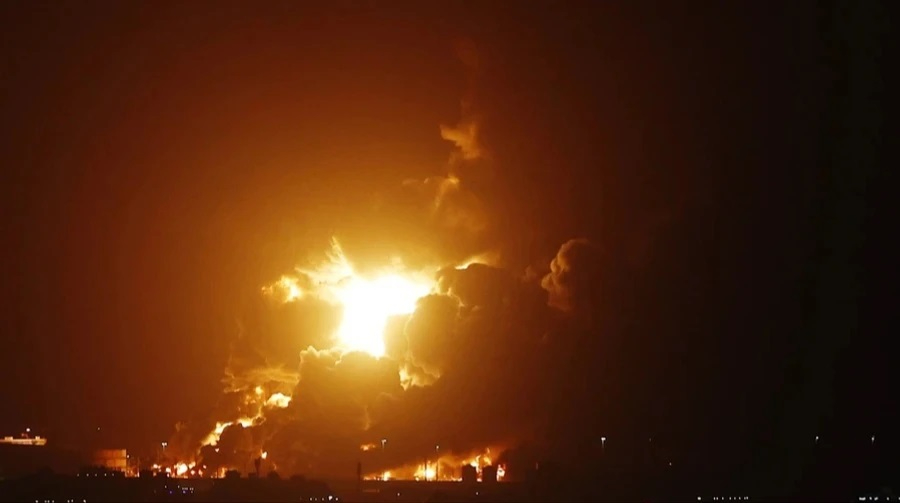
On Monday, March 23, the Israel Defense Forces (IDF) announced a significant series of strikes targeting infrastructure in Tehran, Iran. This operation marks a notable escalation in ongoing tensions between Israel and Iran.
The IDF did not specify the exact targets within Tehran but described the action as a response to what they termed the “terrorist regime” in Iran. Their brief statement indicated the commencement of these new attacks.
Background events leading up to this operation include reports from March 18, when Iranian media claimed that the U.S. and Israel had conducted strikes on Iran’s largest gas field, South Pars, as well as other facilities in the Assaluyeh area. These actions reportedly halted production at two oil refineries with a combined output of approximately 100 million cubic meters per day.
On the same day, Iranian forces launched a substantial attack on the industrial city of Ras Laffan in Qatar, damaging the country’s gas infrastructure. Hours later, Iran executed a second ballistic missile strike on Ras Laffan, resulting in a large fire at QatarEnergy facilities.
In a related development, former U.S. President Donald Trump warned that the United States would respond with significant strikes against Iran’s gas infrastructure at South Pars if Tehran continued its assaults on Qatari liquefied natural gas facilities. Additionally, reports from The Jerusalem Post suggest that the U.S. may be preparing for a ground operation to capture Iran’s Kharg Island, with military forces being rapidly deployed to the Middle East.
The IDF's recent strikes on Tehran represent a significant escalation in regional tensions, following a series of retaliatory actions between Iran and its adversaries. The situation continues to evolve as military operations intensify in the region.