The European Union has expressed significant concern regarding the recent developments between Iran and Israel, urging both parties to avoid further escalation. In a joint statement released by European Council President Charles Michel and European Commission President Ursula von der Leyen, the EU emphasized its commitment to regional security and the critical importance of nuclear safety.
In their statement, the EU leaders noted that they are closely monitoring the situation and remain in contact with regional partners. They highlighted the necessity of preventing actions that could undermine global nuclear non-proliferation efforts. The EU has also imposed sanctions in response to actions taken by the Iranian government, while continuing diplomatic efforts to address issues related to Iran’s nuclear and ballistic programs through negotiations.
In coordination with EU member states, Brussels has pledged to take all necessary measures to support EU citizens in the region. The statement called for maximum restraint from all parties, urging the protection of civilians and adherence to international law.
UK Prime Minister Keir Starmer reiterated that Iran must never acquire nuclear weapons, reaffirming London’s support for diplomatic resolutions. He emphasized the priority of ensuring the safety of British citizens in the region and providing them with round-the-clock consular assistance. The UK government also noted that it has enhanced its defensive capabilities in the Middle East, stating, “We are prepared to defend our interests,” while expressing a desire to avoid a broader regional conflict.
French President Emmanuel Macron called for an urgent meeting of the United Nations Security Council, stating that France is ready to deploy necessary resources to support partners in the region. He characterized further escalation as dangerous for all parties and stressed the importance of sincere negotiations to resolve Iran’s nuclear and ballistic programs.
Ursula von der Leyen described the events in Iran as deeply troubling and underscored the critical importance of nuclear safety and the need to avoid actions that could jeopardize global non-proliferation efforts. Belgian Foreign Minister Maxime Prevot commented that the Iranian people should not suffer due to their government’s choices, expressing regret that previous diplomatic efforts had not led to a resolution.
Norwegian Foreign Minister Espen Barth Eide remarked that the Israeli attack, described as “preventive,” does not comply with international law, emphasizing that preventive strikes require an immediate and unavoidable threat.
On the morning of February 28, Israeli military forces conducted strikes on Iranian territory, resulting in explosions reported in Tehran. According to the Israel Defense Forces (IDF), the attack was sudden, and a nationwide alert was issued, urging citizens to stay close to protected areas. The IDF stated, “This preventive message is intended to prepare the population for the possibility of missile launches toward the State of Israel.”
Israeli Defense Minister Israel Katz indicated that the country had initiated a “preventive military operation” against Iran, aimed at neutralizing potential threats from Tehran and preventing possible attacks on Israeli territory. A U.S. official confirmed America’s involvement in the operation, stating that airstrikes aim to weaken Iran’s security infrastructure.
Subsequently, U.S. President Donald Trump mentioned that America had indeed begun a military campaign against Iran to eliminate threats posed by the current regime, labeling its leadership as a “brutal group” that endangers the U.S., its troops, overseas bases, and allies worldwide. Reports indicated that Iranian officials were preparing for a response, promising that it would be devastating.
In retaliation, Iran launched missiles toward Israel, as reported by the IDF. The military stated that defensive systems were activated to intercept the threat, and alerts were sent directly to mobile phones in affected areas. Sirens were activated across several regions in Israel following the detection of missiles launched from Iran.
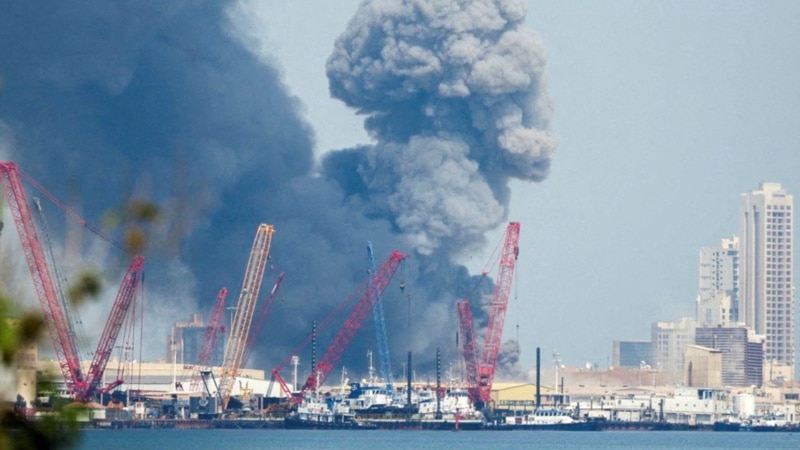
Later reports revealed that Iran had also targeted military facilities in the UAE, Qatar, and Bahrain, with explosions reported in Kuwait. Local media noted significant traffic congestion at the exit from Dubai. Bahrain condemned the attacks on its territory as “treacherous” and confirmed that they were directed at its facilities and infrastructure.
The EU and global leaders have voiced serious concerns over escalating tensions between Iran and Israel, emphasizing the need for restraint and diplomatic solutions. Recent military actions have intensified the situation, prompting international calls for dialogue and adherence to international law.