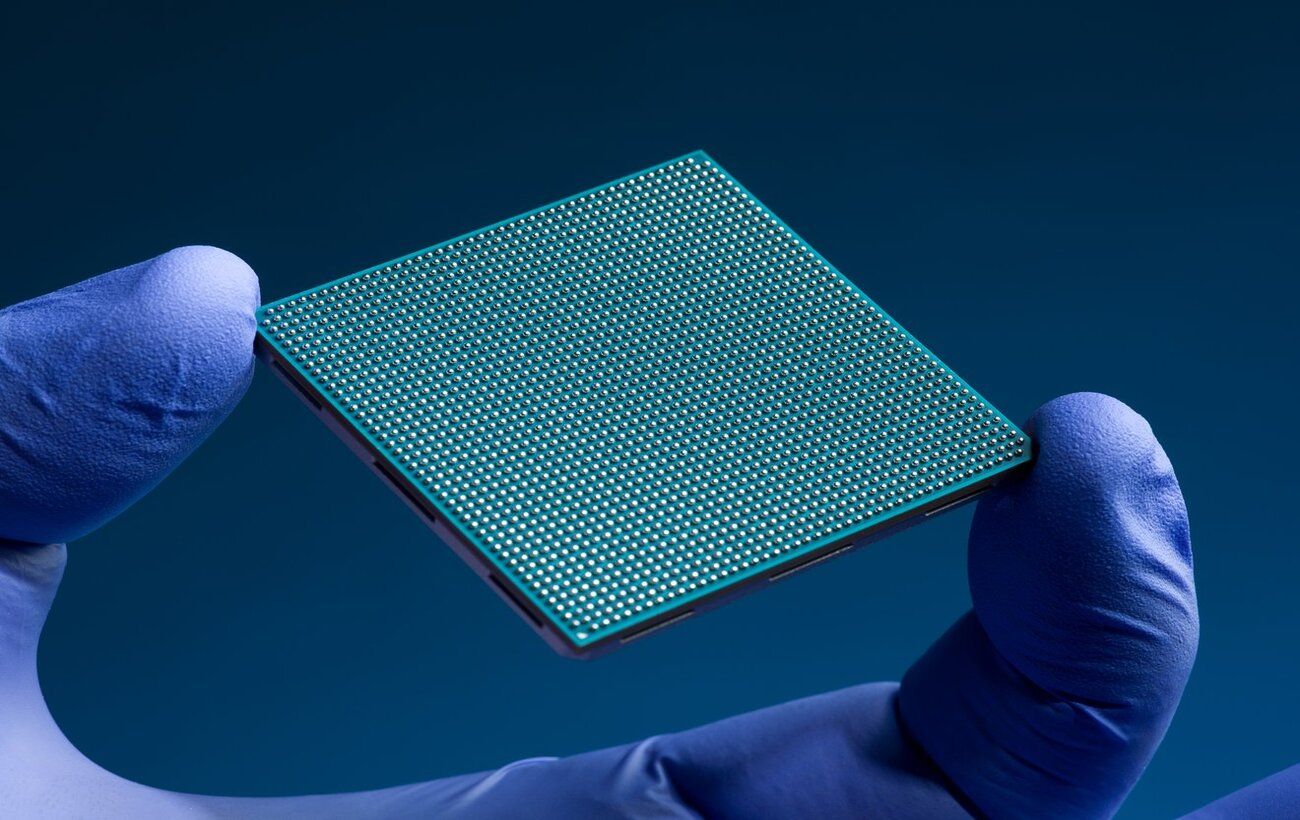
NASA has introduced a groundbreaking superchip designed to enhance the capabilities of future space missions. This advanced device, which boasts the processing power of modern computers, is engineered to withstand the harsh conditions of outer space.
The High Performance Spaceflight Computing (HPSC) project aims to develop a ‘brain’ for autonomous missions. Initial testing, which commenced in February 2026 at the Jet Propulsion Laboratory (JPL), has yielded impressive results.
Key highlights include:
- Performance: The chip operates approximately 500 times faster than any radiation-hardened processor currently in use.
- Architecture: It features a system-on-chip (SoC) design that integrates processors, networking systems, and memory into a single compact module.
- Flexibility: The system is fault-tolerant and multi-core, allowing it to redistribute resources in the event of errors in space.
The testing phase was symbolically launched with an email titled ‘Hello Universe,’ sent by engineers through the new system, honoring a classic programming tradition.
In the rigorous testing process, Jim Butler, the project lead at JPL, stated, “We are subjecting these new chips to stringent tests, including radiation, thermal, and shock assessments, while evaluating their performance under simulated complex landing scenarios on other planets.”
Particular attention is given to landing moments when the computer must process vast amounts of sensor data in mere seconds. The processor has already successfully completed simulations of actual NASA missions, handling workloads that previously required significantly larger and more power-intensive equipment.
In collaboration with Microchip Technology Inc., NASA envisions transforming spacecraft into intelligent systems through this new chip.
Researchers anticipate several advancements:
- Autonomy: With integrated AI, spacecraft will be able to respond instantly to unexpected situations, eliminating the delays associated with Earth-based control.
- Scientific Work: The devices will autonomously filter out irrelevant information, retaining and transmitting only the most valuable discoveries back to Earth.
- Astronaut Support: This technology will be crucial for life support and navigation systems in habitats on the Moon and Mars.
Once fully certified, this new processor is expected to become the standard for all types of missions, ranging from Earth-orbiting satellites to probes venturing to the outer reaches of the solar system.
NASA's new superchip promises to revolutionize space exploration by enabling autonomous decision-making and advanced data analysis in harsh conditions. With testing already underway, the chip is set to enhance the capabilities of future missions to the Moon and Mars.