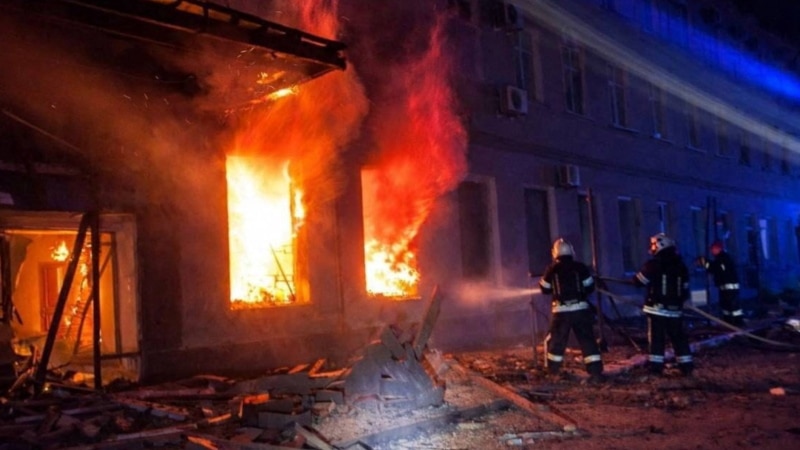
On the night of April 27, Russian forces launched a series of drone strikes on Odesa, resulting in damage to residential buildings and civilian infrastructure, according to local authorities.
Sergiy Lysak, head of the Odesa military administration, reported that 13 individuals sustained injuries from the attacks, which affected various parts of the city. In addition to residential structures, a hotel and nearby vehicles were also damaged.
Lysak indicated that emergency services and medical personnel are currently on-site, with operational headquarters established to manage the situation. Oleg Kiper, the regional governor, confirmed the impact on two residential buildings, a hotel, storage facilities, and several cars.
These strikes are part of a broader pattern of attacks by Russian military forces, which have employed various types of weaponry—including strike drones, missiles, and multiple rocket launch systems—to target Ukrainian cities and civilian infrastructure across the nation.
Ukrainian officials and international organizations have classified these assaults as war crimes, asserting that they are deliberate in nature. The targeting of essential services and healthcare facilities aims to deprive civilians of electricity, heating, water supply, communication, and medical assistance, actions that some legal experts and human rights advocates argue may constitute genocidal behavior.
During the ongoing conflict, various forms of violence against Ukrainian citizens have been reported, including public declarations by Russian officials questioning the existence of Ukrainians as an ethnic group. Such statements have been interpreted as incitements to violence against the Ukrainian population.
The 1948 United Nations Convention on the Prevention and Punishment of the Crime of Genocide obligates signatory states to prevent and punish acts of genocide during both wartime and peacetime. The Convention defines genocide as actions intended to destroy, in whole or in part, a national, ethnic, racial, or religious group.
Indicators of genocide include the killing of group members, causing serious bodily or mental harm, deliberately inflicting conditions calculated to bring about a group’s destruction, and public incitement to commit such acts.
The Russian leadership has consistently denied that its military conducts targeted strikes against civilian infrastructure in Ukraine, despite mounting evidence of civilian casualties and damage to hospitals, schools, and essential services.
Recent drone strikes in Odesa have resulted in civilian injuries and damage to infrastructure, reflecting a pattern of targeted attacks by Russian forces on Ukrainian cities. Authorities classify these actions as war crimes, raising concerns about potential genocidal intent.