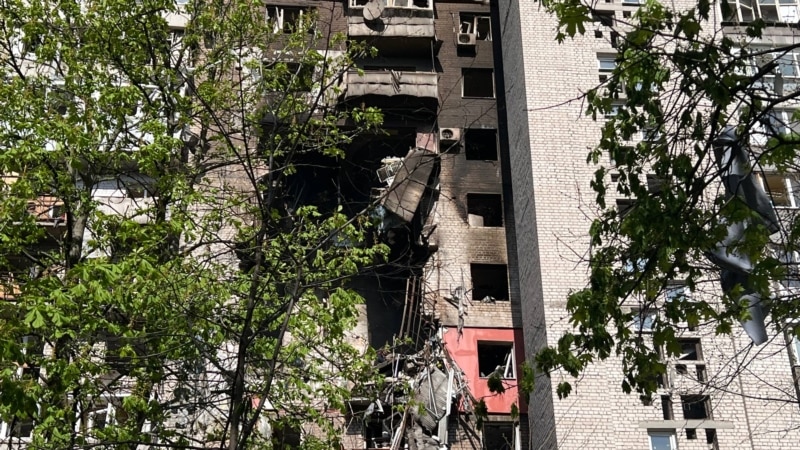
In the early hours of April 25, Russian forces launched a series of attacks on the city of Dnipro, leading to significant injuries and damage to infrastructure. According to Oleksandr Hanzha, the head of the Dnipropetrovsk regional military administration, the number of injured has risen to 18, with 11 individuals requiring hospitalization.
Among the injured is a 26-year-old woman in critical condition, while the remaining victims are reported to be in moderate condition. The assault involved both missile and drone strikes, igniting fires and damaging various buildings, including a four-story apartment complex and several other residential structures.
Initially, reports indicated 14 casualties, which included a child. The ongoing attacks by Russian military forces have raised concerns about the targeting of civilian infrastructure across Ukraine, with various types of weaponry being employed, including drones and missiles.
Ukrainian authorities and international organizations have classified these strikes as war crimes, emphasizing their deliberate nature. They argue that the attacks on essential services and healthcare facilities aim to deprive civilians of basic necessities such as electricity, heat, water, and medical assistance, which constitutes a form of genocidal action.
Legal experts and human rights advocates have pointed to a pattern of behavior by Russian forces that aligns with acts of genocide as defined by international law. This includes public declarations by Russian officials denying the existence of Ukrainians as a distinct ethnic group and calls for their destruction. Additionally, there are reports of systematic targeting of individuals with pro-Ukrainian sentiments, the destruction of cultural institutions, and the forced deportation of children.
The 1948 United Nations Convention on the Prevention and Punishment of the Crime of Genocide obligates signatory nations to prevent and punish acts of genocide both in wartime and peacetime. The convention defines genocide as actions intended to destroy, in whole or in part, a national, ethnic, racial, or religious group.
Indicators of genocide include the killing of group members, causing serious bodily or mental harm, deliberately inflicting conditions calculated to bring about a group’s destruction, and the forcible transfer of children. Despite these allegations, Russian leadership has consistently denied targeting civilian infrastructure during the ongoing conflict.
Recent Russian attacks on Dnipro have resulted in multiple injuries and significant damage to civilian infrastructure, raising concerns of war crimes. Authorities highlight a pattern of targeting essential services, which they argue aligns with definitions of genocidal actions under international law.