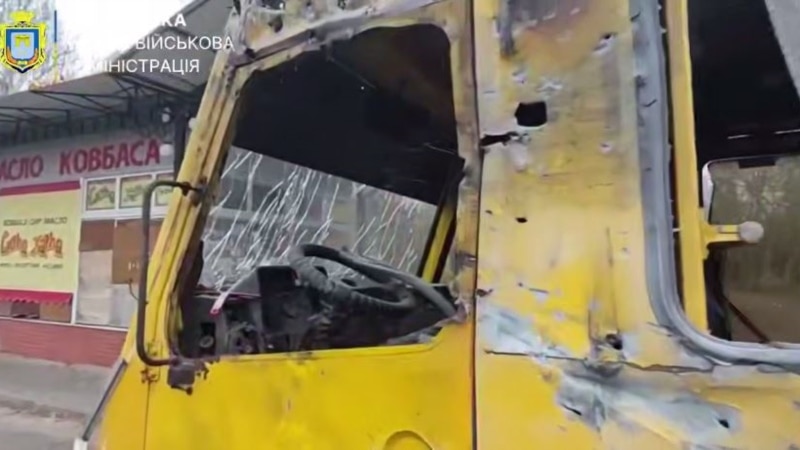
Recent Russian military actions in Ukraine have resulted in injuries to civilians and damage to public infrastructure. In the Nikopol region, a Russian strike damaged a passenger minibus, injuring three individuals, as reported by Oleksandr Hanzha, head of the Dnipropetrovsk Regional Military Administration.
Among the injured, a 37-year-old woman is in serious condition, while a 53-year-old man is classified as moderately injured. A 65-year-old woman is receiving outpatient care. Additionally, two other individuals—a 28-year-old woman and a 52-year-old man—sustained injuries from separate attacks in the Pokrovsk community and are being treated at home.
Local authorities have also reported that Russian forces targeted the Mykolaiv community in the Synelnykove district, resulting in a fire and damage to private residences. Civilian transportation, including public buses and medical vehicles, frequently faces drone attacks in frontline regions such as Kherson, Dnipropetrovsk, and Kharkiv.
The Russian military employs a variety of weaponry, including strike drones, missiles, and multiple rocket launchers, to target Ukrainian cities and civilian infrastructure across the country. Ukrainian officials and international organizations characterize these strikes as war crimes, asserting that they are deliberate in nature.
Attacks on essential services and healthcare facilities are viewed as attempts to deprive civilians of electricity, heating, water supply, communication, medical assistance, and other basic necessities. Legal experts and human rights advocates argue that such actions may constitute genocidal behavior.
The ongoing conflict has seen Russia accused of committing various crimes against Ukrainian citizens that could fall under the definition of genocide. These include declarations of intent to destroy Ukrainians as an ethnic group, public calls for their extermination, and targeted assaults on vital infrastructure.
The 1948 United Nations Convention on the Prevention and Punishment of the Crime of Genocide obliges member states to prevent and punish acts of genocide during both wartime and peacetime. The Convention defines genocide as actions aimed at the complete or partial destruction of a national, ethnic, racial, or religious group.
Signs of genocide include the killing of group members, causing serious bodily harm, deliberately creating living conditions intended to destroy the group, preventing births, and forcibly transferring children from one group to another.
In response to these allegations, Russian leadership denies that its military conducts targeted strikes against civilian infrastructure, claiming that it does not intentionally harm non-combatants or destroy hospitals, schools, and other essential services.
Recent Russian military strikes in Ukraine have resulted in civilian injuries and damage to infrastructure, raising concerns about potential war crimes. Local authorities report ongoing attacks on essential services, which may constitute genocidal actions according to international law.