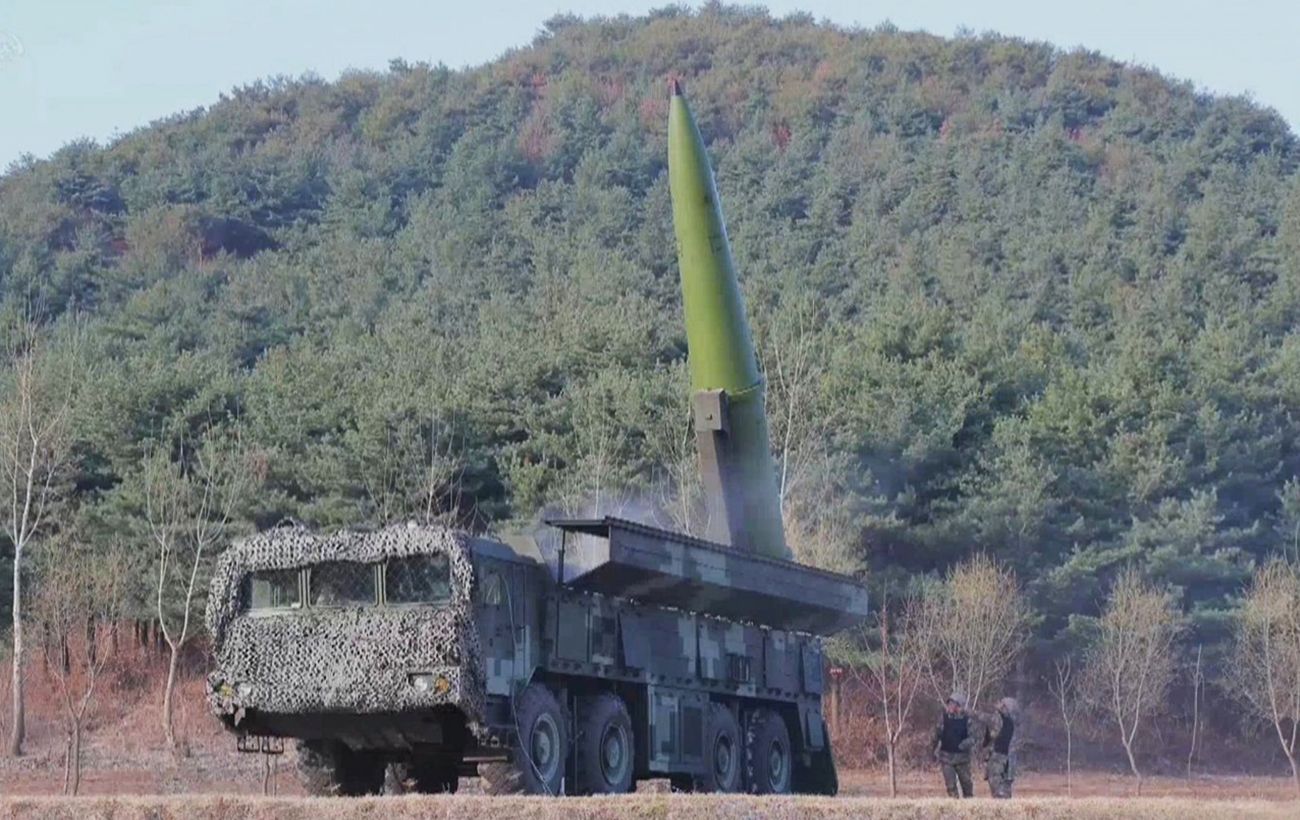
Recent analysis of North Korean ballistic missiles employed by Russia in its offensive against Ukraine reveals that these weapons are not mere copies of Russia’s Iskander missiles. Investigations into missile debris have uncovered the use of outdated technology and civilian components, some of which date back over 50 years.
Military engineers conducted laboratory tests on missile remnants, including one that landed in Kharkiv earlier this year. The findings indicate that these missiles possess a distinctive geometry; for instance, the rear diameter of the KN-23 missile measures 110 cm, a size not found in any other missile globally except those from North Korea.
While Pyongyang has modified original Soviet and Russian designs, the engines of these North Korean missiles are significantly longer—about one and a half times the length of their Russian counterparts. This is attributed to the use of less energetic fuel, necessitating a larger engine volume to achieve comparable flight ranges.
The study also highlighted that the guidance systems of these missiles include commercial components from global brands, which North Korea acquires in violation of international sanctions. Experts from the Ministry of Defense noted that the soldering quality found in these missiles is reminiscent of technology from five decades ago.
Instead of utilizing advanced thermal protection materials, North Korean engineers have opted for cheaper graphite fairings. Despite these technological shortcomings, the Ministry of Defense cautions that these ballistic weapons remain complex targets for air defense systems and pose a significant threat to civilian populations.
Analysis of North Korean missiles used by Russia reveals a reliance on outdated technology and civilian components. Despite these limitations, the missiles still present a considerable threat to air defense systems and civilian safety in Ukraine.