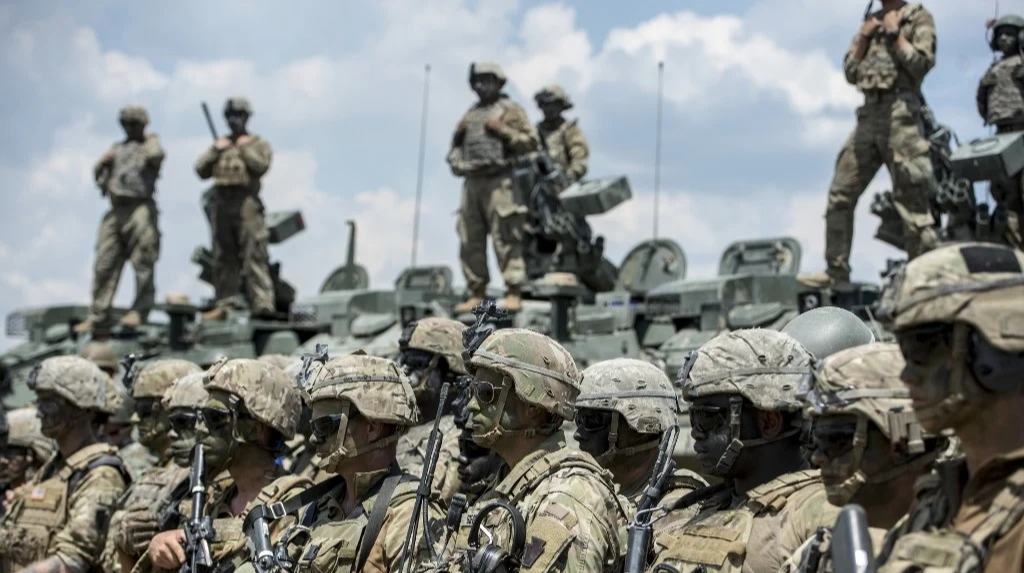
Recent reports indicate that the number of American troops stationed in the Middle East has exceeded 50,000, marking an increase of 10,000 personnel compared to usual levels. This surge follows the deployment of 2,500 Marines and an additional 2,500 sailors as tensions escalate between the U.S. and Iran.
According to The New York Times, this increased military presence comes as President Donald Trump deliberates on the next steps in the ongoing conflict with Iran. Although the specific missions for the newly deployed Marines from the 31st Marine Expeditionary Unit remain unclear, U.S. officials suggest that the administration is considering larger-scale military actions, including potential operations to seize strategic locations such as the island of Khark.
The island is significant due to its role in Iran’s oil exports, and the Strait of Hormuz, a critical maritime route for approximately 20% of the world’s oil supply, has faced disruptions due to Iranian military actions in response to U.S. and Israeli operations.
Typically, around 40,000 U.S. troops are stationed in various countries across the region, including Saudi Arabia, Bahrain, Iraq, Syria, Jordan, Qatar, the United Arab Emirates, and Kuwait. However, the ongoing conflict has prompted an increase in troop numbers, with a military spokesperson confirming that the current count has surpassed 50,000.
Notably, this figure does not include 4,500 personnel aboard the USS Gerald Ford, which has recently experienced technical issues and is currently en route to Crete after leaving the region. The ship is expected to arrive in Croatia soon, but its future deployment remains uncertain.
Additionally, the Pentagon has dispatched around 2,000 soldiers from the 82nd Airborne Division to the Middle East to provide Trump with enhanced military options. The exact location of these troops has not been disclosed, but they are positioned within reach of Iran and may be utilized for operations targeting the island of Khark or other ground missions in conjunction with the Marines.
Military analysts caution that even with the increased troop numbers, many of whom are deployed at sea, the forces available are insufficient for any major ground operations. Comparatively, Israel has mobilized over 300,000 troops for its ongoing operations in Gaza, while the U.S.-led coalition that invaded Iraq in 2003 initially deployed nearly 250,000 personnel.
Iran, with a land area nearly one-third that of the continental United States and a population of approximately 93 million, presents significant challenges for military engagement. Experts argue that capturing and maintaining control over such a vast and complex country with only 50,000 troops would be unfeasible.
In related developments, the Pentagon is reportedly preparing for extended ground operations in Iran. The U.S. has also presented a list of 15 demands to Iran aimed at ending the conflict, which includes restrictions on its military capabilities and a cessation of support for proxy groups in the region. Iran, however, has expressed its unwillingness to accept these terms, indicating a preference to determine its own conditions for concluding the war.
The U.S. military presence in the Middle East has surpassed 50,000 troops as tensions with Iran escalate. This increase follows the deployment of additional Marines and soldiers amid ongoing strategic considerations by the Trump administration.