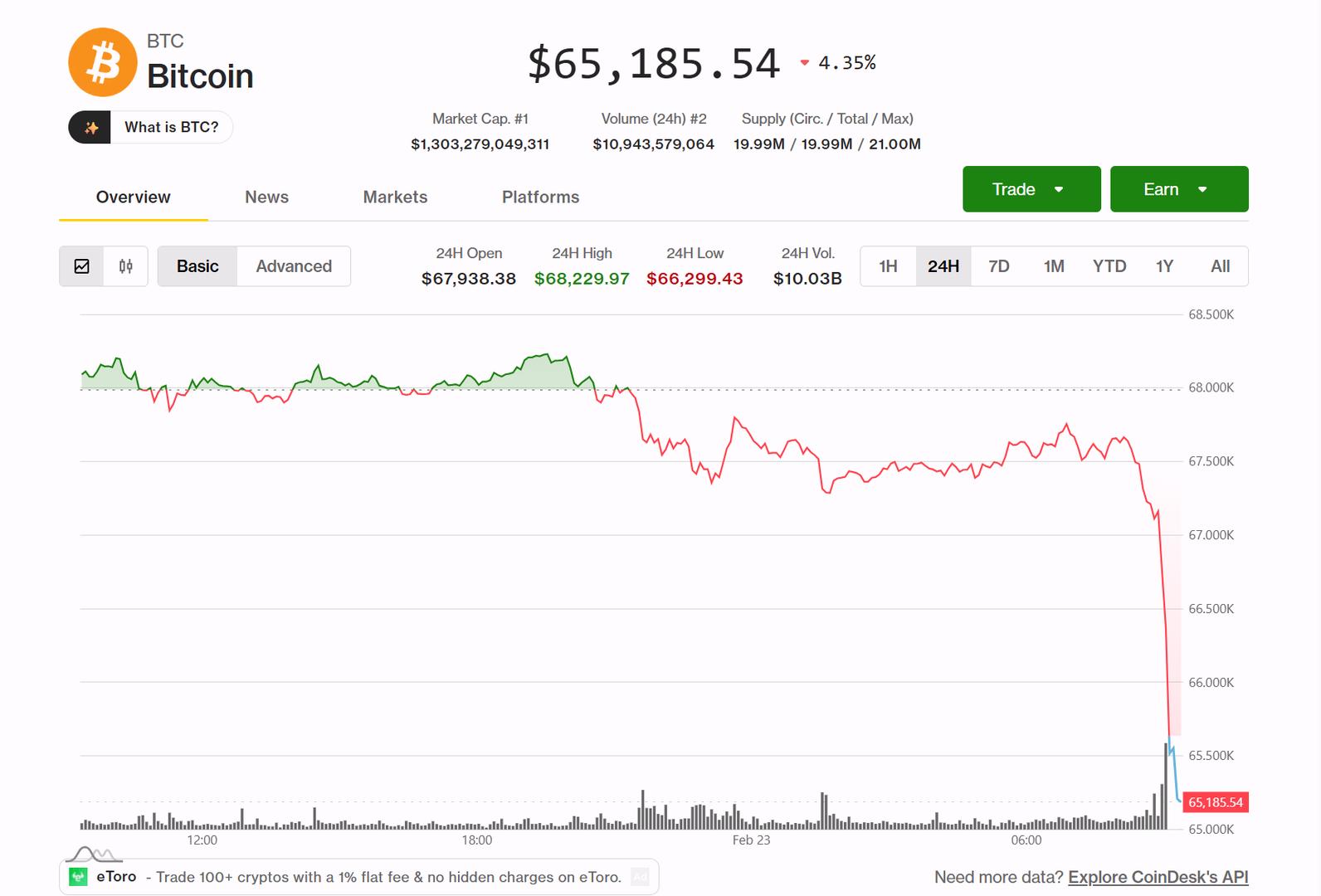
Bitcoin has begun the trading week in Asia at approximately $65,000, reflecting a 4.4% decrease as reported by CoinDesk. This decline follows a drop from the $67,000 range over the weekend, as data from Glassnode and CryptoQuant indicates a market still under strain despite signs that panic selling may be subsiding.
Recent figures from Glassnode reveal that short-term Bitcoin holders have been realizing significant losses. On February 6, the smoothed 7-day measure of net profits and losses for these investors plummeted to –$1.24 billion per day, indicating that newer market participants were collectively locking in substantial losses. This figure has since improved to around –$0.48 billion per day, suggesting a slowdown in panic selling, although losses persist.
The 7D-EMA of Net Realized Profit & Loss for recent investors plunged to –$1.24B/day on Feb 06, before moderating to –$0.48B/day today. While the intensity has cooled, the broader regime still signals a market under pressure, with participants in the base formation phase…
CryptoQuant’s data further illustrates the evolving market dynamics. The number of Bitcoin sent to exchanges surged to about 60,000 BTC daily during early February’s downturn, but this has since decreased to approximately 23,000 BTC on a 7-day smoothed basis, indicating a reduction in immediate selling pressure.
Notably, the “exchange whale ratio” from CryptoQuant has risen to 0.64, the highest level since 2015, meaning that nearly two-thirds of Bitcoin entering exchanges is coming from the ten largest deposits each day. This shift highlights that larger holders, or whales, are primarily responsible for the current supply hitting exchanges, as the average size of each deposit has reached levels last seen in mid-2022.
In contrast, altcoins have experienced a broader distribution, with average daily deposits rising to about 49,000 in 2026, up from 40,000 in the previous quarter. Increased deposit activity for alternative tokens often correlates with heightened volatility and a weaker risk appetite among investors.
Liquidity conditions are also tightening, as net inflows of USDT to exchanges have plummeted from a one-year high of $616 million in November to just $27 million, with some days even recording negative inflows. Typically, stablecoin inflows increase during market rallies, and their recent contraction indicates a decrease in buying power.
In summary, the combined insights from Glassnode and CryptoQuant depict a market grappling with the aftermath of a capitulation event while still lacking robust demand. As the trading week unfolds, the critical question remains whether Bitcoin will maintain the $65,000 level as a near-term support point or continue to navigate a prolonged base-building phase.
Bitcoin is facing selling pressure from large holders as the market attempts to stabilize after recent losses. On-chain data indicates that while panic selling has slowed, significant losses for short-term investors persist, raising questions about the market's near-term direction.