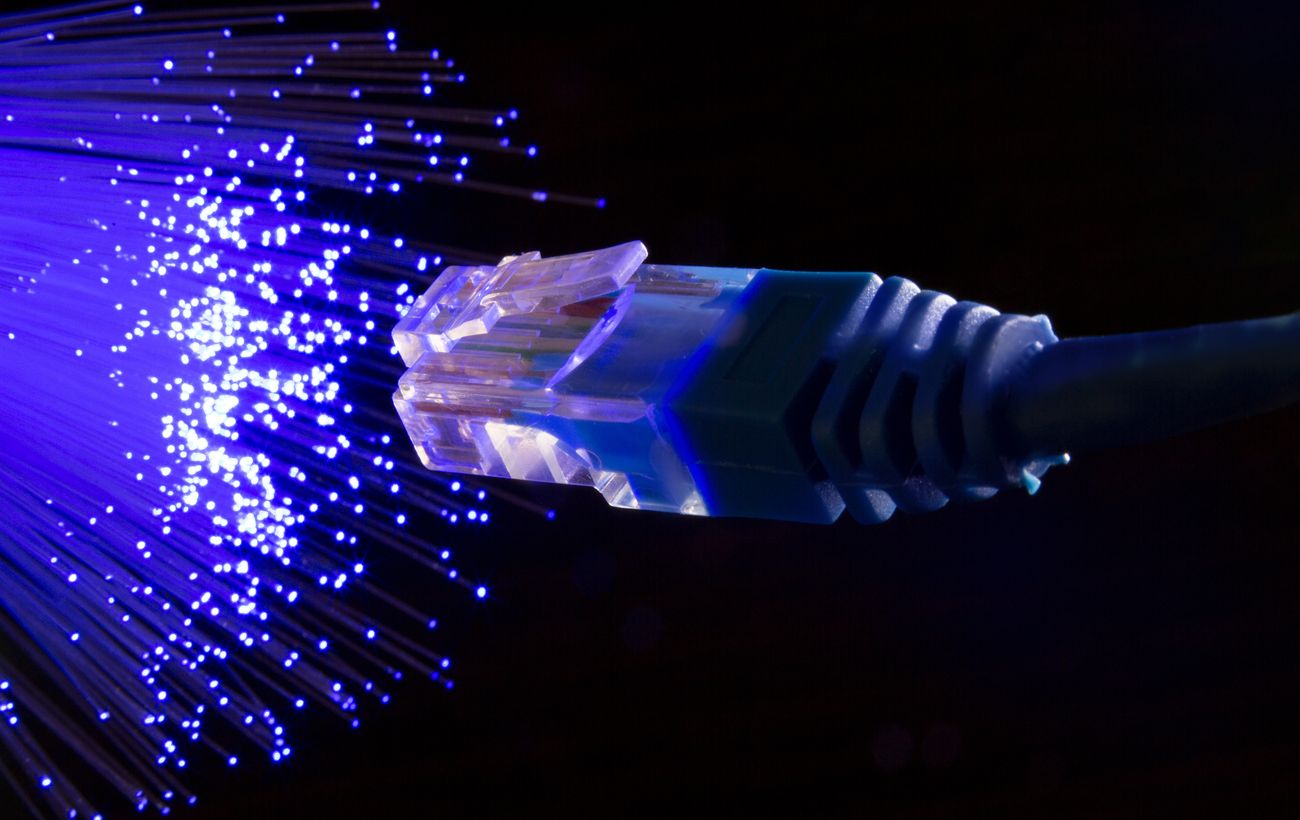
Researchers have successfully tested a groundbreaking technology that transforms vast networks of underwater and terrestrial internet cables into sensitive seismic sensors capable of monitoring earthquakes, volcanic activity, and floods. Utilizing laser pulses, these conventional communication lines can even gather data from outer space.
The foundation of this innovation is Distributed Acoustic Sensing (DAS). Unlike traditional seismographs that record underground tremors at a single point, the new system employs laser pulses to detect minute changes in vibration, stress, or movement along the entire length of the cable.
The effectiveness of this method was demonstrated during the recent eruption of the Grímsvötn volcano in Iceland. The fiber-optic network enabled authorities to issue a warning just 26 minutes before the eruption began, providing residents with critical time to evacuate safely.
This approach also proves to be economically advantageous. In California, over 700 conventional seismographs have been installed, each costing up to $50,000. In contrast, researchers deployed a single specialized laser device costing $200,000 along a 100-kilometer stretch of standard cable, yielding data equivalent to that from 10,000 standard sensors.
A similar project was conducted in the Canary Islands, where a 120-kilometer underwater communication cable was converted into nearly 12,000 virtual sensors, capable of detecting seismic echoes from oceanic earthquakes thousands of kilometers away.
Scientists from Los Alamos National Laboratory have proposed using this same technology to study the Moon. They plan to lay fiber-optic lines over several kilometers of the lunar surface.
Laboratory tests using a lunar soil substitute indicated that the cables do not need to be buried for the laser signal to remain clear.
While it is noted that the Moon lacks tectonic plates like Earth, it does experience significant “moonquakes.” Several factors contribute to this:
- Cosmic influences: Variations in the crust caused by Earth’s gravitational pull and regular meteorite impacts.
- Thermal shock: The Moon’s surface experiences extreme temperature fluctuations, dropping below -245 degrees Celsius at night and rising to 120 degrees during the day. These rapid changes cause the lunar surface to contract and expand, leading to cracks and tremors.
Additional data from these sensors will assist scientists in understanding the Moon’s internal structure, including its density, composition, and the presence of any liquid within.
Moreover, this technology could shed light on the Moon’s formation history and provide reliable communication for future space missions, as the cables will also serve their primary function of providing internet connectivity.
Researchers have developed a method to convert internet cables into seismic sensors, enhancing monitoring capabilities for natural disasters. This technology not only proves effective in real-time alerts but also has potential applications for lunar exploration.