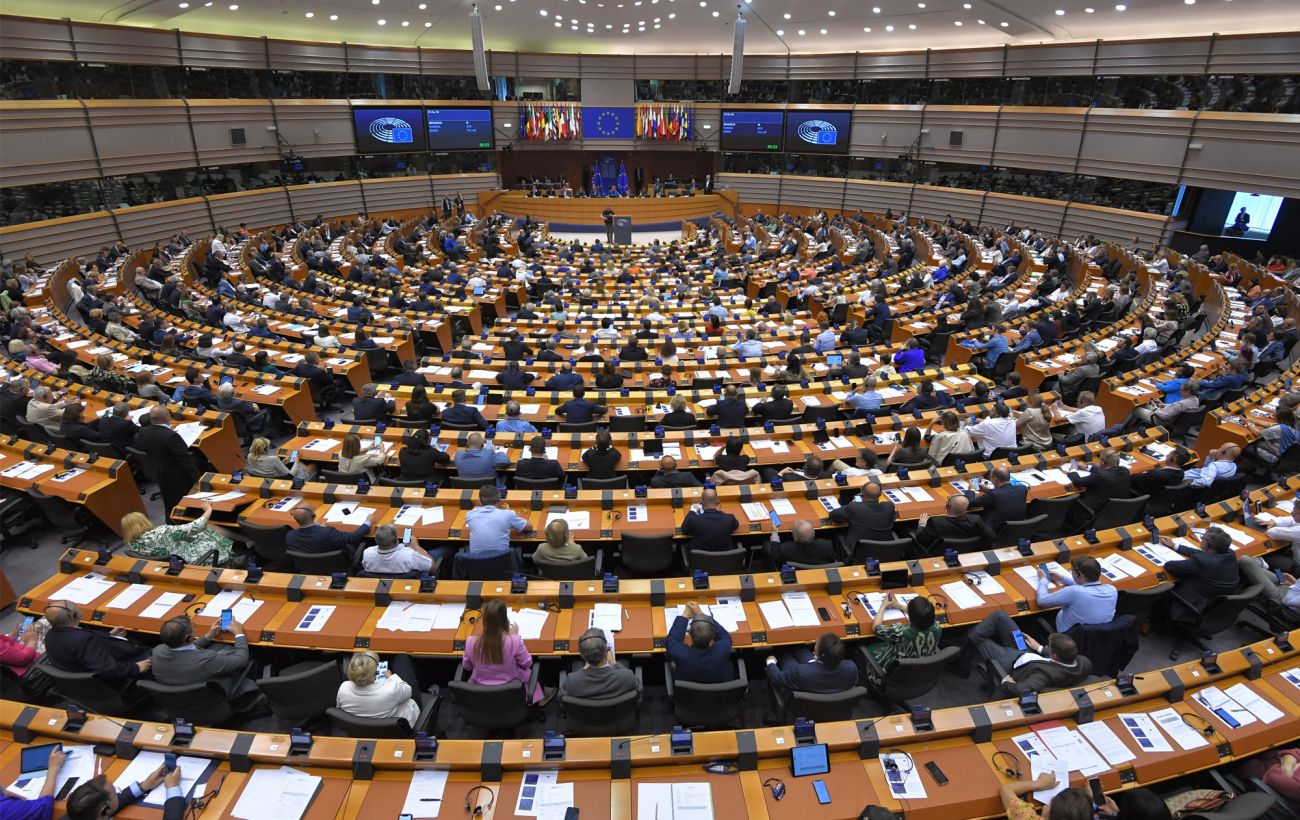
Members of the European Parliament have urged the European Commission to reconsider its application of the Carbon Border Adjustment Mechanism (CBAM) in light of the ongoing war in Ukraine. They highlighted the need for a distinct approach or special exemptions for the country under current wartime conditions.
The discussions regarding amendments to the CBAM regulation and the establishment of a Temporary Decarbonization Fund took place during a session of the European Parliament’s Committee on Environment, Climate and Food Safety (ENVI).
Mohammed Shagim, the rapporteur for CBAM, emphasized that the existing force majeure mechanism does not adequately reflect the realities of the war in Ukraine. He stated, “I cannot imagine what situation qualifies as force majeure if the wartime circumstances in Ukraine do not.”
Shagim further noted that Ukraine lacks the capacity to decarbonize at the required pace and is unable to provide independent verification of emissions data amidst the conflict. He proposed a separate discussion to explore a tailored solution for Ukraine.
Pieter Lize, a representative from the European People’s Party, echoed the call for a distinct approach, asserting, “I do not want to open a Pandora’s box, but Ukraine is indeed a special case.” He questioned the European Commission’s current lack of consideration for exemptions for Ukraine.
Pascal Canfin, the rapporteur for the Temporary Decarbonization Fund, expressed disappointment over the absence of a clear response from the European Commission regarding Ukraine’s situation. Meanwhile, Maria Elena Scoppio, a representative of the European Commission, largely avoided addressing the parliamentarians’ concerns, stating that Ukraine “is not part of the current report,” and thus the Commission would not comment on the possibility of a special regime or the application of force majeure.
During the discussion, members also examined the broader implications of CBAM for European industry and competition in global markets. Canfin specifically linked the mechanism to the potential strengthening of Russia’s position in export markets. He pointed out that European producers face additional carbon costs, while their Russian counterparts do not.
“The EU should not be giving such a gift to Russia,” Canfin remarked.
As previously reported, the European Commission has not anticipated any exemptions for Ukraine under the CBAM, despite the country’s eligibility for such under the force majeure clause. The Commission has claimed that the impact of CBAM on the Ukrainian economy will be “minimal.” However, these assessments have been criticized as disconnected from reality, with projections indicating that Ukraine could lose 5% of its GDP by 2026 due to the CBAM.
Overall, the forecast for this year anticipates a 4.8% contraction in the economy, a 7.8% decline in exports to the EU, and a 13.1% drop in manufacturing output. The pressure is already being felt, with exports of long steel products to the EU down 60% and pipe exports down 44%. The ArcelorMittal Kryvyi Rih plant has already shut down two of its facilities, putting over three thousand jobs at risk.
The European Parliament is advocating for a review of the Carbon Border Adjustment Mechanism (CBAM) in light of Ukraine's wartime conditions. Lawmakers argue that the current framework fails to address the unique challenges faced by Ukraine, which could significantly impact its economy.