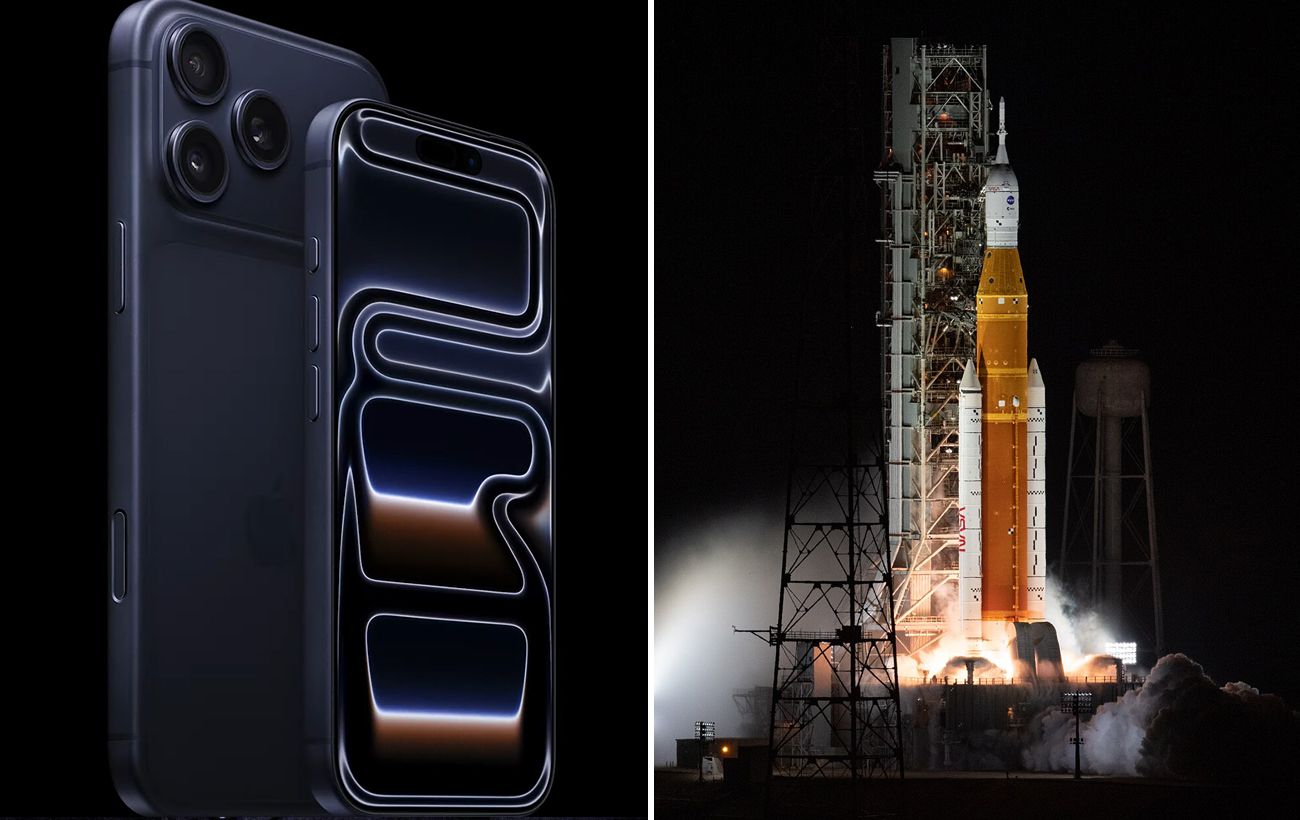
The NASA Artemis 2 mission has made headlines by including the iPhone 17 Pro Max among its equipment. This marks a significant moment as it is one of the first instances where astronauts are permitted to take smartphones on a journey to another celestial body.
To ensure the iPhone 17 Pro Max met safety standards, NASA conducted an extensive evaluation process consisting of four phases. Researchers assessed potential risks associated with lithium-ion batteries and electromagnetic radiation, subsequently developing strategies to mitigate these concerns.
Interestingly, the initiative originated from NASA itself rather than Apple, with the agency purchasing the devices independently. This move has been described as one of the largest free marketing campaigns in the history of the tech giant.
However, the use of smartphones in space comes with strict limitations. Astronauts will not have access to standard features, as:
- Communication – Bluetooth, Wi-Fi, and cellular connections are disabled to prevent interference with the spacecraft’s navigation systems.
- Applications – The crew is prohibited from playing games or using FaceTime.
- Media Only – The devices will serve solely as digital cameras for capturing images of Earth and the Moon.
The choice of the iPhone 17 Pro Max is attributed to its advanced optical capabilities, which allow astronauts to take high-quality photographs of space. Key camera enhancements include:
- 8x Optical Zoom – Equivalent to a 200mm focal length, enabling detailed imaging of the Moon’s surface.
- Larger Sensor – The telephoto lens sensor is 56% larger than previous models, crucial for low-light photography.
- Center Stage Front Camera – The new 18-megapixel selfie camera with a wide field of view allows for group photos of the crew without needing to reposition the device.
Jeremy Hansen, a specialist on the Artemis II mission and astronaut with the Canadian Space Agency (CSA), noted the significance of this development. Apple technologies have previously supported NASA missions, such as the Perseverance rover, which utilized processors similar to those in older Mac computers.
NASA believes that incorporating the iPhone 17 Pro Max as a personal device for the crew signifies a new era of integrating popular consumer electronics into space exploration programs.
NASA's Artemis 2 mission will feature the iPhone 17 Pro Max, marking a historic first for smartphone usage in space. The agency conducted thorough safety checks and imposed strict limitations on the device's functions, allowing it to be used solely for photography.