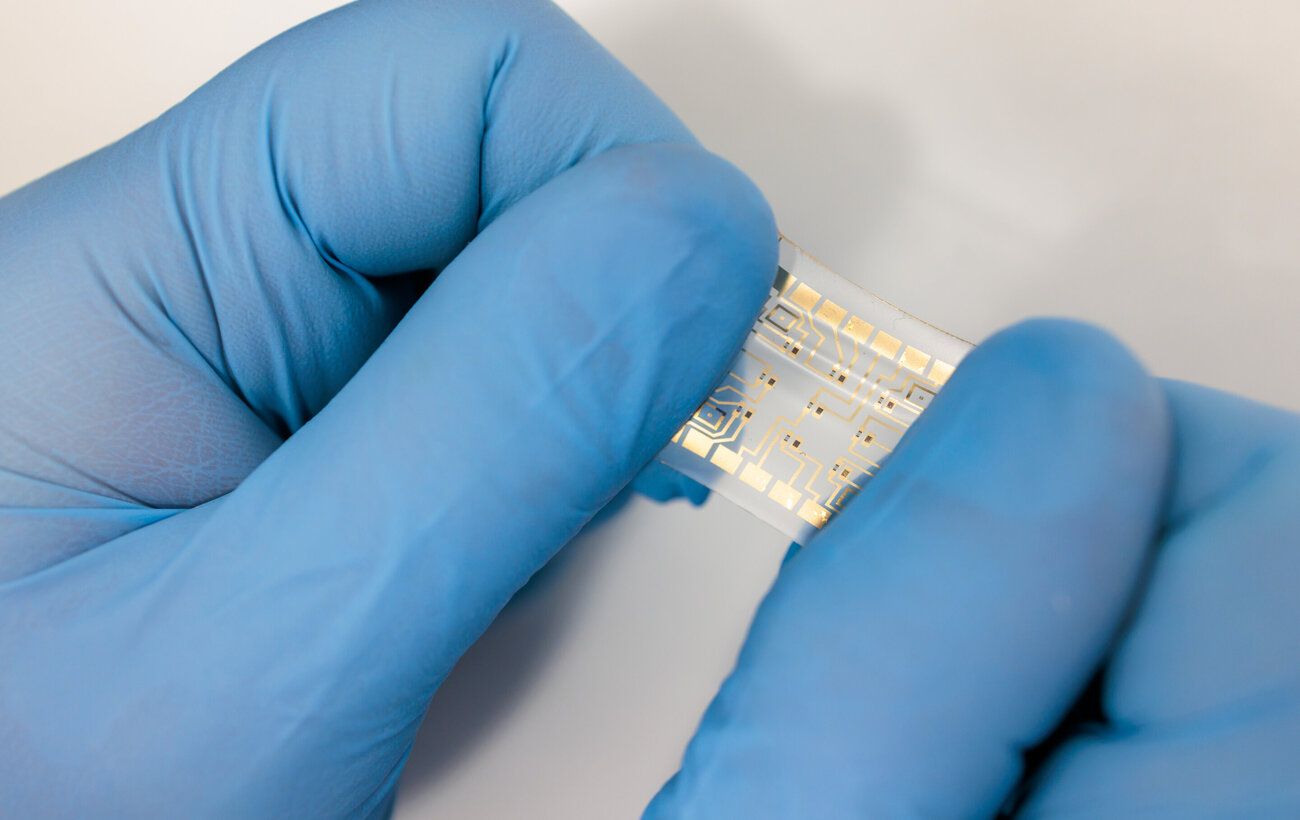
A team of American researchers has unveiled a groundbreaking skin patch that functions as a second skin, equipped with built-in artificial intelligence. Unlike conventional smartwatches that merely collect data and transmit it to remote servers, this new device processes information on-site, potentially transforming personal health monitoring.
Current wearable devices face a significant drawback: latency. When a smartwatch detects an irregular heartbeat, it must relay this information through a phone to a cloud server, where algorithms analyze the data before sending results back. This process can take several seconds, a delay that could be critical in emergencies such as ventricular fibrillation, a life-threatening condition characterized by chaotic heartbeats.
The innovative patch acts as a personal, real-time doctor integrated into the skin. Rather than using silicon chips, the researchers employed organic electrochemical transistors that process information through electric currents and ion movement in a specialized gel electrolyte. This architecture mimics the synaptic functions of the human brain and features built-in memory for complex AI computations performed locally.
Led by Professor Sihong Wang, the development team faced challenges related to the sensitivity of flexible materials to heat and solvents, which rendered traditional microelectronics manufacturing methods ineffective. Additionally, the gel electrolyte tended to leak, causing short circuits.
Collaboration with Argonne National Laboratory proved instrumental in overcoming these hurdles.
A new polymer was developed that hardens into precise patterns when exposed to ultraviolet light.
Printing density was enhanced through photolithography, allowing researchers to fit 10,000 elastic transistors within a single square centimeter of the electronic skin.
In tests designed to evaluate the patch’s effectiveness, engineers uploaded an AI algorithm aimed at combating ventricular fibrillation. Typically, this condition is treated with a powerful and painful shock from a defibrillator that affects the entire heart. The researchers proposed a targeted approach, tracking the direction of abnormal electrical waves in the heart and neutralizing them with preemptive micro-impulses.
Tests conducted on actual donor hearts demonstrated that the flexible patch could accurately locate dangerous electrical waves with an impressive 99.6% accuracy. Remarkably, the device maintained its effectiveness even when stretched to one-and-a-half times its original length.
In a separate experiment, the neural network embedded in the patch analyzed comprehensive patient data—cholesterol levels, blood sugar, maximum heart rate, and ECG readings—to assess heart attack risk with an accuracy of 83.5%.
Currently, the development team is focused on integrating additional biosensors and elastic wireless modules into the patch, aiming to create a fully autonomous health monitoring system.
Researchers have developed a skin patch that processes health data in real-time, potentially improving emergency responses to heart conditions. With high accuracy in detecting dangerous heart rhythms, this innovation could lead to a new era in personal health monitoring.