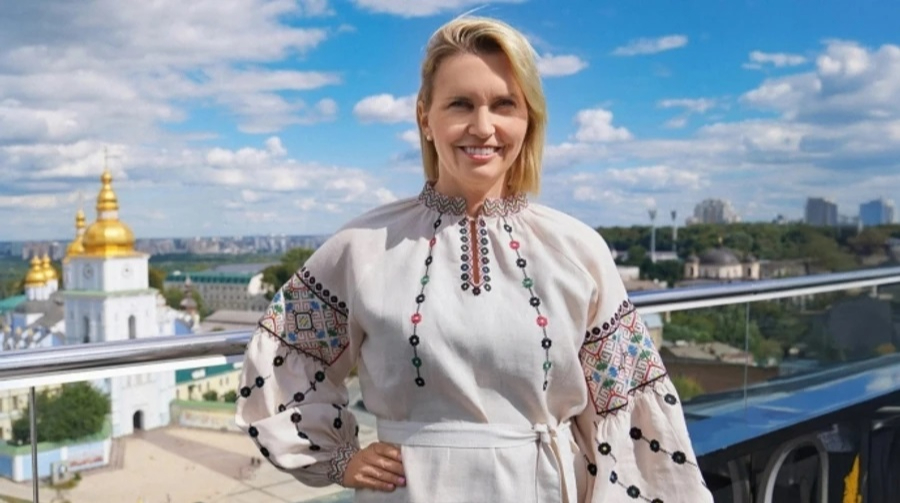
Bridgit Brink, the former US ambassador to Ukraine, has expressed serious concerns regarding the decision by President Donald Trump in March 2025 to suspend military assistance to Ukraine, a move she claims jeopardized the safety of both Ukrainians and the approximately 1,000 American embassy personnel in Kyiv.
In an interview with Reuters, Brink highlighted the potential life-threatening implications of this decision, particularly following a high-profile meeting between Trump and Ukrainian President Volodymyr Zelensky at the White House shortly before the aid suspension. The halted military support included critical air defense systems that had been protecting both Ukrainian citizens and US embassy staff from Russian drone and missile attacks.
“I had 1,000 people, all civilians, on the ground. And we were protected by Ukrainians using American and other equipment,” Brink stated.
Brink noted that the suspension of military aid occurred without prior warning, leading to a lack of clarity regarding the rationale behind the decision. “When we tried to find out why it was stopped, we received no response,” she remarked.
Brink reached out to various government entities, including the Pentagon and the State Department, expressing her deep concerns about the implications for both Ukrainian safety and the security of US personnel. However, the Pentagon did not provide a comment on her statements.
She also revealed that her team worked behind the scenes to persuade the Trump administration to restore the military assistance, which was eventually reinstated on March 11. However, Brink noted that she never received an official explanation for the initial suspension.
The relationship between the Trump administration and its embassies was further strained by significant staffing reductions at the National Security Council (NSC), which traditionally coordinates foreign and defense policy. In 2025, Trump cut the NSC staff from hundreds to just a few dozen.
According to three current and former American officials in Washington, NSC staff had not conducted regular meetings for several months, limiting their ability to organize interagency discussions on national security and foreign policy matters. A White House representative stated that while NSC meetings continued, they were less frequent and focused on Trump’s priorities.
During this period, many officials reported receiving minimal guidance on critical issues, such as the war in Ukraine and NATO’s future. Instead, they closely monitored Trump’s posts on Truth Social for political signals, often keeping his account open on a separate screen to respond quickly to his updates.
Brink, who previously participated in NSC meetings under President Joe Biden to develop and coordinate complex wartime policies between Washington and the Kyiv embassy, noted that such meetings ceased during Trump’s presidency. Instead, she was advised to “just call people,” a situational approach she described as ineffective in a conflict zone where Russian attacks were commonplace.
“We are seven hours ahead, and we are in a bunker almost every night,” Brink explained.
Brink also criticized Trump’s policy of appeasement towards Russia, which involved seeking closer ties with President Vladimir Putin while simultaneously blaming Ukraine for the aggression it faced. This approach ultimately led Brink to resign in April 2025 in protest. Two months later, she announced her candidacy for the US House of Representatives as a Democratic candidate from Michigan.
Bridgit Brink, former US ambassador to Ukraine, has voiced concerns over President Trump's suspension of military aid to Ukraine in March 2025, citing risks to both Ukrainian citizens and US embassy staff. Brink's statements highlight the challenges faced by US diplomats during this period and the strained relations within the Trump administration.
Source: Reuters