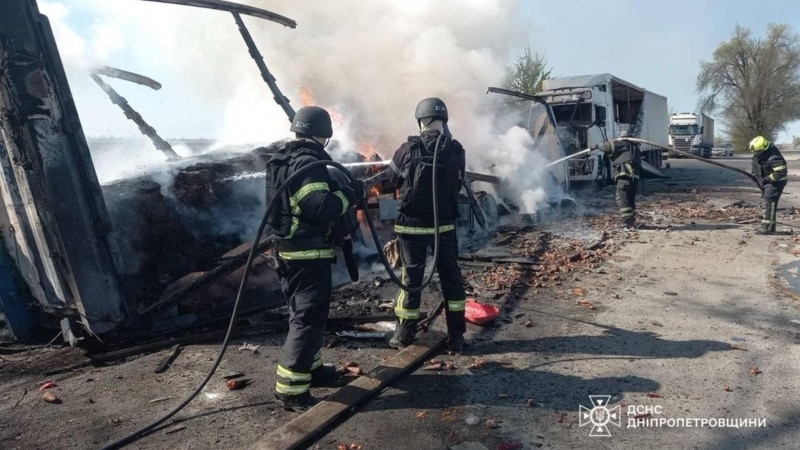
On May 7, Russian forces launched nearly 80 attacks on the Dnipropetrovsk region using rockets, artillery, and drones, resulting in injuries to five individuals, according to regional military administration chief Oleksandr Hanzha.
Hanzha reported that the city of Dnipro suffered damage to businesses, cultural institutions, and vehicles. Additionally, the Solonyansky community in the Dnipro district was targeted, leading to damage at a local agricultural enterprise. In the Nikopol area, strikes were directed at the towns of Nikopol, Pokrovsk, Chervonohryhorivka, Marhanets, and Myrivska, affecting businesses, infrastructure, and residential buildings.
Among the injured, a 45-year-old man was hospitalized in serious condition, while the others are expected to receive outpatient care.
Further attacks were reported in Kryvyi Rih, where Russian forces targeted the Apostolivska and Zelenodolsk communities, causing additional infrastructure damage.
Russian military operations have consistently targeted Ukrainian cities and civilian infrastructure across various regions, employing a range of weaponry including drones, missiles, and artillery systems.
Ukrainian authorities and international organizations have classified these attacks as war crimes, emphasizing their deliberate nature. The strikes on essential services and healthcare facilities are seen as attempts to deprive civilians of electricity, heating, water, communication, and medical assistance, raising concerns about potential genocidal actions.
Legal experts and human rights advocates argue that Russia’s actions during the ongoing conflict may constitute genocide, citing public declarations by Russian officials questioning the existence of Ukrainians as an ethnic group. These statements, along with targeted attacks on vital infrastructure, persecution of pro-Ukrainian individuals in occupied territories, and the cultural erasure of Ukrainian identity, contribute to this classification.
The 1948 United Nations Convention on the Prevention and Punishment of the Crime of Genocide obligates its 149 member states to prevent and punish acts of genocide in both wartime and peacetime.
According to the Convention, genocide includes actions intended to destroy, in whole or in part, a national, ethnic, racial, or religious group. Indicators of genocide can include the killing of group members, causing serious bodily or mental harm, and the deliberate infliction of conditions aimed at destroying a group.
Russian leadership has denied that its military is intentionally targeting civilian infrastructure or causing civilian casualties during the conflict, despite mounting evidence to the contrary.
Recent Russian military actions in the Dnipropetrovsk region have resulted in significant civilian injuries and infrastructure damage. Authorities classify these attacks as war crimes, raising serious concerns about potential genocidal actions against Ukrainians.