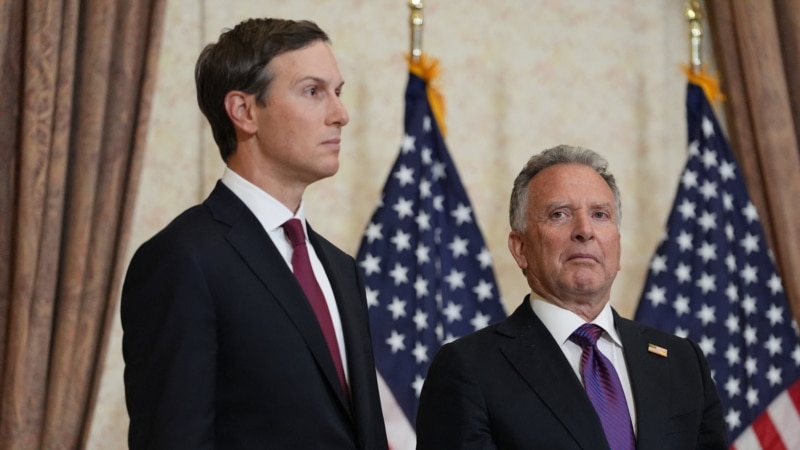
U.S. envoys Steve Witkoff and Jared Kushner have postponed their planned visit to Ukraine, reflecting growing concerns in Washington about the effectiveness of renewed peace negotiations regarding the ongoing conflict. This decision comes despite months of internal discussions about the trip, which would have marked their first visit to Ukraine, while both have previously traveled to Moscow for discussions with President Vladimir Putin.
A senior Ukrainian official expressed disappointment over the envoys’ failure to follow through on their commitments, stating, “They have promised to visit Kyiv multiple times but have yet to fulfill that promise.” This sentiment has been echoed publicly, with President Volodymyr Zelensky openly criticizing the approach taken by the U.S. representatives.
The intended visit was not merely a gesture of goodwill; it aimed to revitalize trilateral diplomatic efforts among Ukraine, the U.S., and Russia, particularly as negotiations have stalled. Sources indicated that Witkoff and Kushner were expected to meet with Zelensky in Kyiv before proceeding to Moscow for talks with Putin.
Strategically, both envoys remain heavily involved in U.S.-Iran negotiations, which has shifted the administration’s focus away from Ukraine. An official noted that the current priorities have relegated Ukraine from being a central issue on the diplomatic agenda.
Logistical challenges also hinder the trip, particularly the need for rail travel during wartime, which complicates arrangements for Witkoff. More fundamentally, the lack of progress in negotiations poses a risk that the visit could highlight the ongoing deadlock, particularly regarding territorial disputes.
An American official confirmed that discussions about the visit are ongoing but emphasized that it has not yet been confirmed. Despite the lull in high-level interactions, communication between Kyiv and Washington continues. According to a Ukrainian official, Kyiv is exploring “new formats” to enhance cooperation with the United States.
Negotiations have been stalled for over two months, with Washington’s attention shifting to the conflict with Iran and related diplomatic efforts. The last round of trilateral talks occurred on February 16, and a subsequent meeting scheduled for late February was postponed.
In a recent interview with Reuters, President Zelensky stated that the U.S. has conditioned security guarantees on Ukraine’s withdrawal of troops from the Donbas region. Kirill Dmitriev, a special representative of the Russian president, expressed satisfaction with Zelensky’s acknowledgment that U.S. security guarantees would only be offered if Ukraine withdraws from Donbas, calling the comment a positive development.
In response, U.S. Secretary of State Marco Rubio labeled Zelensky’s assertions as false. The Ukrainian president countered by suggesting that he had revealed only a fraction of the broader issues at play.
The planned visit of U.S. envoys to Ukraine has been delayed due to concerns about the effectiveness of peace negotiations. This reflects a broader shift in U.S. diplomatic focus and ongoing challenges in the Ukraine conflict.