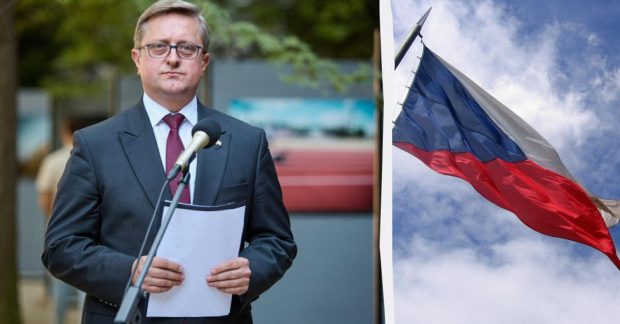
The Czech Republic is set to implement stricter regulations concerning Ukrainian refugees who hold temporary protection status. According to Vasyl Zvarych, the Ukrainian ambassador to the Czech Republic, violations of local laws by these individuals could lead to the revocation of their status or even deportation.
In an interview with the media outlet Glavcom, Zvarych emphasized that the proposed legislative changes are not intended to worsen the situation for Ukrainians but to adapt existing laws to current realities. He noted that many Ukrainians who fled the Russian invasion have successfully integrated into Czech society, securing employment and establishing livelihoods.
“The focus of the legislative changes is to provide Ukrainians with greater opportunities to transition from temporary protection to long-term residency in the Czech Republic,” Zvarych stated. He also mentioned that the Czech government is working to enhance oversight to prevent any misuse of the temporary protection status.
Despite the tightening of regulations, Zvarych reassured that the day-to-day lives of Ukrainians in the Czech Republic would not face critical restrictions. He indicated that individuals will need to be more vigilant regarding compliance with local laws while holding temporary protection status.
Refugee Policy Discussions
In response to a question regarding recent comments by Czech Interior Minister Vít Rakušan about limiting the intake of refugees from western Ukraine and working-age men, Zvarych noted that these remarks stem from the coalition agreement prioritizing migration policy. He does not perceive these initiatives as being directed against Ukrainians.
“From what I have been assured, those Ukrainians who are legally residing and working in the Czech Republic with temporary protection status will not experience significant changes. There may be minor adjustments, such as a reduction in the time limit for how long individuals can stay outside the Czech Republic without losing their status,” he explained.
Currently, this limit is set at 90 days, but it is expected to be reduced to approximately 30 days to ensure that individuals with temporary protection do not reside primarily in Ukraine or other EU countries.
Integration and Cultural Connection
Zvarych also addressed the issue of integration, stating, “We are categorically against the assimilation of our citizens. Integration into European society is an irreversible process linked to Ukraine’s future membership in the European Union. However, it is crucial to maintain a connection between Ukrainians and their homeland in some form.”
Approximately 600,000 Ukrainians currently reside in the Czech Republic, with less than half having arrived before the onset of the full-scale Russian aggression. Zvarych highlighted efforts to ensure that ties between these individuals and their homeland remain intact through Ukrainian schools and cultural initiatives.
Broader Context of Ukrainian Refugees in Europe
In related developments, German Chancellor Friedrich Merz recently expressed Germany’s commitment to facilitating the return of Ukrainians to their home country. He also voiced solidarity with the Ukrainian government’s decisions regarding travel restrictions for men of military age.
Ukrainian President Volodymyr Zelensky has emphasized the need for rotations among military personnel at the front, suggesting that relevant authorities in Ukraine and Germany should address the status of Ukrainians who have left the country in violation of Ukrainian law.
The Czech Republic plans to tighten regulations for Ukrainian refugees with temporary protection status, focusing on compliance with local laws. Ambassador Vasyl Zvarych reassured that these changes aim to facilitate integration and long-term residency rather than impose critical restrictions.