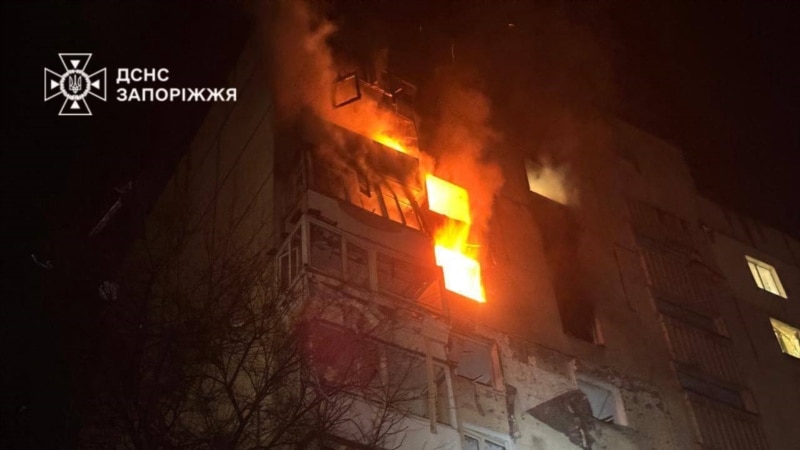
At least three individuals have died, and nearly twenty others sustained injuries due to Russian airstrikes in the Zaporizhzhia and Poltava regions on the night of March 24, according to regional military administration leaders.
Vitaliy Dyakivnych, head of the Poltava regional military administration, reported that residential buildings and a hotel were damaged in the Poltava community, resulting in two fatalities and eleven injuries. Meanwhile, Ivan Fedorov, head of the Zaporizhzhia regional military administration, confirmed one death and five injuries in Zaporizhzhia, which experienced a combined attack involving drones and missiles.
Fedorov noted that six apartment buildings, two private homes, a store, non-residential structures, and an industrial facility were damaged in the attack.
On the evening of March 23, Ukrainian President Volodymyr Zelensky urged citizens to remain vigilant regarding air raid alerts, citing intelligence suggesting that Russian forces might be preparing for a large-scale strike. He indicated that appropriate directives had been issued for air defense.
Russian military forces have consistently targeted Ukrainian cities and civilian infrastructure using various types of weaponry, including strike drones and missiles. These actions have been classified by Ukrainian authorities and international organizations as war crimes, emphasizing their deliberate nature.
Attacks on critical infrastructure, including energy and healthcare facilities, are viewed as attempts to deprive civilians of essential services such as electricity, heating, water supply, and medical assistance. Legal experts and human rights advocates argue that these actions could fall under the definition of genocide, as outlined in the 1948 UN Convention on the Prevention and Punishment of the Crime of Genocide.
The Convention obligates its 149 signatory nations to prevent and punish acts of genocide during both wartime and peacetime. It defines genocide as actions intended to destroy, in whole or in part, a national, ethnic, racial, or religious group.
Indicators of genocide include the killing of group members, infliction of serious bodily harm, deliberate creation of living conditions intended to destroy a group, prevention of births, and forcible transfer of children from one group to another.
Despite these allegations, Russian leadership denies that its military conducts targeted strikes against civilian infrastructure, asserting that such claims are unfounded.
Recent Russian airstrikes in Ukraine have resulted in multiple casualties and injuries, prompting international condemnation and raising concerns over potential war crimes. Ukrainian officials have classified these attacks as deliberate assaults on civilian infrastructure, with implications for international law regarding genocide.