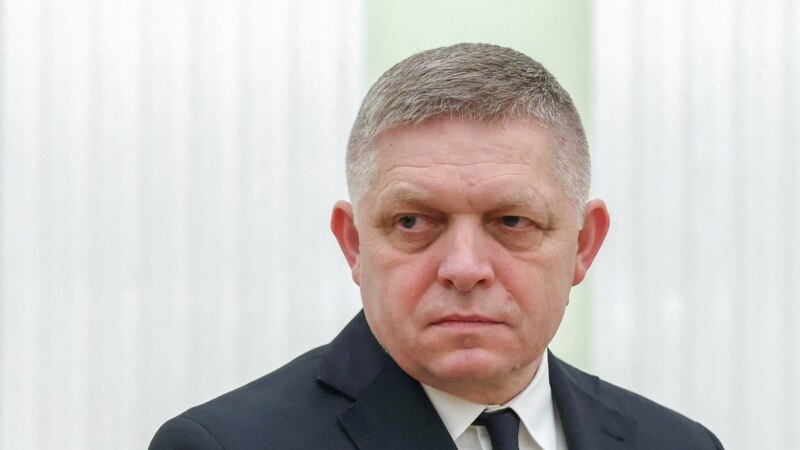
Slovak Prime Minister Robert Fico announced that his country will halt emergency electricity supplies to Ukraine unless oil transit through the Druzhba pipeline is restored by today. Fico stated, “From today, if the Ukrainian side requests assistance to stabilize the Ukrainian energy grid, it will not receive such help.”
The Prime Minister indicated that the suspension would be lifted once oil transit to Slovakia resumes. He noted that in January 2026, emergency supplies were needed to stabilize Ukraine’s energy network at double the rate compared to the entire year of 2025. This claim has not yet been commented on by Kyiv.
Ukraine’s Ministry of Energy previously reported a record volume of electricity imports from the EU to Ukraine in January, amounting to 41,987 GWh. However, the specific amount imported from Slovakia was not detailed.
This announcement followed unsuccessful attempts by European ministers in Brussels to persuade Slovakia and Hungary to retract their threats against Ukraine regarding delays in the restoration of the oil pipeline. Both countries are blocking the approval of the 20th sanctions package against Russia and a multi-billion euro loan for Ukraine, which EU leaders agreed upon during a summit in December. They have vowed to maintain their veto until the transportation of Russian crude via the Druzhba pipeline is resumed.
Ukrainian officials assert that the pipeline was damaged due to Russian shelling at the end of January, a claim that Hungarian and Slovak officials dispute. On February 23, Hungarian Foreign Minister Peter Szijjarto stated that there are no physical obstacles to the supplies, emphasizing political factors instead. He suggested that Kyiv is attempting to pressure Budapest to unblock negotiations regarding Ukraine’s EU membership.
Ukrainian Foreign Minister Andrii Sybiha reiterated at a European Council meeting on February 23 that the pipeline is indeed damaged, urging both European capitals to direct their ultimatums towards the Kremlin.
The European Commission confirmed on February 23 that “Russia has destroyed the Druzhba pipeline,” while also noting Ukraine’s obligations to repair it. The timeline for repairs, they added, depends on the Ukrainian side.
The Commission emphasized the expectation for all EU leaders to uphold their commitment made at the December 18 summit to allocate a multi-billion euro loan to Ukraine. Efforts by the EU and individual member states to persuade Hungary and Slovakia to withdraw their vetoes regarding the loan and the new anti-Russian sanctions package will continue at various levels.
Following the onset of the full-scale invasion, the EU prohibited the purchase of Russian oil. Hungary, Slovakia, and Austria received extensions due to their lack of access to the sea, which prevents them from receiving oil tankers from other countries and makes them reliant on the Druzhba pipeline.
The Druzhba pipeline, which transits through Ukraine, facilitates the transportation of Russian oil to Europe, including Hungary and Slovakia. According to a study by the Finnish Center for Research on Energy and Clean Air (CREA) and the Bulgarian Center for Study of Democracy (CSD), imports of Russian crude oil to Hungary and Slovakia from the beginning of the full-scale invasion in 2022 to 2024 have generated €5.4 billion in revenue for the Kremlin. This amount is equivalent to the cost of 1,800 Iskander-M ballistic missiles.
Slovakia's Prime Minister has announced a halt to emergency electricity supplies to Ukraine unless oil transit through the Druzhba pipeline is restored. This decision follows ongoing disputes regarding the pipeline's operational status and the political implications for EU sanctions against Russia.