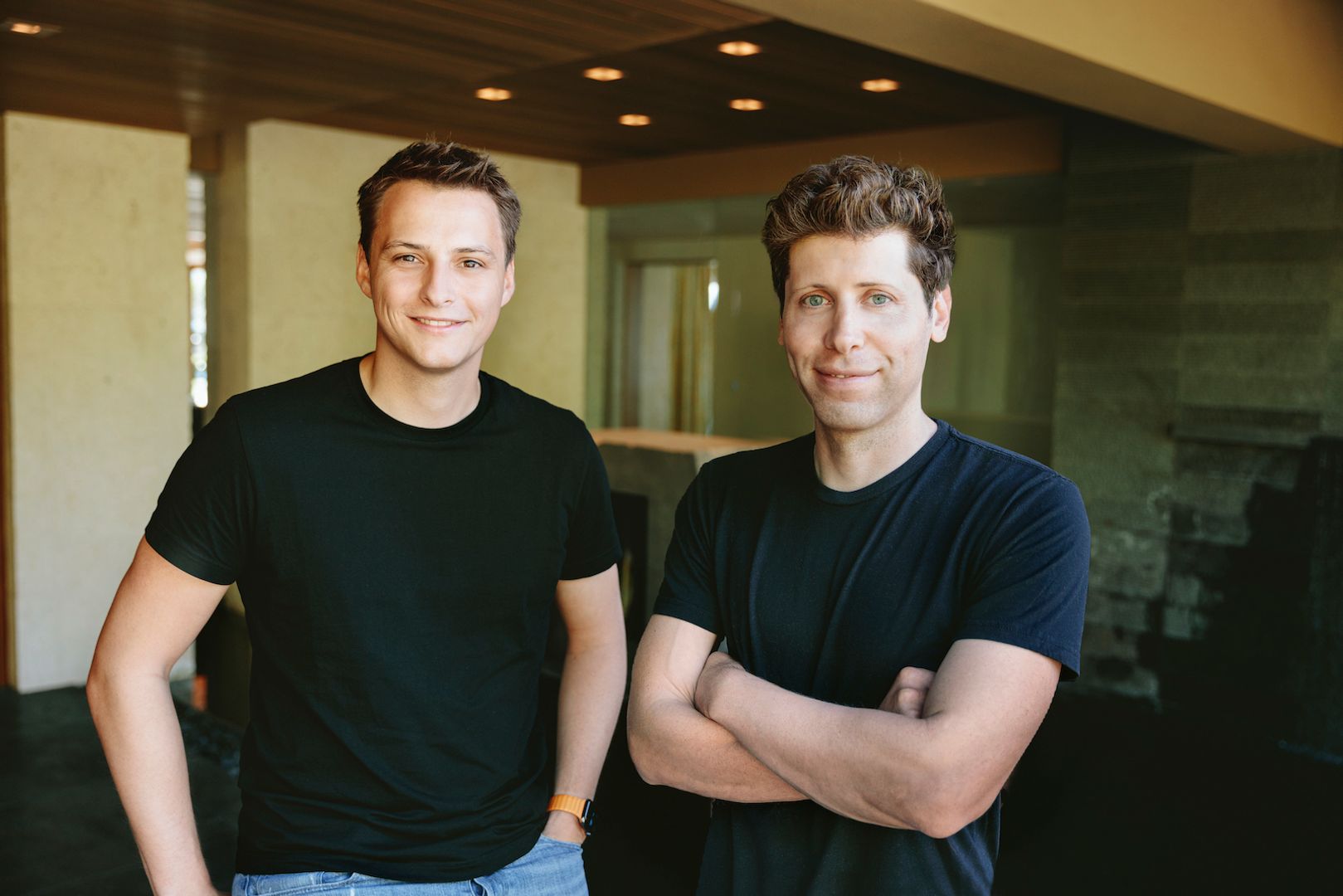
The World ID project, backed by Sam Altman, has announced a significant upgrade to its digital identity framework, aimed at enhancing online authentication for consumers, businesses, and AI agents. The announcement was made during an event in San Francisco, where the company emphasized its commitment to addressing growing concerns about online impersonation through bots and deepfakes.
The upgraded World ID system is designed to provide what the company terms ‘full-stack proof of human’ infrastructure. Central to this system are custom-built devices known as ‘Orbs,’ which users must visit in person to obtain a World ID. The Orb scans the user’s face and iris to generate a unique cryptographic code, ensuring that each individual is recognized as a unique human without disclosing personal information. The company states that images captured during this process are deleted immediately, and only anonymized data is transmitted across a distributed network to confirm the user’s identity.
Critics have raised concerns regarding the biometric scanning process utilized by the Orbs, questioning the implications for privacy and data security. In response, World has redesigned its system architecture to enhance privacy, security, and usability. New features include account-based identity management, multi-key support, and recovery mechanisms, aligning with the standards expected in large-scale security systems.
Accompanying the upgrade is the introduction of a World ID app, currently in beta testing. This application will enable users to manage their credentials and authenticate their identities across various platforms, streamlining the process of proving one’s identity online.
World is also expanding its partnerships with several consumer platforms to integrate its identity verification system. Notable collaborations include Tinder, where users will be able to showcase a ‘verified human’ badge, and a new tool called ‘Concert Kit’ aimed at helping artists reserve tickets for verified individuals, thereby combating ticket scalping.
The gaming and online community sectors are also part of World’s strategy, with partnerships involving companies like Razer and Mythical Games. Additionally, Reddit is exploring similar identity verification tools to enhance bot detection.
On the enterprise side, World is collaborating with Zoom to introduce a feature named ‘Deep Face,’ which will verify that meeting participants are real humans rather than deepfake representations. The project is also working with Docusign to integrate proof-of-human checks into digital agreements.
Furthermore, World is developing tools like ‘AgentKit’ that will allow developers to attach credentials to agents, ensuring that sensitive actions are conducted by verified individuals. Collaborations with firms such as Okta, Vercel, and Browserbase are underway to establish a trust layer for automated workflows without necessitating the use of personal data.
At the announcement event, Sam Altman remarked, ‘World ID is on the way to being a real human network for the internet,’ underscoring the project’s ambition to redefine online identity verification.
The World ID project has launched a significant upgrade to its digital identity system, focusing on enhanced security and privacy. The initiative aims to combat online impersonation through partnerships with various consumer and enterprise platforms.