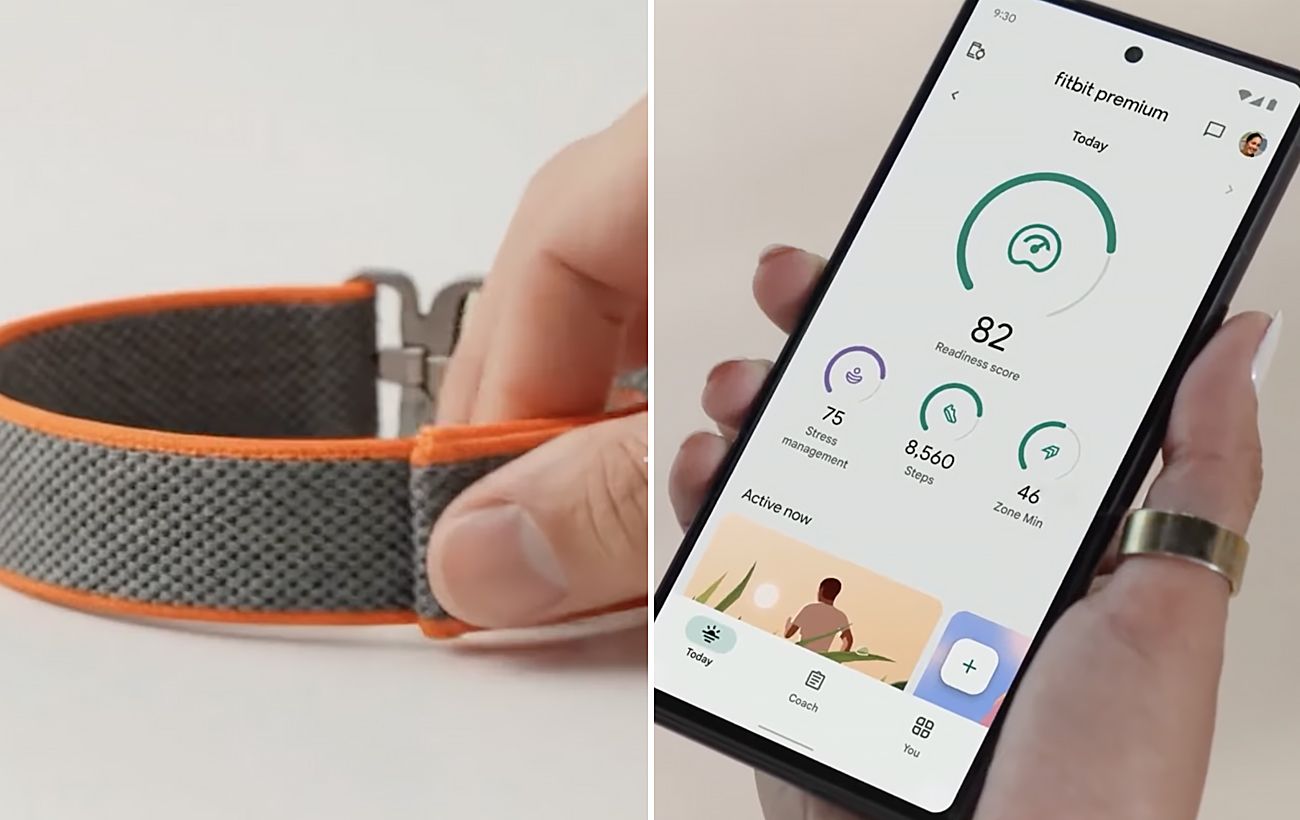
Google has introduced a groundbreaking fitness tracker, the Fitbit Air, which distinguishes itself by lacking a display and focusing on precise biometric data collection. This launch is expected to coincide with a shift in the software ecosystem, transitioning Fitbit services under the Google Health brand.
A key feature of the Fitbit Air is its absence of a screen. Engineers have emphasized that this design choice allows for a complete focus on the device’s ergonomics. The name “Air” reflects the concept of a lightweight gadget that is barely noticeable during continuous wear.
The tracker features a compact aluminum capsule that attaches with secure textile or silicone straps. Developers assert that this design is ideal for professional athletes and those seeking an accurate sleep tracker that remains unobtrusive at night without the distraction of a display’s light.
The technical capabilities of the fitness tracker are impressive. By eliminating the energy-consuming screen, Google claims that the Fitbit Air will significantly outperform standard smartwatches in battery life, reportedly lasting up to two weeks on a single charge.
The capsule houses advanced sensors that measure heart rate variability (HRV), blood oxygen saturation, and skin temperature. All collected data is transmitted directly to a smartphone, where Google Health Coach utilizes artificial intelligence to provide detailed analytics on the user’s readiness for physical activity.
Four-time NBA champion Stephen Curry has been appointed as a professional ambassador and performance consultant for the new product line, having tested the device in real-world conditions for several months.
The launch of the Fitbit Air is part of Google’s broader strategy to unify its health services under the Google Health platform. Reports indicate that the existing Fitbit Premium subscription will be rebranded, and personalized advice services will be integrated with the Gemini neural network.
Users will receive personalized health reports in text format, and they will be able to ask questions directly through the app. Developers believe this approach transforms the tracker from a mere sensor into a comprehensive tool for managing physical well-being.
The official debut of the Google Fitbit Air is anticipated at the Google I/O conference in May 2026.
Google has launched the Fitbit Air, a unique fitness tracker without a display, designed for accurate biometric monitoring. This device aims to integrate seamlessly into the Google Health ecosystem, enhancing user experience and health management.