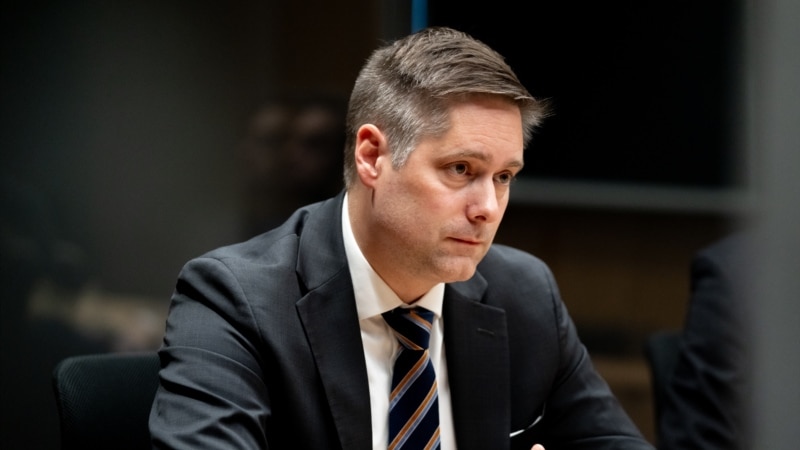
U.S. Deputy Assistant Secretary for Europe and Eurasia, Christopher Smith, informed Congress on May 14 that Russia may reposition troops with combat experience from the Ukraine conflict to NATO’s eastern flank. He emphasized that while Russia currently allocates around 90% of its military capabilities to Ukraine, it is likely to seek opportunities for power projection and create dilemmas for NATO.
Smith’s comments came during a House Foreign Affairs Subcommittee hearing focused on security threats faced by Estonia, Latvia, and Lithuania. The hearing highlighted growing concerns in Washington and among NATO allies that a ceasefire in Ukraine might not diminish the Russian threat but could instead shift Moscow’s focus to the northeastern border of the alliance.
Texas Representative and Subcommittee Chairman, Keith Self, noted that Russia is already rebuilding its military forces while continuing its operations in Ukraine. He warned that once the conflict concludes, there is a genuine risk that Russia could station its battle-hardened troops at the borders of the Baltic states. Historical patterns suggest that a cessation of hostilities in Ukraine may not lessen the Russian threat but could redirect it.
Smith pointed out that the threat is already evident through Russian cyberattacks, sabotage operations, and hybrid tactics targeting the Baltic region. He stated, “We should expect Russia to redistribute its forces.”
Bipartisan lawmakers recognized Estonia, Latvia, and Lithuania as exemplary NATO allies, citing their high defense spending and robust support for Ukraine. All three Baltic nations are nearing compliance with President Donald Trump’s defense spending requirement of 5% of GDP, with Latvia being the first NATO country to legally commit to this target.
Since Russia’s invasion in 2022, the Baltic states have contributed a significant portion of their defense budgets to Ukraine. Democratic Representative Bill Keating from Massachusetts mentioned that these countries have provided support equivalent to about 13% of their annual defense expenditures. He noted, “For the U.S. to match Estonia’s contribution in GDP percentage, it would need to provide over a trillion dollars.”
Smith described the Baltic nations as some of the most transatlantic and pro-American voices in Europe, consistently backing Washington on NATO spending, energy security, and support for Ukraine. He characterized the U.S. partnership with the Baltic states as strong, enduring, and strategically vital.
However, several Democrats at the hearing pressed Smith regarding reports of delays in arms shipments to the Baltic states due to U.S. military commitments related to the conflict with Iran. Smith acknowledged the delays concerning certain munitions but affirmed Washington’s commitment to supplying weapon systems purchased by Baltic allies.
The hearing also focused on hybrid threats, including cyberattacks, drone incursions, sabotage of underwater infrastructure, and disinformation campaigns attributed to Russia and Belarus. Smith highlighted that NATO and the Baltic countries are increasingly concentrating on defense against drone warfare and cyber operations, lessons learned directly from the battlefield in Ukraine. He noted, “Latvia, for instance, is the largest drone manufacturer in Europe after Ukraine.”
Lawmakers and officials indicated that the Baltic nations are actively working to reduce their dependence on Russia and China. Smith stated that the Baltic states severed ties with Russian energy imports in February 2025 and now receive approximately 80% of their liquefied natural gas imports from the U.S. He also warned that Baltic governments are increasingly viewing China through the lens of its support for Moscow’s military efforts, as China reportedly supplies about 80% of dual-use goods for Russia’s defense industry.
U.S. officials have raised alarms about Russia's potential military repositioning towards NATO's eastern flank, particularly affecting the Baltic states. Concerns were voiced during a congressional hearing about the ongoing threats posed by Russia, emphasizing the need for vigilance and support for NATO allies.