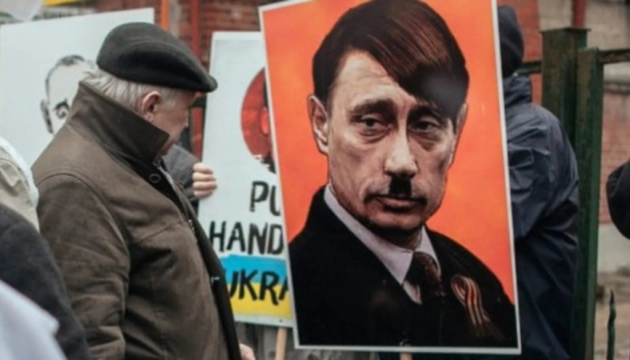
The ongoing conflict in Ukraine has sparked renewed discussions about the nature of the Russian state and its historical parallels with fascism and Nazism. As the war enters a new phase, some analysts are drawing connections between contemporary Russia and the totalitarian regimes of the past, particularly in light of the rhetoric used by both sides.
On June 22, 2026, a significant date marking 85 years since the onset of World War II, reflections on the war’s origins reveal a complex interplay of historical narratives. The Soviet Union, under Joseph Stalin, played a pivotal role in the war’s initiation alongside Nazi Germany, leading to immense human suffering and widespread devastation across Europe. The current conflict initiated by Russia against Ukraine has now surpassed 1,418 days, a symbolic threshold that echoes past aggressions.
For over a decade, Russian propaganda has been rife with the slogan “we can repeat,” signaling a desire to reclaim lost imperial glory. The consequences of this mindset have manifested in the destruction of Ukrainian cities and a staggering death toll on both sides. Unlike the past, however, the global democratic community now largely supports Ukraine, marking a stark contrast to the geopolitical dynamics of the early 20th century.
As the war continues, questions arise about the nature of the combatants involved. Many argue that Ukraine, despite being a smaller nation, stands against a monstrous imperial regime centered in Moscow. Russian state media, however, has inverted this narrative, labeling Ukraine as the aggressor and branding it with accusations of Nazism. This claim, while absurd to many, persists due to several factors.
- First, Moscow has a long history of utilizing propaganda to manipulate perceptions, often branding its opponents as fascists or Nazis.
- Second, the Russian government heavily funds its media outlets and information channels, creating a pervasive environment of misinformation.
- Third, the rise of the internet and social media has amplified the reach of Russian propaganda, making it easier to disseminate false narratives.
- Fourth, the current conflict is fundamentally an information war, and underestimating this aspect could be detrimental.
- Lastly, the effectiveness of Russia’s propaganda campaign is evident, as many continue to believe in these outlandish claims.
Definitions of Nazism and fascism vary, but many scholars agree that contemporary Russia exhibits several characteristics associated with these ideologies. While Ukraine does not fit any of these definitions, Russia’s political landscape reflects many of the traits associated with totalitarian regimes, including a cult of personality, suppression of dissent, and aggressive nationalism.
In discussions about who embodies Nazism in this conflict, it is essential to consider the perspectives of historians and political analysts. Yaroslav Hrytsak, a noted historian, argues that Putin’s regime displays clear fascist traits, including an obsession with controlling all aspects of life and a disdain for democratic values. Vladimir Yermolenko, a philosopher, emphasizes that Russian nationalism is rooted in a belief in superiority over other nations, including Ukrainians.
Political scientist Igor Reiterovich points out that the Russian state denies the existence of the Ukrainian nation, perpetuating the notion of a singular Russian identity. This denial, he argues, is a classic manifestation of Nazi ideology, which seeks to erase the identities of perceived inferior groups.
As the conflict unfolds, the use of the term “Nazi” by Russian authorities against Ukraine serves as a convenient tool for their narrative. This tactic not only misrepresents the reality of the situation but also reflects a deeper historical mythos that continues to shape Russian perceptions of the world.
In conclusion, the ongoing war in Ukraine has reignited discussions about the historical implications of totalitarianism and the role of propaganda in shaping national identities. As both sides navigate this complex landscape, the need for a nuanced understanding of the past becomes increasingly critical.
The article explores the complex relationship between contemporary Russia and historical fascism, particularly in the context of the ongoing war in Ukraine. It highlights the use of propaganda and the inversion of narratives as key elements in the conflict, while drawing parallels between past totalitarian regimes and current political dynamics.
