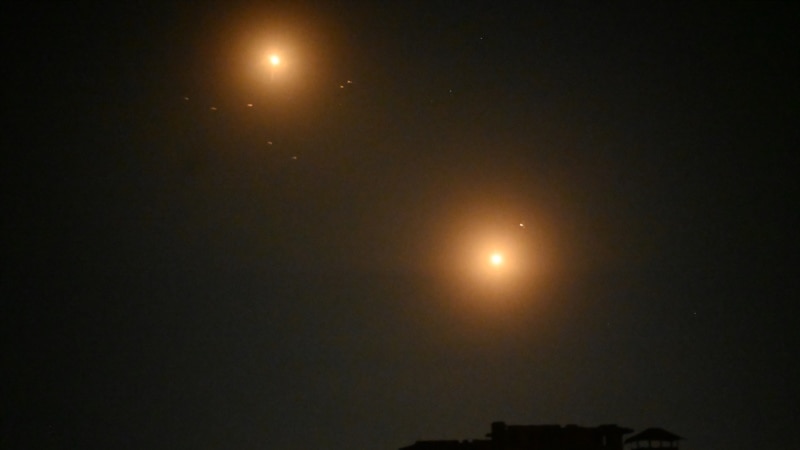
On April 24, the Russian military launched a series of airstrikes against Ukraine, deploying a total of 666 aerial attack assets, according to a statement from the Ukrainian Air Force.
Ukrainian defense forces reported that their air defense systems successfully intercepted 30 Russian missiles and 580 drones during this period. The city of Dnipro was identified as a primary target, with additional strikes reported in the Kharkiv, Chernihiv, Sumy, Odesa, and Kyiv regions.
The Ukrainian military’s radio-technical units documented the following breakdown of the aerial assault: 47 missiles and 619 drones, including:
- 12 ballistic missiles of the Iskander-M/S-400 type, launched from Millerovo, Kursk, and occupied Crimea;
- 29 cruise missiles of the X-101 type, fired from the Caspian Sea;
- One Iskander-K cruise missile from Bryansk;
- Five Kalibr cruise missiles, also launched from the Caspian Sea;
- 619 strike drones, including types such as Shahed, Gerbera, and Italmas, originating from various locations including Bryansk, Kursk, and Crimea, with approximately 400 of these being Shahed drones.
The Russian military has been consistently targeting Ukrainian cities and civilian infrastructure using a variety of weapons, including drones, missiles, and rocket artillery. Ukrainian authorities, along with international organizations, have classified these attacks as war crimes, emphasizing their deliberate nature.
Attacks on critical infrastructure, such as energy and healthcare facilities, are viewed as attempts to deprive civilians of essential services, which some legal experts and human rights advocates argue could amount to genocidal actions. They cite statements from Russian officials denying the existence of Ukrainians as an ethnic group and calling for their destruction.
The 1948 United Nations Convention on the Prevention and Punishment of the Crime of Genocide obligates its 149 signatory countries to prevent and punish acts of genocide during both wartime and peacetime. The convention defines genocide as actions intended to destroy, in whole or in part, a national, ethnic, racial, or religious group.
Indicators of genocide include the killing of group members, causing serious bodily or mental harm, deliberately inflicting living conditions calculated to destroy a group, preventing births, and forcibly transferring children from one group to another.
The Russian government has consistently denied allegations that its military targets civilian infrastructure or intentionally harms non-combatants during the ongoing conflict.
The Russian military has intensified its airstrikes on Ukraine, targeting multiple regions and resulting in significant interceptions by Ukrainian defense forces. These actions have drawn international condemnation, with allegations of war crimes and potential genocide being raised against Russia.