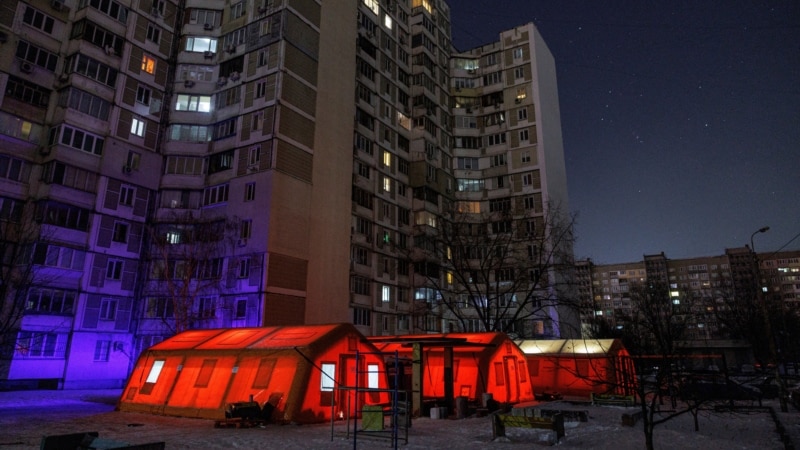
Recent statements from the United Nations High Commissioner for Refugees (UNHCR) indicate that despite intensified Russian assaults on Ukraine’s energy infrastructure, there has not been a corresponding rise in the number of people fleeing the country. Bernadette Castel-Hollingsworth, a representative of the UNHCR in Ukraine, shared these insights during an interview with Interfax-Ukraine.
Castel-Hollingsworth noted that UNHCR teams have been monitoring border crossings daily at 30 checkpoints since 2022. She emphasized that while there may have been some internal movements within Ukraine, these were largely temporary. For instance, during particularly cold weeks, individuals may have sought refuge with relatives but returned afterward.
Since November, the frequency of border crossings has remained stable, although the motivations behind these departures have shifted. Castel-Hollingsworth explained, “The overall number of people leaving has not increased, but the reasons for their departures are increasingly linked to energy issues, including water supply concerns, which we had not observed in 2024.” This shift in reasoning highlights growing anxieties regarding essential services amid ongoing conflict.
Regarding demographic trends among those leaving or displaced internally, Castel-Hollingsworth stated that there is no predominant group. She observed a slight increase in young men departing in September and October, following a legal change in August, but this trend did not persist. Most departures involve families, single-parent households with children, vulnerable individuals, and the elderly.
Since the onset of Russia’s full-scale invasion in February 2022, the country has faced relentless attacks on its energy infrastructure. As of January 2026, the UN reported that Ukraine has lost over half of its pre-invasion electricity generation capacity due to occupation and damage from attacks, now operating at only 11 GW—significantly below the 18 GW needed during peak winter consumption. This gap has resulted in prolonged electricity supply disruptions.
The Ukrainian Foreign Ministry has characterized the Russian strikes on energy facilities, which deprive civilians of heating during severe winter conditions, as acts of genocide. In early February, Russian Foreign Minister Sergey Lavrov claimed that Russia had not initiated attacks on civilian infrastructure, alleging that Ukraine was the first to target Russian energy facilities.
On February 25, Ukraine’s Prosecutor General Ruslan Kravchenko announced that he had submitted evidence to the International Criminal Court regarding Russian attacks on Ukraine’s energy infrastructure from July 2025 to February 2026.
The UNHCR has reported that despite increased Russian attacks on Ukraine's energy infrastructure, there has been no significant rise in the number of people leaving the country. The motivations for those who do leave have shifted toward concerns over energy and water supply, reflecting the ongoing impact of the conflict on essential services.