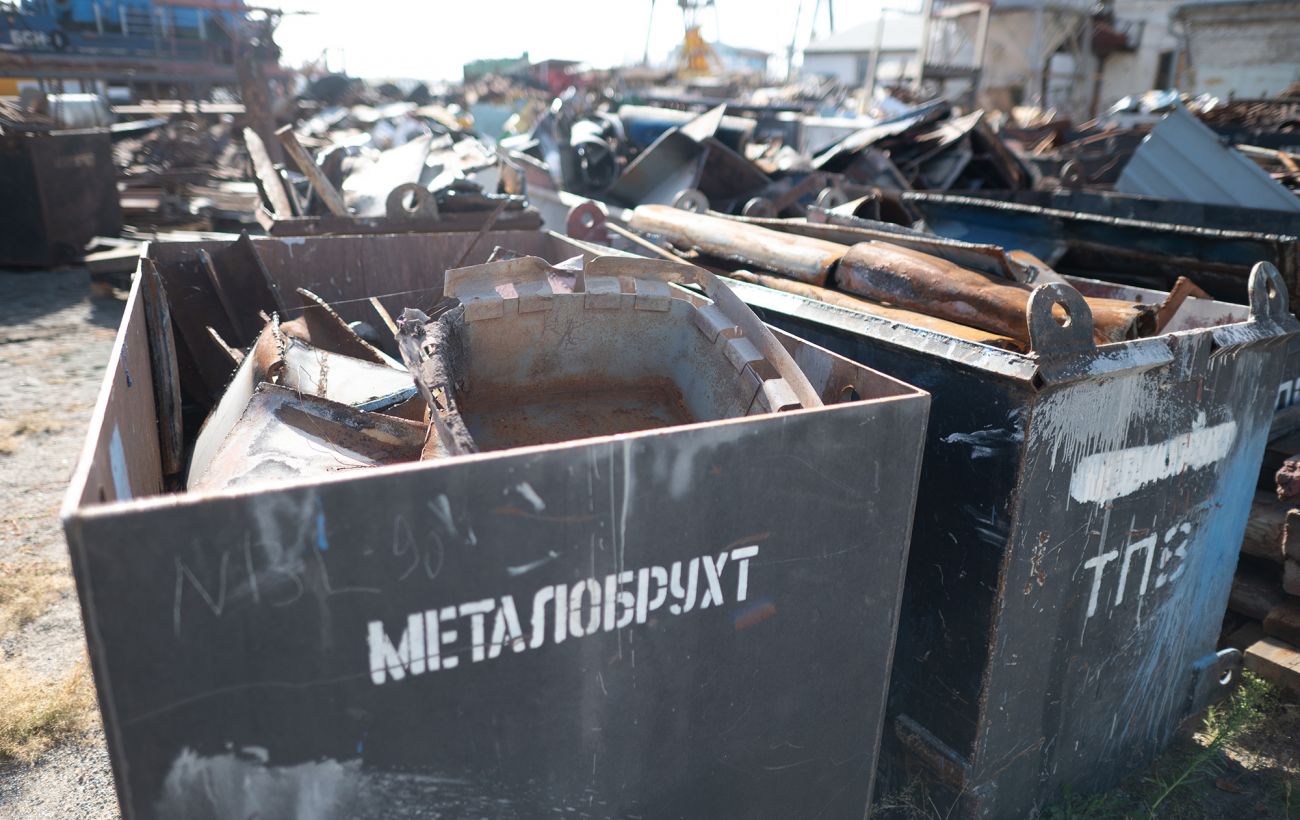
The Ukrainian government’s recent decision to limit scrap metal exports has sparked controversy, as some exporters are seeking to challenge the ruling in court. The measure aims to bolster the domestic economy, but it has met resistance from those who previously benefited from more lenient export policies.
Experts indicate that the state stands to gain significantly more from processing scrap metal into finished products than from its mere export. One industry expert noted, “The state earns more than ten times from recycling scrap into finished goods than from exporting it directly.” This highlights the economic rationale behind the government’s restrictions.
According to industry estimates, the government is losing out on at least tens of billions of hryvnias and billions of dollars in foreign currency revenue due to the current export practices. Many exporters are reportedly operating through individual entrepreneurs, paying minimal taxes, and taking advantage of the duty-free regime with the European Union by routing shipments through third countries, including Turkey.
Ukrainian metallurgical enterprises have also been adversely affected by the export of scrap metal. The President of the Ukrainian Metal Industry Association (UMPA) stated that last year, local metallurgical plants missed out on at least 200,000 tons of scrap that could have been processed into steel and exported as finished products. This shortfall translates into over $1 billion in potential revenue.
Since 2022, the metallurgical sector has been functioning under challenging conditions, with some large companies incurring losses amounting to tens of billions of hryvnias annually. Despite this, scrap metal procurement has remained a profitable business during the years 2022 to 2024.
In response to the government’s restrictions, some exporters are attempting to overturn the decision through legal channels. Kalenkov noted that lawsuits are being filed without the payment of court fees, with the expectation that cases will be automatically reassigned to different judges. He expressed concern over the judicial process, suggesting that the aim is to have the case heard by a more favorable judge.
Additionally, Kalenkov pointed out that Polish partners have expressed concerns regarding the export limitations. He noted that the volume of scrap metal exported from Ukraine to Poland has increased from 50,000 tons to 350,000 tons in recent years, yet this figure represents less than 5% of the Polish market, which is estimated at 7 million tons and is currently in surplus.
The head of UMPA emphasized that the association is in ongoing communication with the Ministry of Economy, the Cabinet of Ministers, and European partners, providing economic data to support the industry’s position. He concluded, “This is a necessary yet justified decision that aligns with the interests of the Ukrainian economy and is not directed against our European colleagues.”
The Ukrainian government's restrictions on scrap metal exports aim to enhance domestic economic conditions, yet exporters are contesting the decision legally. The metallurgical sector has reported significant losses due to reduced access to scrap, while the government faces potential revenue losses from current export practices.