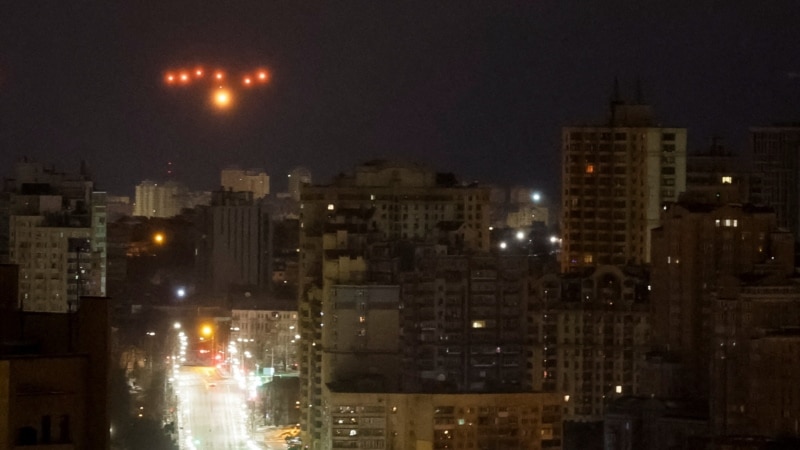
Ukrainian military officials announced on March 2 that their air defense systems successfully thwarted 14 significant Russian assaults over the winter months. These attacks, characterized by a combination of missile and drone strikes, intensified notably in February.
According to the Ukrainian Air Force, Russian forces launched seven large-scale attacks using various types of missiles and drones during December and January. The frequency of these assaults doubled in February, with another seven major attacks reported.
“This winter has posed one of the toughest challenges for Ukraine’s air defense system. The aggressors have repeatedly attempted to plunge Ukraine into complete blackout and destroy critical infrastructure, employing an unprecedented number of missiles and drones,” the Air Force stated. They noted that the enemy combined drone strikes with missile launches of different types to complicate the air situation and exhaust defense resources.
The military highlighted a systematic increase in the use of both standard ballistic missiles, such as the Iskander-M, and other missile types that approach their targets on ballistic trajectories, including the Kinzhal, Zircon, Kh-22/32, and S-300/S-400 systems. Over the course of three months, Russian forces reportedly fired more than 700 missiles of various types.
Despite these challenges, the Ukrainian airspace remained largely intact. The resilience of the energy system was attributed to the professionalism of air defense units, mobile fire groups, radio-technical troops, aviation, and drone units. Each intercepted missile serves as evidence of Ukraine’s growing strength, technological advancement, and experience. The Air Force also expressed gratitude to energy workers and repair teams who restored power under fire, keeping the energy network operational.
Officials warned of potential new attacks from Russia and emphasized the need for continued support from international partners, particularly in the form of regular supplies of missiles for air defense, aviation, and other weaponry to protect Ukrainian cities from Russian ballistic missiles, cruise missiles, and drones.
Russian military forces have consistently targeted Ukrainian cities and civilian infrastructure across all regions using various weapons, including strike drones, missiles, guided aerial bombs, and multiple rocket launch systems. Ukrainian authorities and international organizations classify these attacks as war crimes, asserting they are deliberate in nature.
Attacks on essential services and healthcare facilities aimed at depriving civilians of electricity, heat, water, communication, and medical assistance are viewed as indicators of genocidal actions. Legal experts, genocide researchers, and human rights advocates assert that Russia’s actions during the ongoing war encompass all forms of crimes that could be classified as genocide. This includes declarations of intent to destroy Ukrainians, public calls for their extermination, targeted strikes on critical infrastructure, persecution of pro-Ukrainian individuals in occupied territories, and efforts to erase Ukrainian culture.
The 1948 United Nations Convention on the Prevention and Punishment of the Crime of Genocide obligates its 149 member states to prevent and punish acts of genocide in both wartime and peacetime. The Convention defines genocide as actions intended to destroy, in whole or in part, a national, ethnic, racial, or religious group.
Signs of genocide include the killing of group members or inflicting serious bodily harm, deliberately creating living conditions aimed at destroying the group, preventing births, and forcibly transferring children from one group to another, as well as public incitement to commit such acts.
Russian leadership continues to deny that its military deliberately targets civilian infrastructure in Ukraine, resulting in civilian casualties and the destruction of hospitals, schools, kindergartens, and energy and water supply facilities.
Ukrainian air defense forces have successfully repelled 14 major Russian attacks this winter, maintaining the integrity of the country's energy infrastructure. Despite facing an unprecedented number of missile and drone strikes, military officials emphasize the need for continued international support to bolster defenses against future assaults.