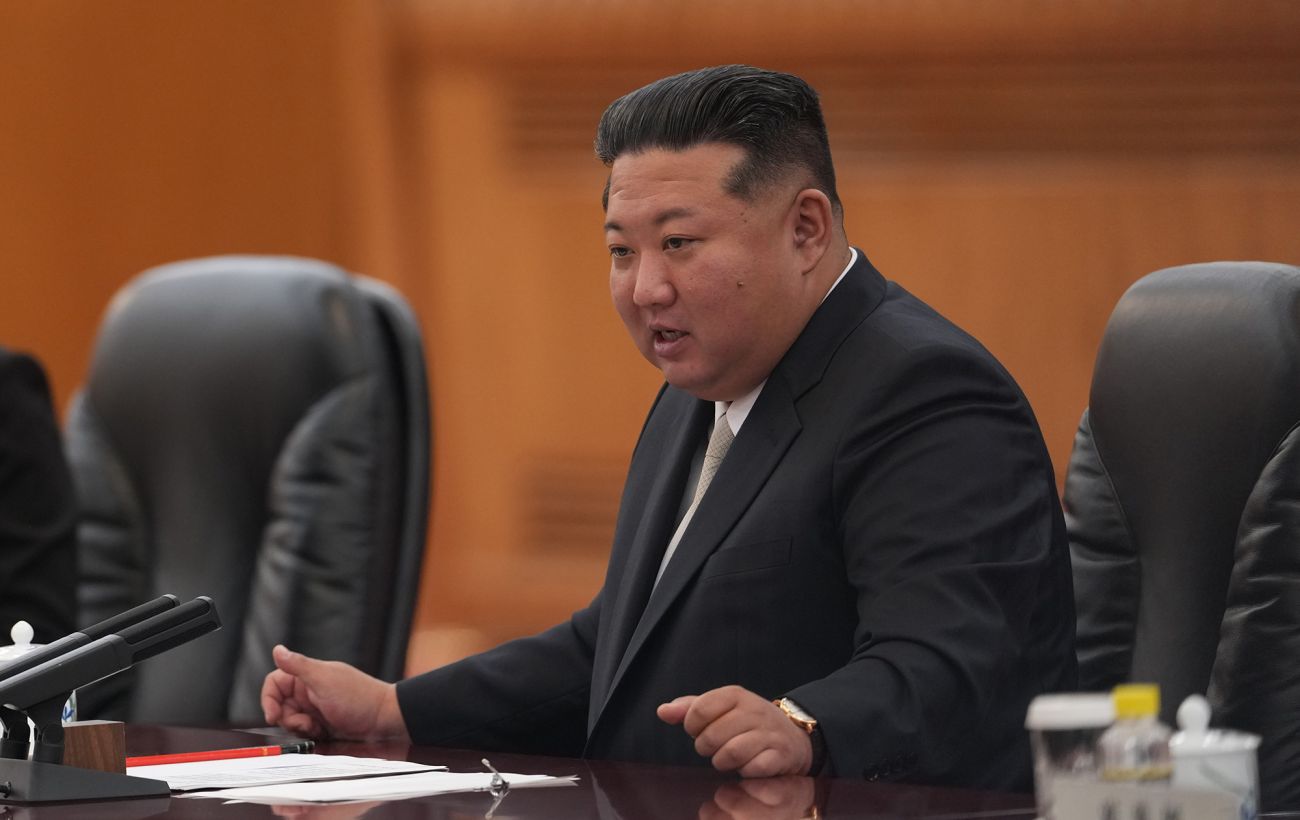
North Korea has amended its constitution to stipulate an automatic nuclear strike in the event of the leader Kim Jong-un’s death resulting from a foreign attack. The decision was made during a session of the Supreme People’s Assembly held on March 22 in Pyongyang.
The revised nuclear policy was disclosed by South Korea’s National Intelligence Service during a closed briefing for government officials. Under the new legislation, if the command and control system of North Korea’s nuclear forces is threatened by an adversarial attack, a nuclear strike must be executed “automatically and immediately.”
Reports indicate that this legislative change was influenced by the recent death of Iran’s Supreme Leader Ali Khamenei and several members of his inner circle during coordinated strikes by the United States and Israel in Tehran.
Andrei Lankov, a professor at Kookmin University in Seoul, suggested that the situation in Iran served as a wake-up call for North Korea. He noted, “Iran became a warning signal. North Korea observed the extraordinary effectiveness of the U.S.-Israeli strikes against leadership, which swiftly eliminated much of the Iranian leadership, and they are likely now fearful.”
However, Lankov also pointed out that executing a similar operation against North Korea would be significantly more challenging than against Iran. He cited the country’s near-total isolation, stringent control over foreign movements, and limited intelligence-gathering capabilities within its borders as key factors complicating any potential military action.
Reports further indicate that Kim Jong-un has long harbored fears of assassination attempts, often avoiding air travel and typically traveling by armored train with a security detail.
North Korea's recent constitutional amendment allows for an automatic nuclear response if Kim Jong-un is killed by a foreign attack. This decision reflects heightened concerns following the assassination of Iranian leadership and underscores the regime's focus on its security protocols.