Recent advancements in quantum computing have reignited discussions about potential vulnerabilities in Bitcoin, particularly concerning early wallets associated with its creator, Satoshi Nakamoto. Analysts warn that a sufficiently powerful quantum computer could compromise Bitcoin’s cryptographic security, particularly affecting wallets with visible public keys.
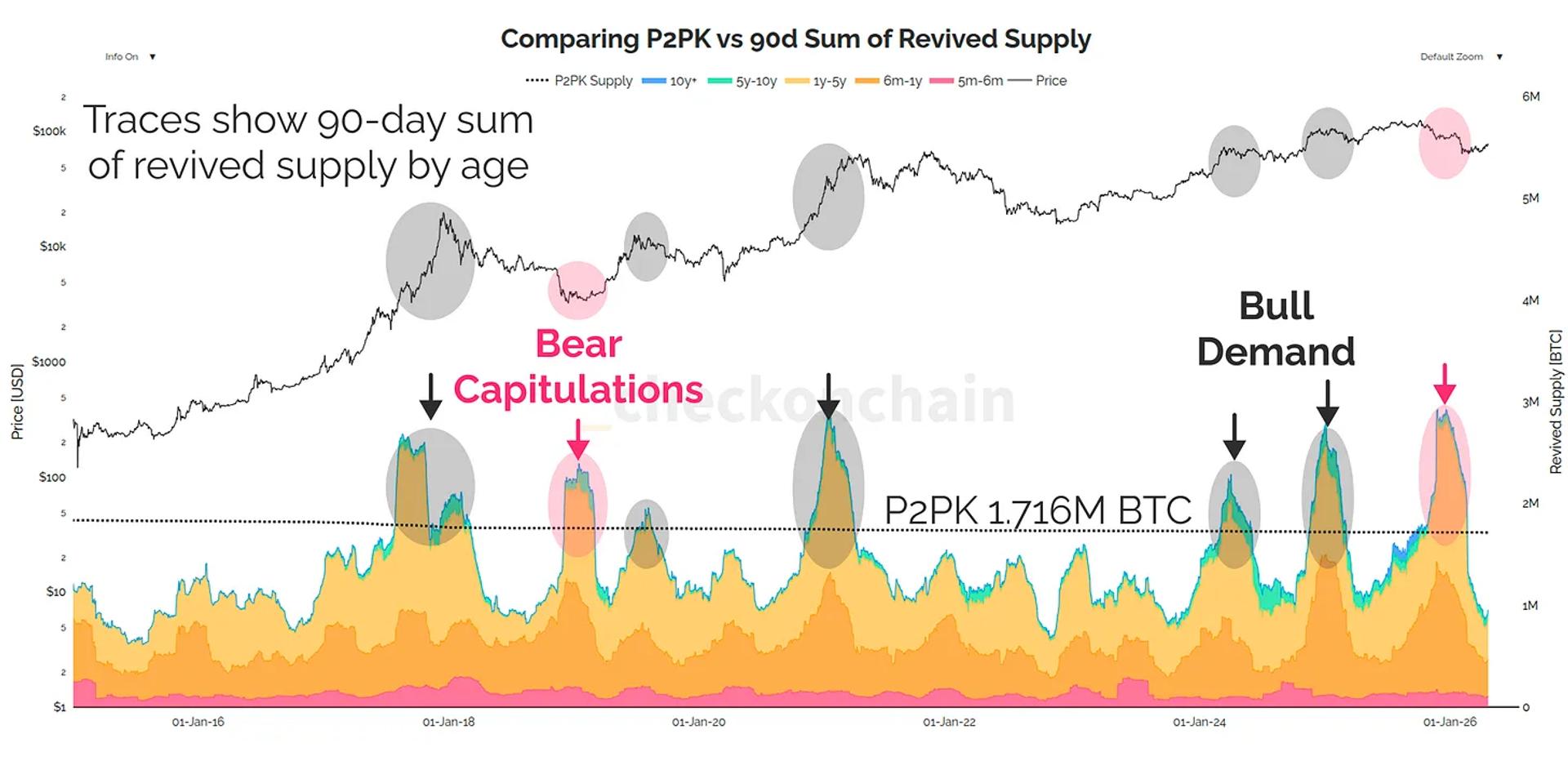
James Check, a Bitcoin analyst, highlights that approximately 1.7 million BTC, valued at around $145 billion, are held in these vulnerable Satoshi-era addresses. While some fear that this could lead to a significant market crash due to a sudden influx of sell pressure, data suggests that such a scenario may not be as catastrophic as it seems.
During bullish market conditions, long-term holders of Bitcoin typically sell between 10,000 and 30,000 BTC daily. This means that the entire supply of Satoshi-era coins could be distributed over a period of two to three months, which is manageable within the context of market dynamics. In fact, during the last bear market, over 2.3 million BTC changed hands in just one quarter, surpassing the potential quantum threat without resulting in a systemic collapse.
Furthermore, monthly inflows to exchanges are around 850,000 BTC, and derivatives markets frequently cycle through volumes equivalent to the entire Satoshi stash every few days. When viewed against Bitcoin’s existing liquidity, the potential sell-off appears less alarming.
Nevertheless, a sudden, concentrated release of these coins could induce volatility and possibly trigger a downturn. Check notes that any entity capable of accessing these funds would likely prefer to distribute them gradually to avoid market disruption and maximize returns.
Ultimately, the pressing issue may not be the mechanical sell pressure itself, but rather governance concerns surrounding the future of the Satoshi coins. Proposals like BIP-361 aim to address these governance challenges, potentially freezing the Satoshi coins to allow the market to stabilize.
Recent discussions about quantum computing's threat to Bitcoin focus on the vulnerability of early wallets. While the potential sell-off of Satoshi-era coins could induce volatility, market data suggests that such an event would be manageable rather than catastrophic.