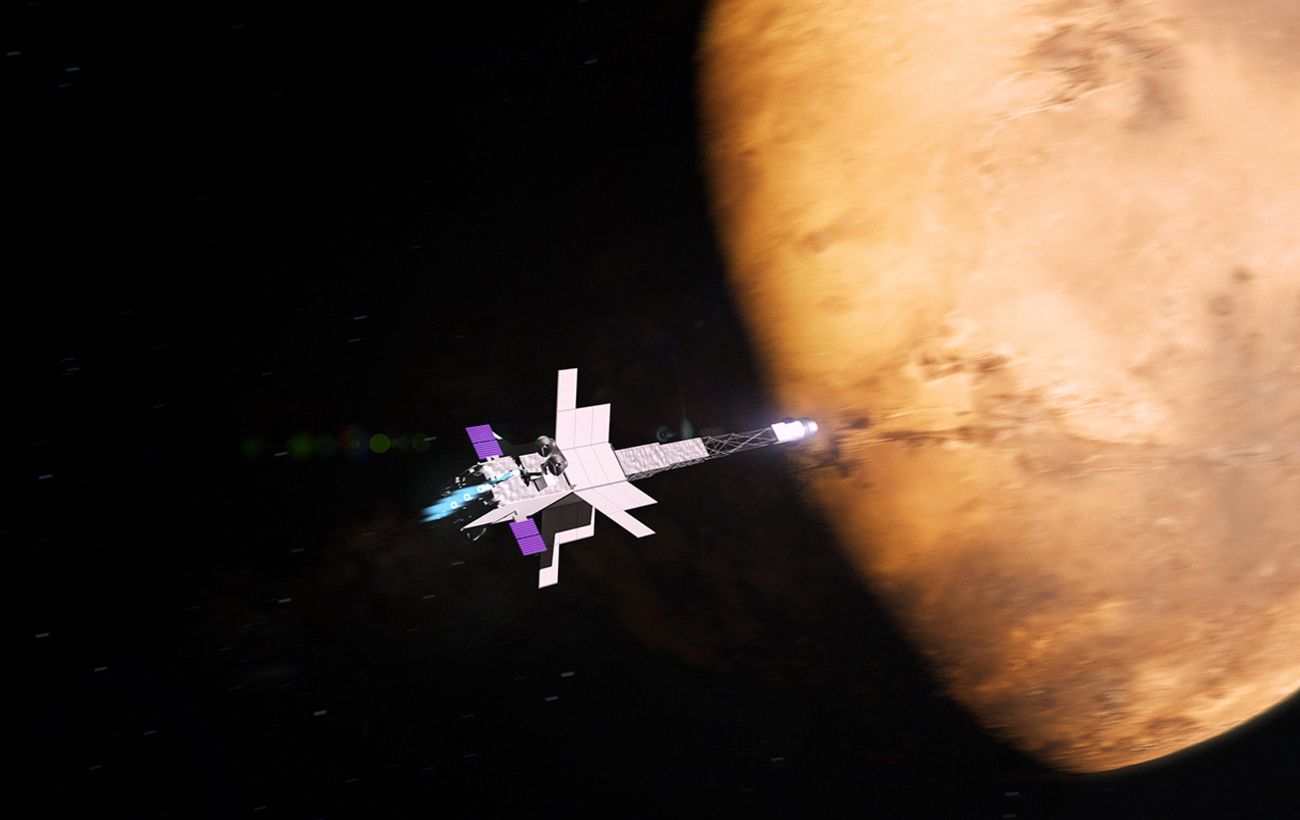
NASA has officially introduced its inaugural mission utilizing nuclear electric propulsion, designated as SR-1 Freedom. This initiative is positioned as a significant advancement in the exploration of deep space.
The SR-1 Freedom spacecraft aims to address a critical challenge associated with long-duration space flights: the diminishing power output of solar panels. For instance, near Jupiter, the solar energy available is merely 4% of what is accessible on Earth, which directly impacts energy efficiency.
How Nuclear Electric Propulsion Works
Fission Reaction: Uranium is bombarded with neutrons to produce substantial heat.
Electric Energy: Turbines convert this heat into electricity, which ionizes gas.
Plasma Jet: The ionized gas transforms into plasma, whose expulsion generates thrust.
According to NASA, this propulsion method is ten times more powerful than conventional reactors and significantly more efficient than chemical fuels. Although traditional launch vehicles are still necessary to achieve orbit, the nuclear engine enables speeds previously unattainable in deep space.
Configuration of SR-1 (Image: Wikimedia)
Mission Skyfall
The primary objective of SR-1 Freedom is to deliver the Skyfall mission to Mars. This collaborative project involves the Jet Propulsion Laboratory (JPL) and drone developers AeroVironment.
Skyfall plans to deploy a fleet of three remotely operated helicopters on the Martian surface. If the delivery is successful, the SR-1 Freedom technology could overshadow the planet’s exploration efforts and mark a pivotal moment for the U.S. aerospace sector.
Ambitions
The launch is scheduled for late 2028. NASA Administrator Jared Isaacman has indicated that the nuclear reactor is “almost complete.” To expedite the development process, the agency is utilizing components from the Gateway lunar station, which has yet to be launched into space.
Despite these ambitions, skepticism persists within the scientific community. Concerns include:
- Tight Timelines: The development of such systems typically requires 3-5 years, yet NASA is attempting to condense this timeline significantly.
- Financial Pressure: The project is being executed amid a reduction in NASA’s scientific budget by half.
- Safety Issues: Professor Andrew Higgins has criticized NASA’s “LEGO approach,” where disparate components are assembled together, suggesting this could elevate risks during the mission.
Notwithstanding these concerns, NASA remains confident that the success of SR-1 Freedom will lay the groundwork for the Lunar Reactor-1 program, aimed at establishing the first permanent nuclear base on the Moon.
NASA's SR-1 Freedom mission represents a significant advancement in nuclear electric propulsion, aiming to address power limitations in deep space exploration. While the project faces skepticism regarding its timeline and safety, it is seen as a potential foundation for future lunar initiatives.