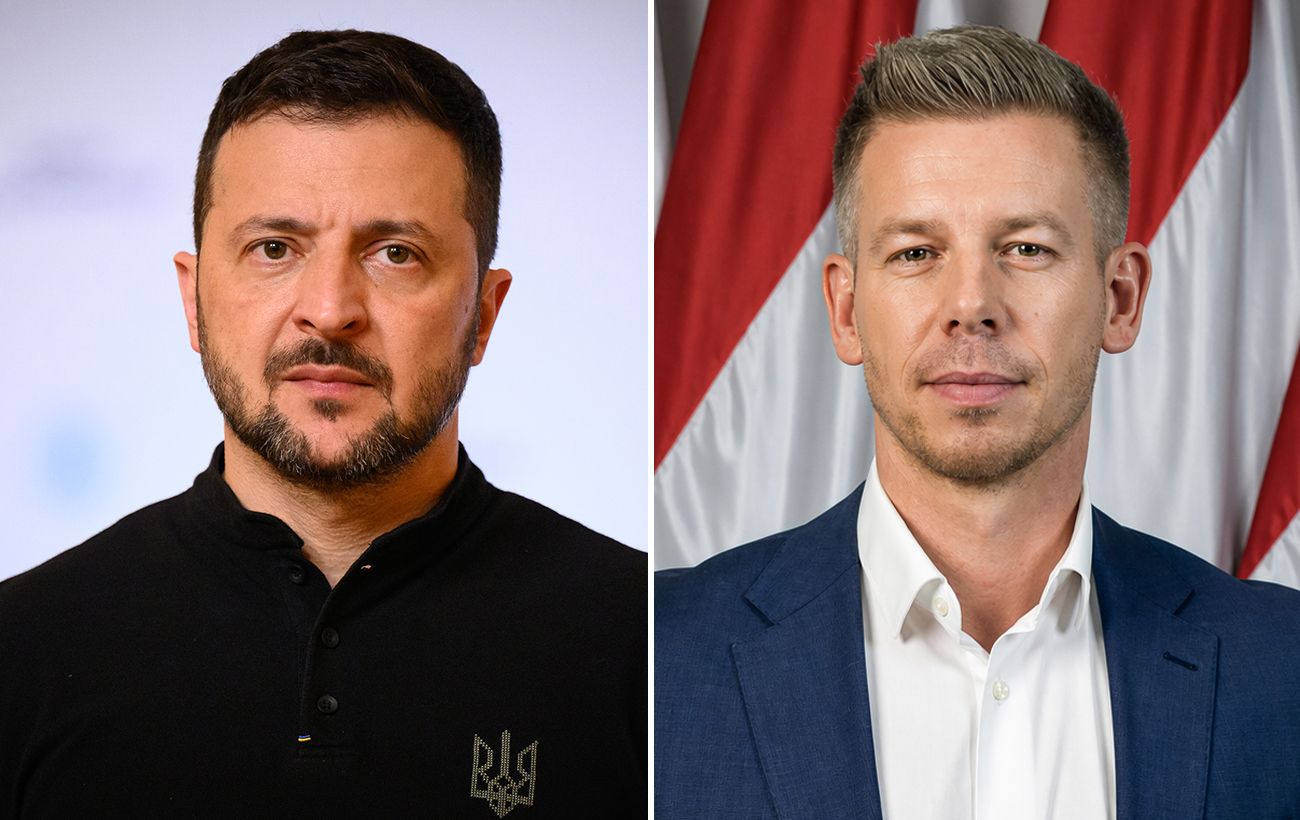
The incoming Prime Minister of Hungary, Péter Mátyás, has expressed his intention to arrange a meeting with Ukrainian President Volodymyr Zelensky in early June. This proposed meeting aims to address the rights of ethnic Hungarians in Ukraine and the broader context of the ongoing conflict.
Mátyás, leader of the Tisza party, recently met with the mayor of Berehove, Zoltán Babják, where they discussed the challenges faced by the Hungarian community in Ukraine and the impacts of the war. He emphasized the need to establish a new foundation for relations between Hungary and Ukraine, particularly in light of the historical and cultural ties between the two nations.
He stated, “We agreed that it is in the interest of Hungarians living in Transcarpathia to elevate the relationship between Hungary and Ukraine to a new level. Based on this, I intend to initiate a meeting with President Zelensky in early June—symbolically in predominantly Hungarian Berehove.”
Mátyás has urged Ukraine to lift restrictions on the rights of ethnic Hungarians that have been in place for over a decade. He believes that restoring their cultural, linguistic, administrative, and educational rights would encourage many ethnic Hungarians from Transcarpathia to return home after the war.
He remarked, “If we manage to resolve these issues, we can undoubtedly open a new chapter in Ukrainian-Hungarian bilateral relations.” Mátyás also pointed out that higher education in Ukraine remains predominantly monolingual, with graduation exams conducted in Ukrainian, and noted that there have been no significant changes in the use of the Hungarian language in official contexts.
Furthermore, he highlighted ongoing restrictions in public life and culture, stating that while Hungarian-language events and media can operate, they are subject to quotas, registration, and formal requirements.
Péter Mátyás, the future Prime Minister of Hungary, plans to meet with Ukrainian President Volodymyr Zelensky to discuss the rights of ethnic Hungarians in Ukraine. He advocates for lifting long-standing restrictions to foster better bilateral relations and encourage the return of Hungarians to Transcarpathia post-war.