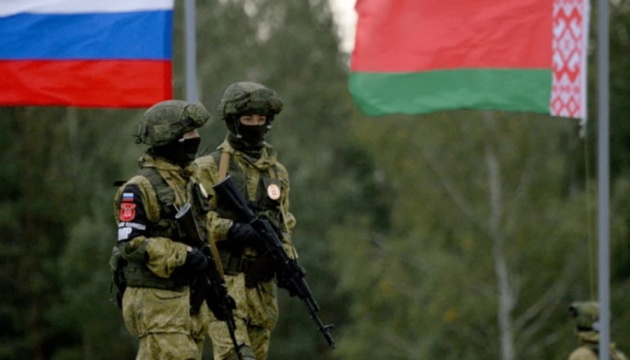
Ukrainian intelligence has reported heightened military activity in Belarus, raising concerns about potential threats along the border. President Volodymyr Zelensky has indicated alarming signals from the region, noting significant logistical developments, including new road construction and artillery position setups near Ukrainian frontiers.
In response to these developments, Zelensky has instructed diplomatic and intelligence channels to firmly warn Belarusian leader Alexander Lukashenko about Ukraine’s readiness to defend its territory. He has also made geopolitical references, cautioning that recent events in Venezuela should deter Belarus from making mistakes.
Former Foreign Minister Dmytro Kuleba highlighted troubling trends, including ongoing military training in Belarus and large-scale military exercises conducted earlier this year. He pointed out that while these activities may not individually warrant alarm, together they suggest preparations for a potential second front.
Experts are divided on the implications of this activity. Some believe that a full-scale invasion is unlikely, suggesting that Russia may instead use Belarus for hybrid warfare tactics, including border provocations. Others warn against underestimating the situation, emphasizing the dangers of dismissing it as mere misinformation.
ANALYZING THE TENSION: INvasion or Deception?
To understand the current escalation, experts are examining the motivations behind Moscow and Minsk’s actions. The strategic aim for Russia appears to be stretching Ukraine’s defensive lines. However, questions remain about Lukashenko’s willingness to fully engage in the conflict.
Andriy Illienko, an officer in the National Guard, suggests that the situation reflects Belarus’s loss of sovereignty. He argues that Moscow’s ultimate goal is to draw Belarusian forces into the conflict while maintaining a state of tension that keeps Ukrainian resources occupied away from critical eastern and southern fronts.
Illienko believes that Lukashenko is aware of the risks involved, stating, “Lukashenko is a scoundrel and a criminal, but not an idiot. His primary concern is retaining power, which puts him in a precarious position. Engaging directly in the war poses a significant risk to his regime and life, yet his authority is heavily reliant on Moscow’s support.”
The current escalation may stem from renewed pressure from the Kremlin, prompting Ukraine’s leadership to address the issue publicly and proactively.
Pavlo Lakiychuk, head of security programs at the Strategy XXI Center, notes that the tension has been artificially generated since late 2022, rooted in Russia’s demographic and mobilization challenges. He argues that Putin’s catastrophic losses compel him to seek military resources from Belarus, warning that Russian influence in Belarus’s military could spiral out of Lukashenko’s control.
Retired SBU Major General Viktor Yahun urges caution against viewing military maneuvers as mere displays. He asserts that infrastructure preparations indicate a shift from passive observation to establishing a potential launch point for operations. Yahun emphasizes that the construction of roads and artillery positions signals serious military intent.
EVOLUTION OF RISKS: HOW DOES THE CURRENT SITUATION DIFFER FROM EARLY 2022?
One prevalent fear in Ukraine is the haunting memory of the early days of the full-scale invasion when Russian armored columns advanced from Belarus towards Kyiv and Chernihiv. However, the current military landscape in 2026 is markedly different.
Military analyst Oleksandr Kovalenko provides a detailed assessment of the enemy’s current capabilities, confirming that while Belarus remains a source of danger, the likelihood of a large-scale offensive is minimal due to a critical shortage of combat-ready forces. He notes that the Russian contingent in Belarus is insufficient for an offensive, comprising only about 2,000 personnel focused on air defense and support roles, lacking elite assault units.
Kovalenko reminds that at the onset of the invasion, Russia had deployed a force of 40,000 elite troops in Belarus, which ultimately suffered a strategic defeat in northern Ukraine. He questions whether a smaller Belarusian force, lacking combat experience, could achieve similar objectives.
Moreover, Ukraine has undergone significant military transformation, enabling its forces to not only defend the border but also to conduct preemptive strikes deep into enemy territory. Kovalenko stresses that any aggression from Belarus would provoke an immediate and robust response, potentially targeting critical infrastructure within Belarus.
Analyst Denys Popovych distinguishes between preparations for actual warfare and current hybrid maneuvers, asserting that genuine offensive operations would leave substantial logistical traces detectable by reconnaissance. He believes that the ongoing activities are more about psychological pressure than combat readiness.
RED LINES AND INDICATORS: WHAT WILL SIGNAL SERIOUS INTENT?
While the current focus appears to be on establishing a platform for potential operations, experts agree that modern warfare cannot commence unnoticed. Popovych notes that a full-scale campaign necessitates extensive mechanized logistics, and any troop movements would be evident to intelligence agencies.
Kovalenko outlines a clear threshold for escalating threats, stating that a significant increase in Russian forces in Belarus would signal a serious danger. He also highlights the potential for missile and drone attacks from Belarus, which would require substantial logistical preparation.
Yahun emphasizes that provocations along the border could occur without large troop concentrations but insists that Ukraine must remain vigilant. He believes that the President’s recent statements reflect a proactive stance in addressing the situation.
Ultimately, while the current military activity in Belarus represents a hybrid pressure operation rather than a prelude to a full-scale invasion, it underscores the Kremlin’s strategy to create an illusion of high threat levels. This tactic aims to divert Ukrainian forces from critical frontline areas to secure the extensive northern border.
However, the absence of a substantial military presence in Belarus means that the threat remains manageable. Ukrainian forces are now equipped to respond decisively to any aggression from the north, marking a shift in the paradigm of military engagement.
As the situation evolves, Ukraine’s leadership continues to act decisively, ready for any scenario, while making it clear that the era of unchecked use of Belarus as a staging ground has ended.
Ukrainian intelligence is closely monitoring increased military activity in Belarus, raising concerns about potential threats along the border. Experts are divided on whether this represents a genuine risk of invasion or a hybrid pressure strategy by Russia to distract Ukraine's military resources.
